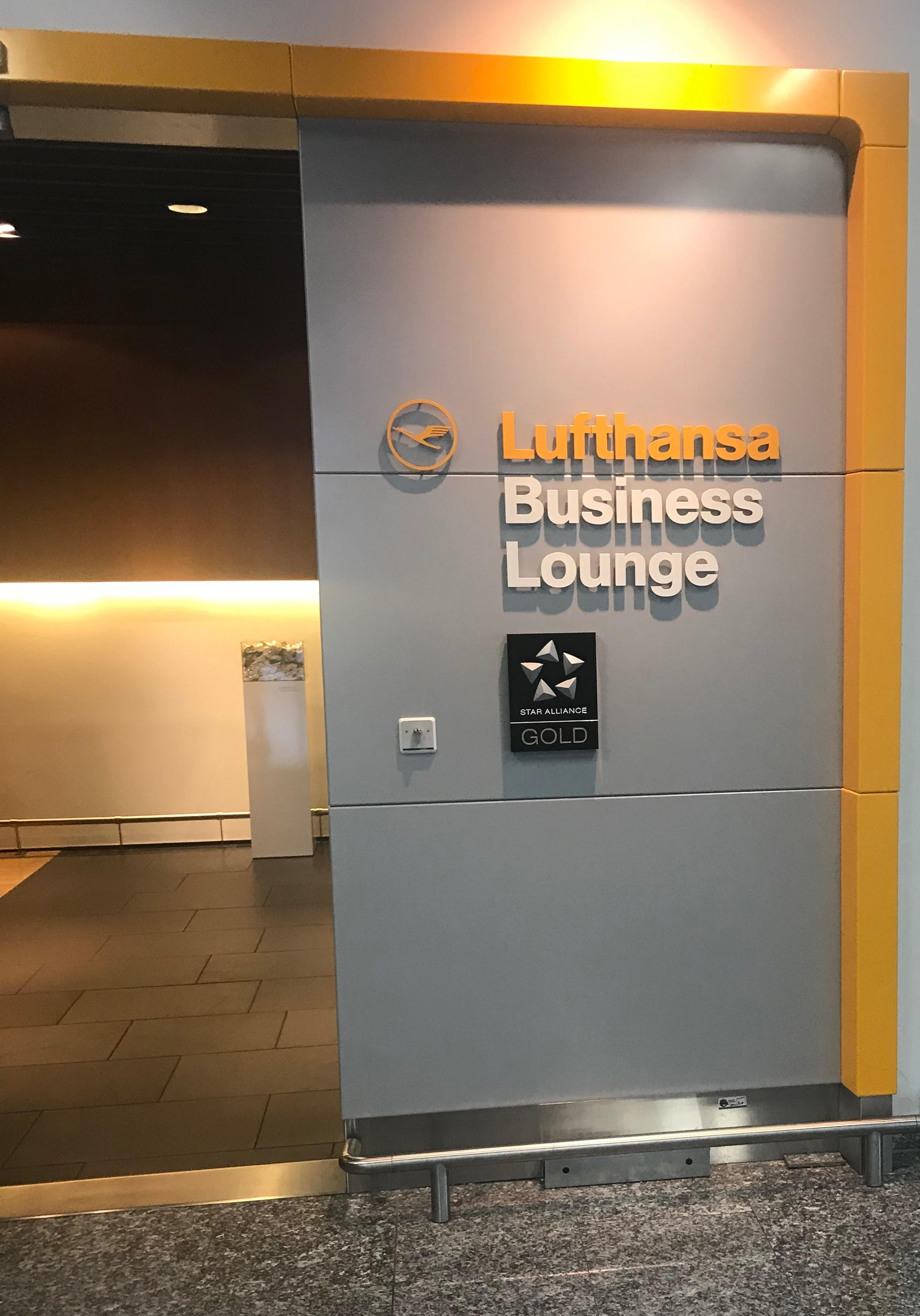
As part of our award redemption using United miles for a business class ticket to Lisbon, my wife and I had access to the Lufthansa Business Class Lounge during our 6-hour layover in Frankfurt, Germany. At Frankfurt Airport, Lufthansa has seven business-class lounges and four Senator Lounges (first-class lounges). I chose The business class lounge after passport control near A26 since this was closest to our departure gate.
Upon entering the lounge, the receptionist scanned our boarding pass at the entrance and directed us to the lounge. Since Lufthansa has seven business-class lounges, I didn’t expect there to be much of a crowd at this one. About three-quarters filled when we arrived and became less crowded as the hours went by.
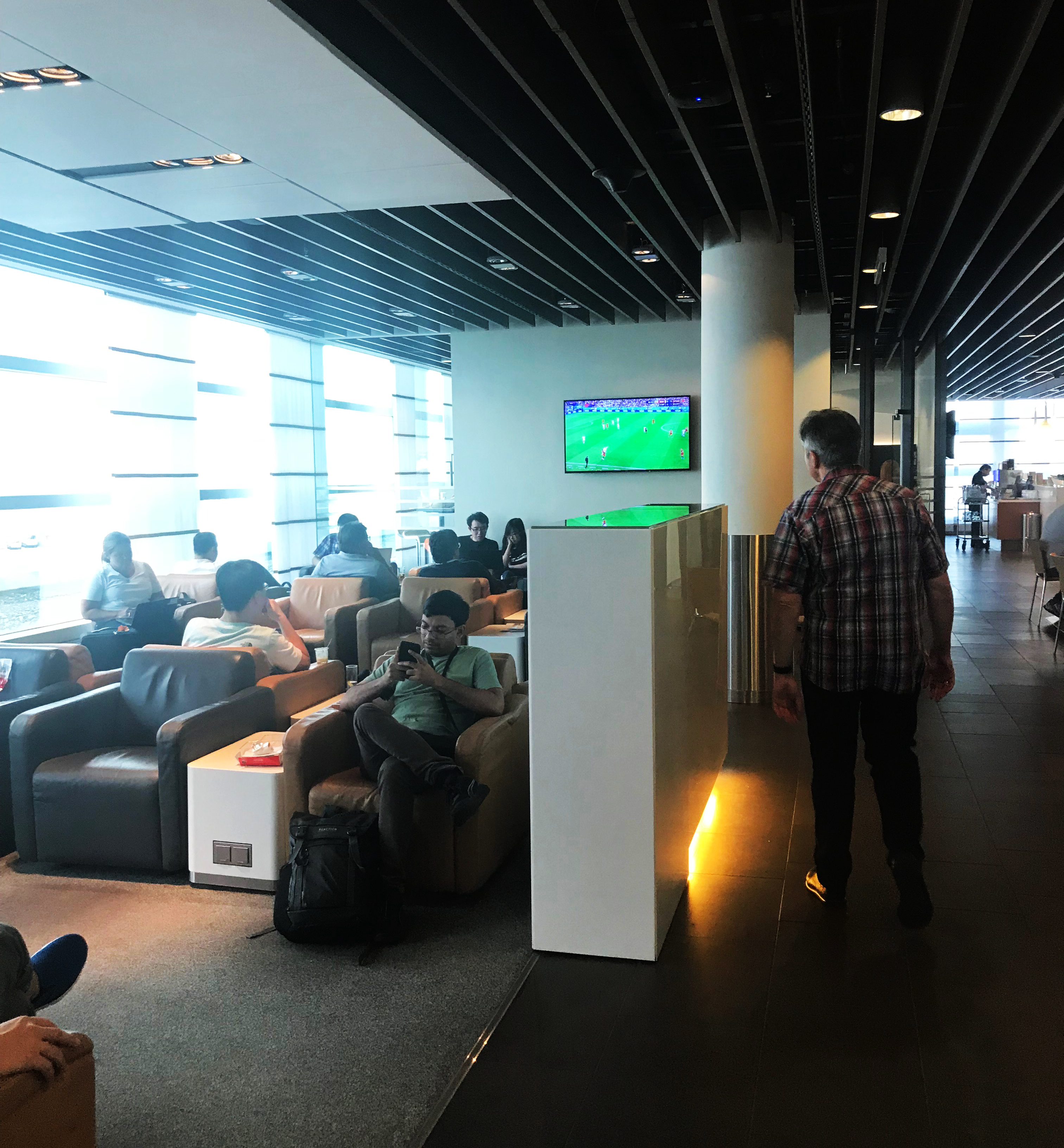
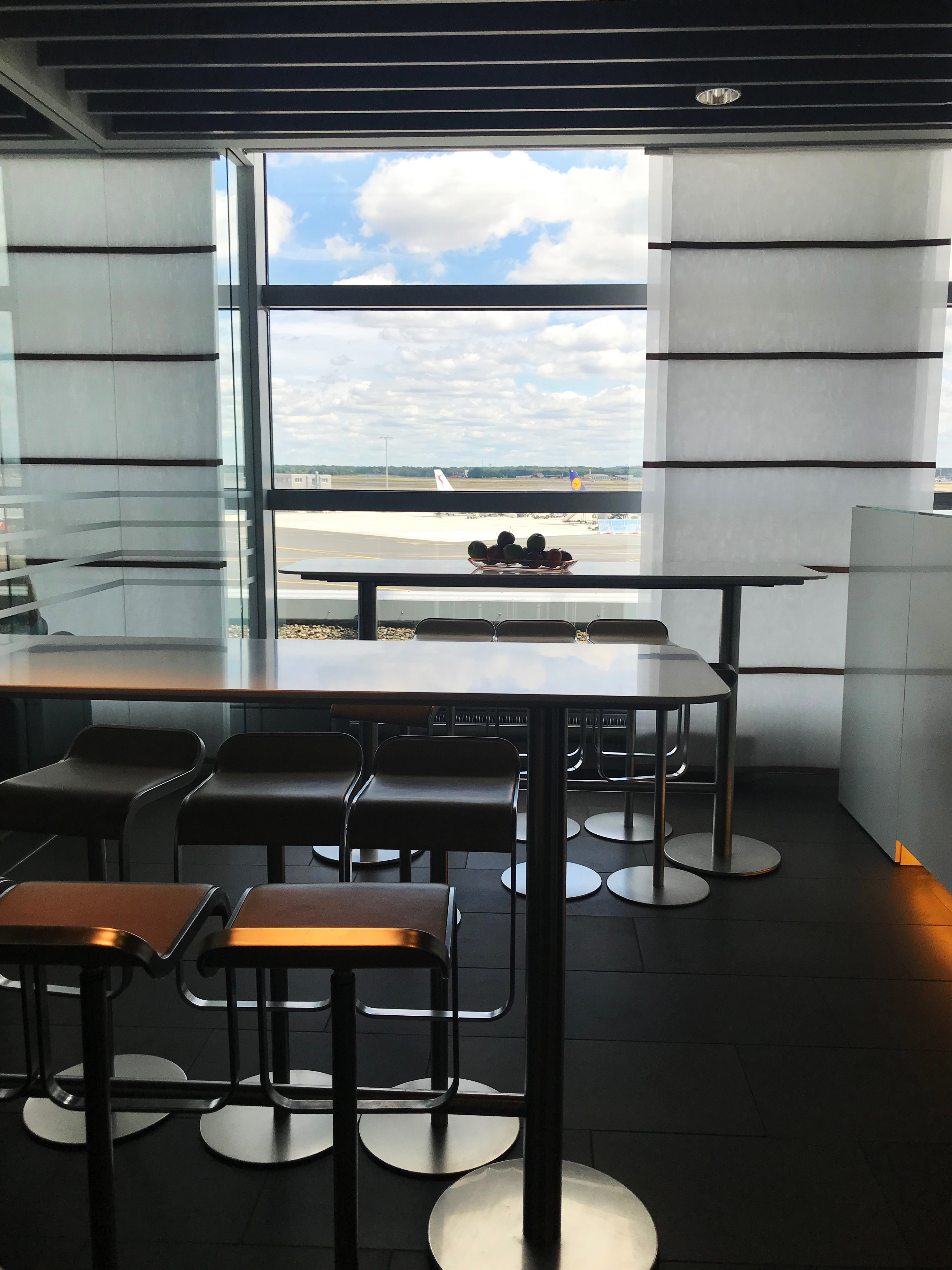
Most of the crowd was fixated on the TV’s and the World Cup match that was being played. The lounge itself isn’t huge by any stretch but has enough seating and excellent amenities.
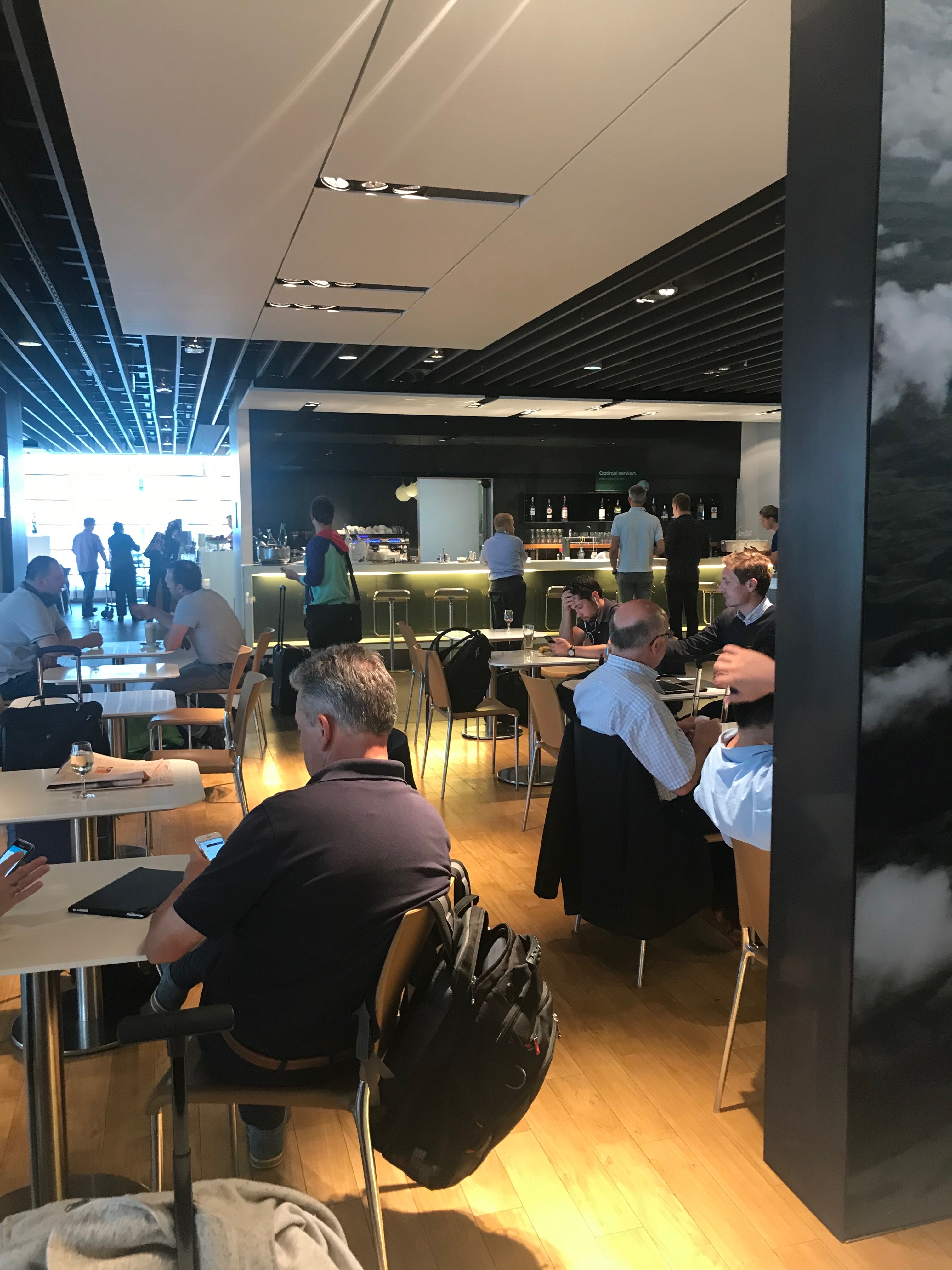
The seating area right in front of the bar
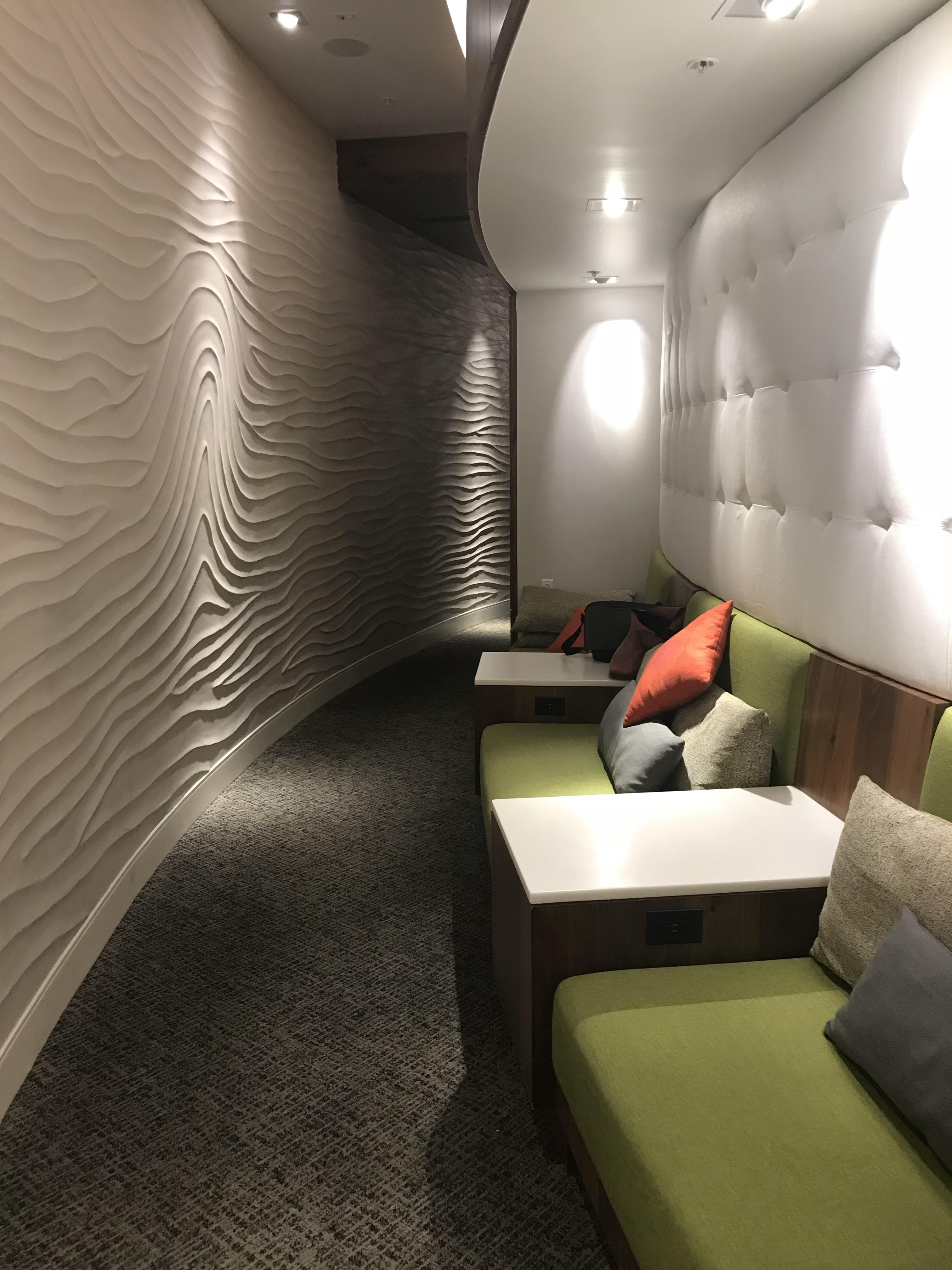
There were a few different seating areas, and much like Polaris Lounge in Chicago, this one had seating areas with different ambiances. As much as I wanted to take pictures of every single area of the lounge, I tried not to take pictures of an area if there were people who might be looking right at the camera. I wish it was a bit easier to be discrete and thorough at the same time.
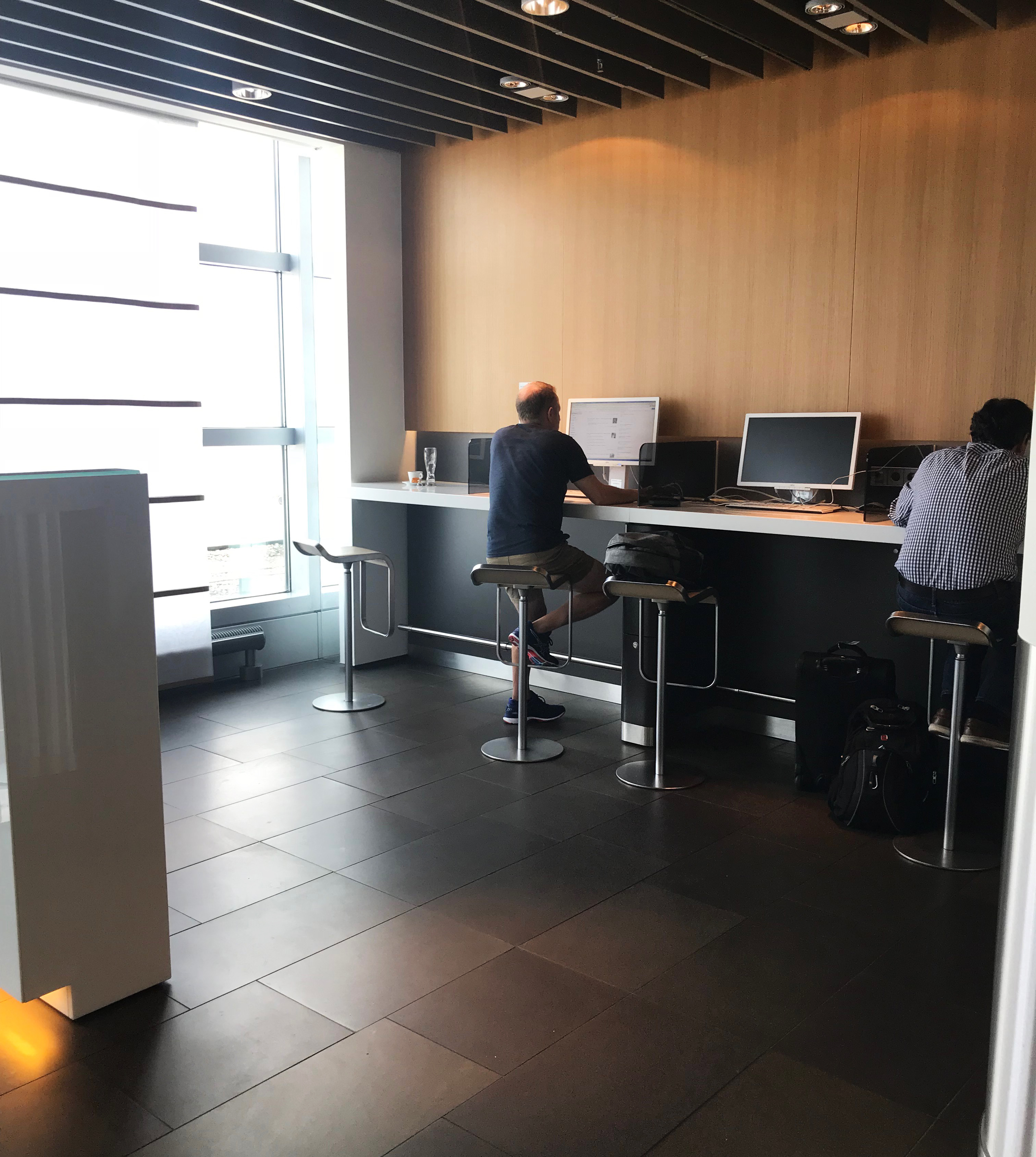
The business center was being utilized by only a few people and had relatively new PC’s.
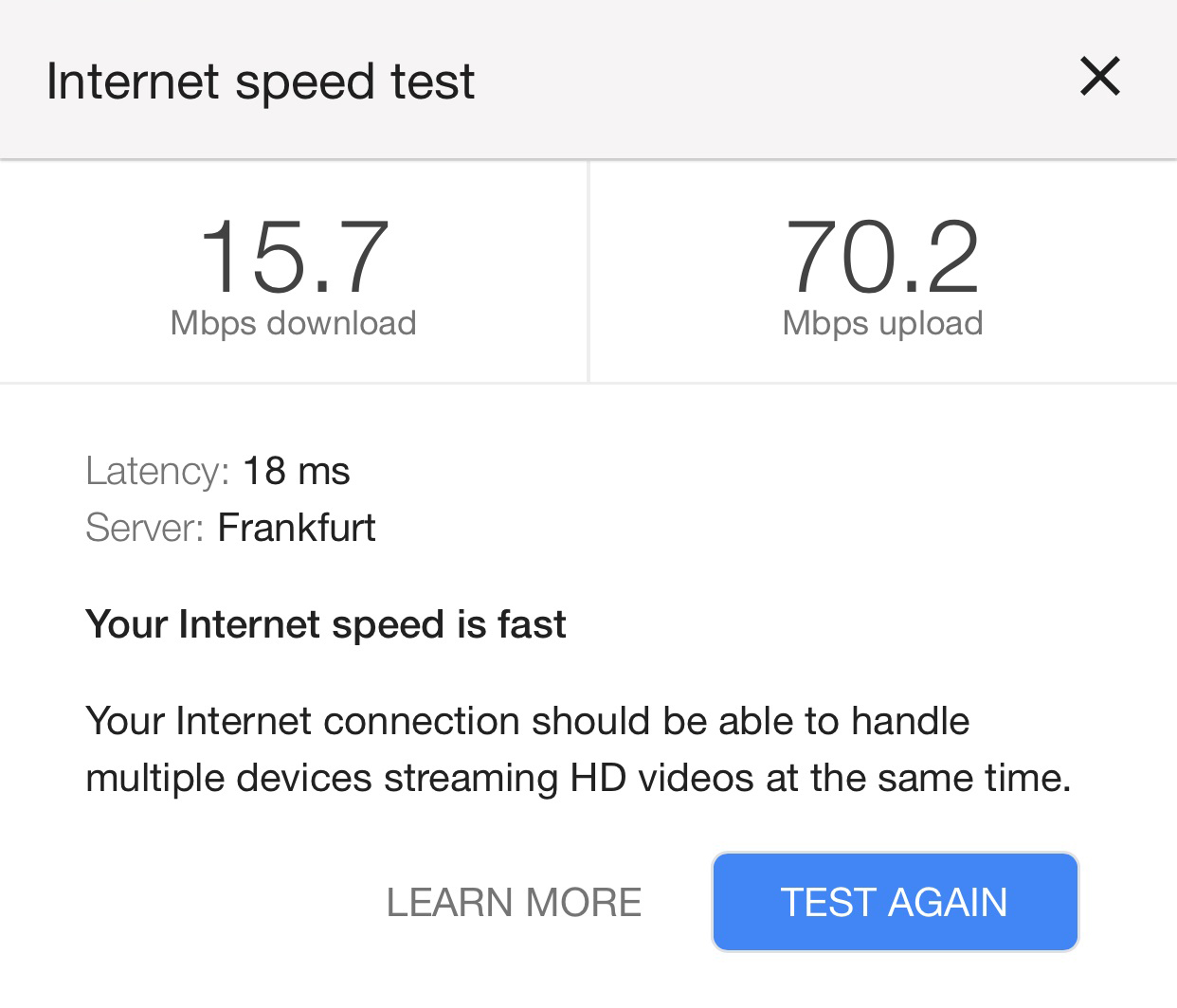
The other half of the business center was completely empty, but having chairs without back support probably convinced everyone to stay away. The wifi connectivity at this lounge was excellent, among the fastest I had experienced at any lounge. Kudos to Lufthansa for really looking out for business travelers.
Like the Polaris Lounge, this lounge also had bedrooms available upon request. My wife wanted to take a nap, so they gladly unlocked a room for her and provided her with a blanket.
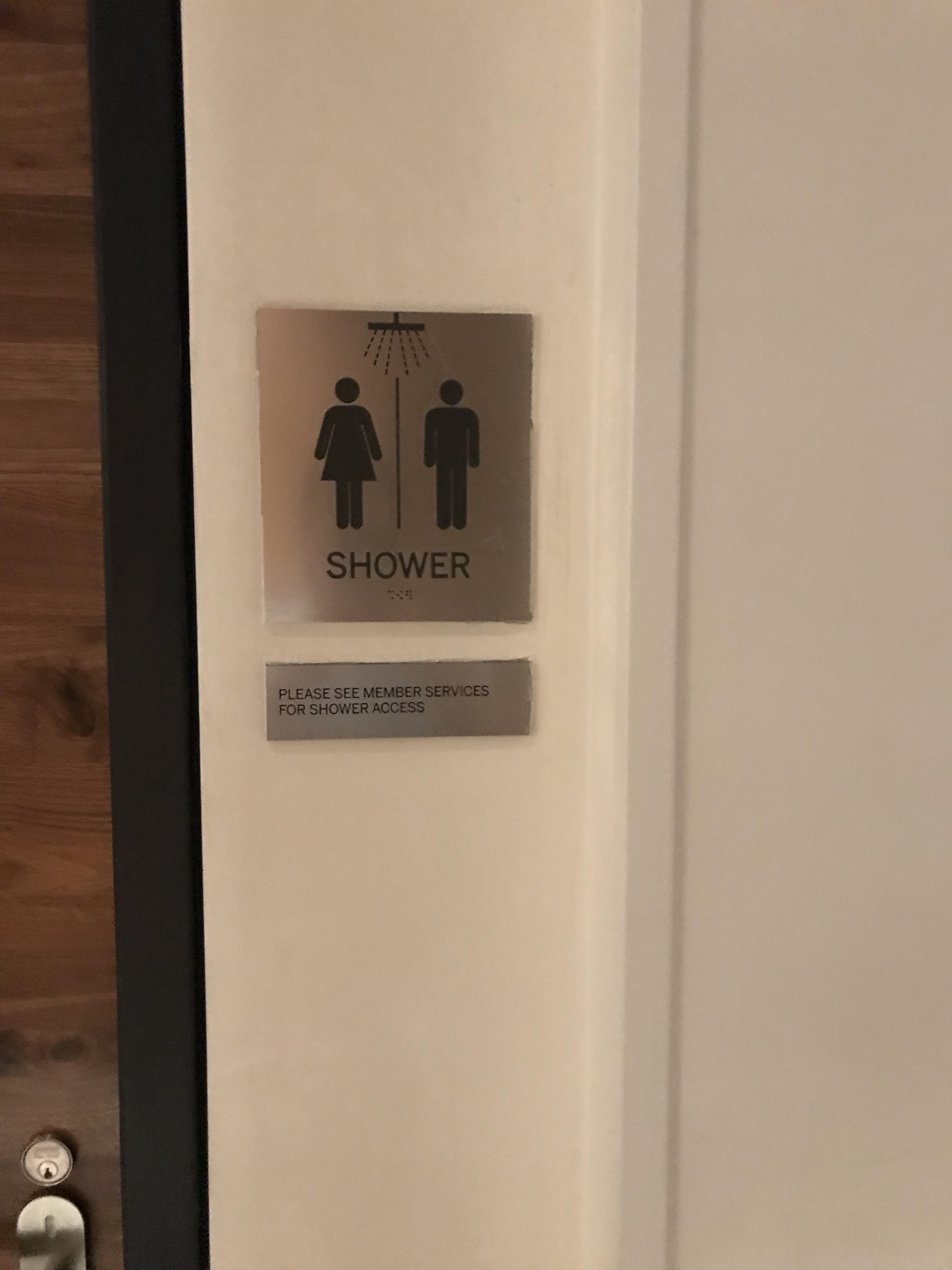
I wasn’t tired enough to reserve a room for myself, but she said the beds were very comfortable, and she slept for two solid hours. This lounge also had access to showers upon request. Next up was to check out the food offerings. Usually, this is among the first things I do at a lounge. Since I had breakfast on the plane only an hour prior, I wasn’t all that hungry, and I did not want to eat for the sake of eating. So I waited a few hours until hunger struck.
Bread basket
The bread was bread. Not terrible, but not great.
The potato salad was decent. Their regular salad was subpar and very dry.
SaladNoodles with cheese
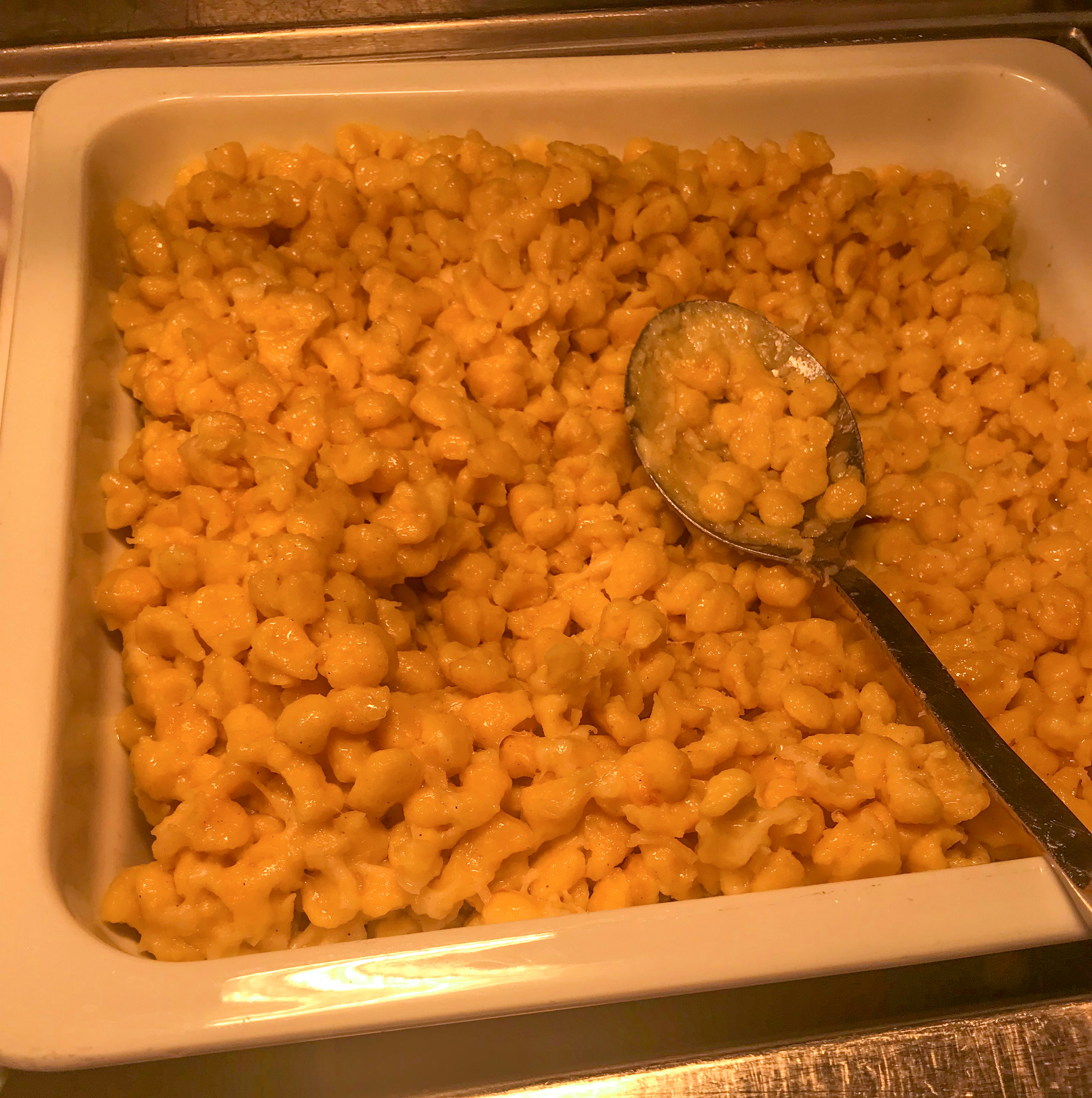
The noodles with cheese were surprisingly good. It might not look good from the picture above, but trust me, it was good. Taking pictures of the food near the buffet area is also where I ran into a little bit of trouble. There was a far greater selection than what I could take a picture of. However, one of the employees responsible for replenishing the buffet told me in half English and half German that I was not allowed to take pictures of the food or buffet area. I had no idea why this was the case, but rather than challenge that assertion, I just took her word for it and stopped taking pictures of that area.
The caramel pudding was heavenly. This was so good I had to have it twice.
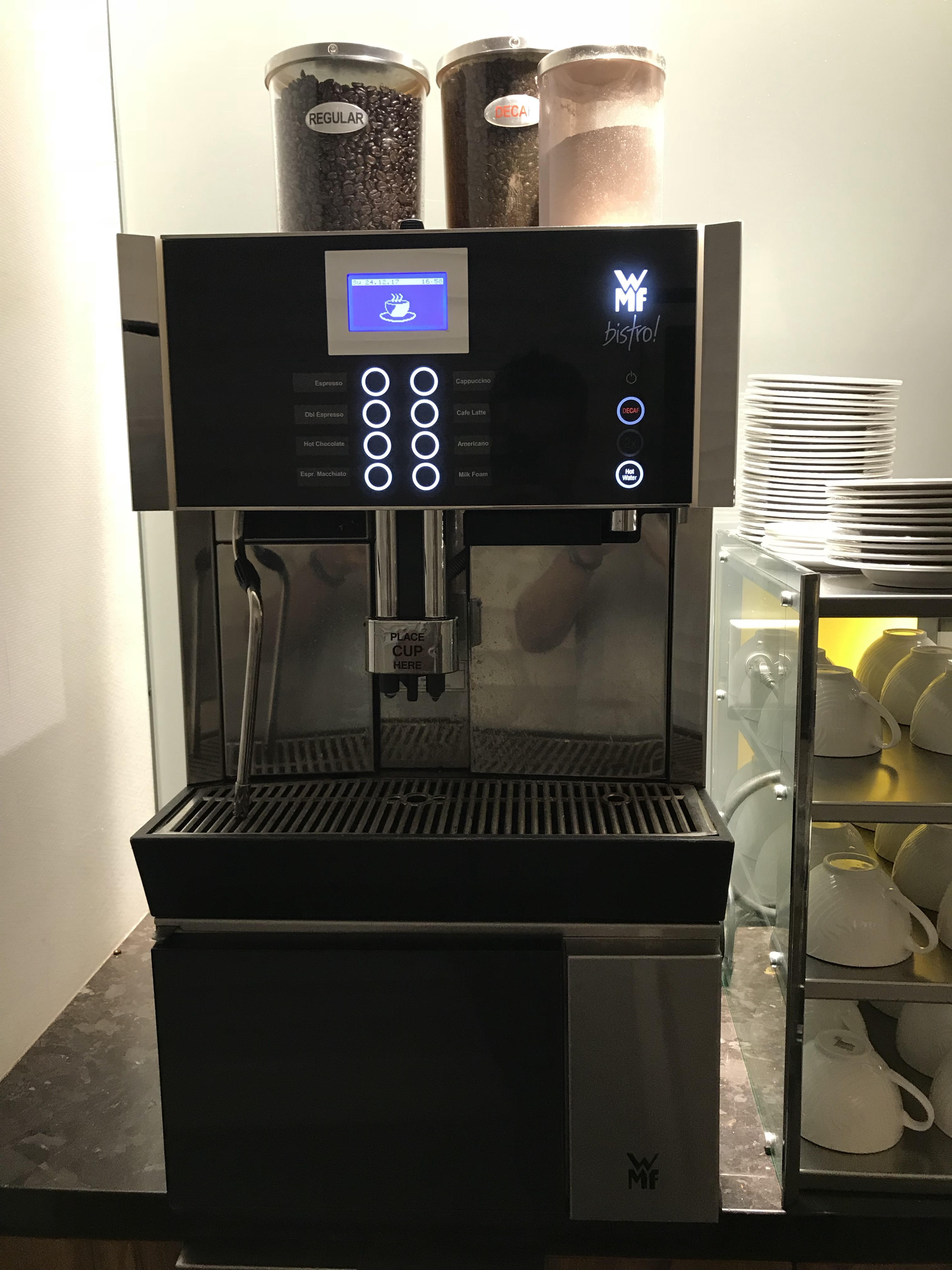
There’s nothing like having ginger ale where you can actually taste the ginger. The lounge had plenty of drinks, a solid espresso machine, and a well-stocked bar. Again, I did not want to challenge the lady and take a picture, but take my word for it. As for the bathrooms, Lufthansa did a great job maintaining the men’s room.
Mens Room
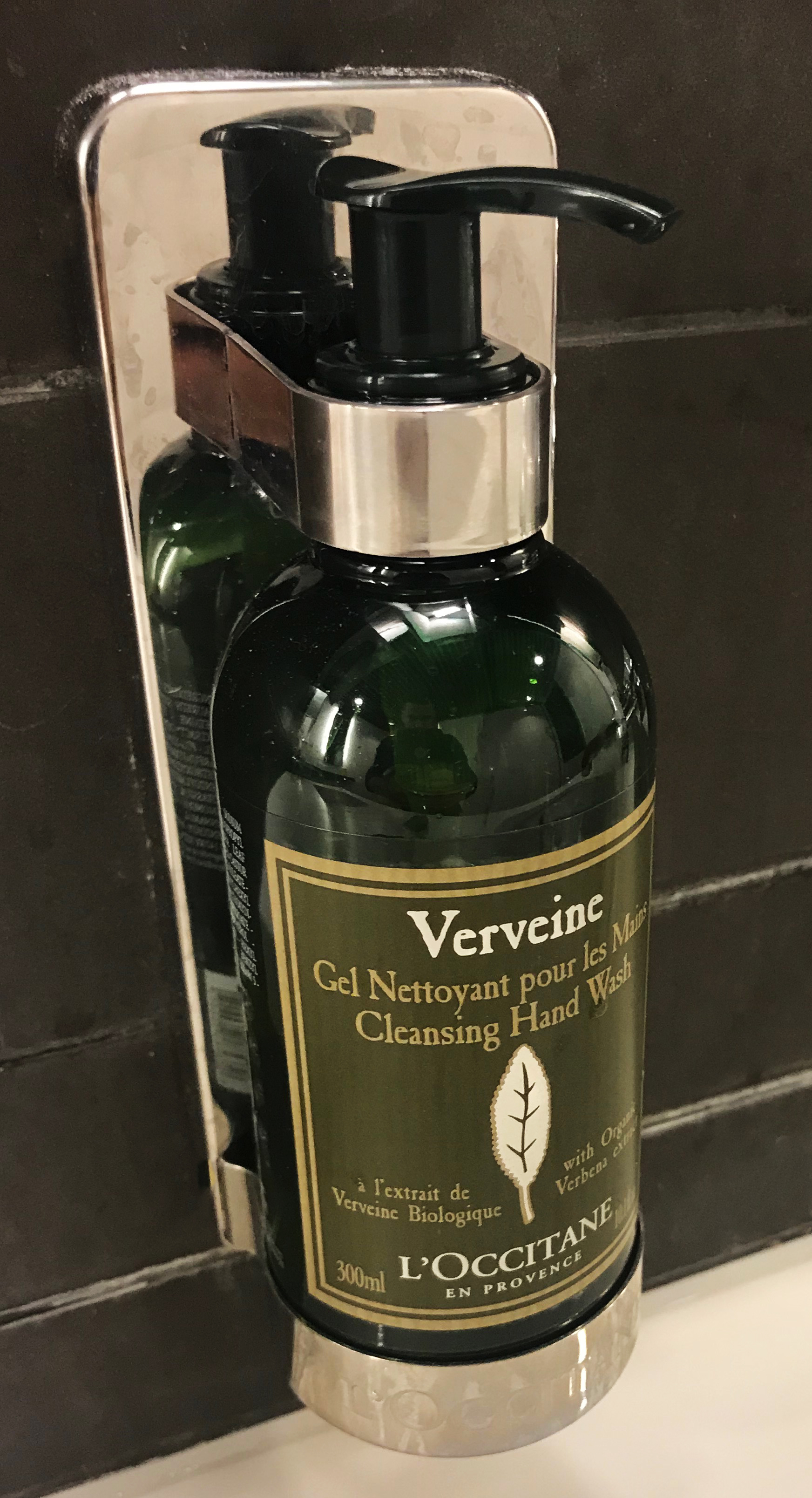
The L’Occitane soap and lotion that they provided was a very nice touch. Small details like that do not go unnoticed.
Final Thoughts
. This was a fantastic lounge that checked just about every box. Solid food options, high speed Wi-Fi connectivity, enough seating, and added amenities such as bedrooms and showers. Rather than construct two or three large lounges and risk capacity issues, I appreciate how Lufthansa built 7 smaller business-class lounges to spread out the crowd. This issue will come into play for my next review, the KLM Business Class Lounge at Schipol Airport in Amsterdam. As for the Lufthansa Business Class Lounge, I would rate it a 4.6/5.
We had a layover in Boston during a recent trip from NYC to Chicago, so we decided to stop by The Lounge at Logan International Airport. It was rather convenient since we would depart from Terminal C, the same terminal where The Lounge is situated. This lounge is part of the Priority Pass network but also serves as a business class lounge for Aer Lingus and TAP Portugal as they depart from Terminal C. I didn’t have any issues getting in since it wasn’t full. Still, I have heard of incidents where Priority Pass cardholders were denied access when The Lounge expected a large influx of business class travelers flying on Aer Lingus or TAP Portugal. Since it is the only lounge in Terminal C, hours between 4 p.m.-8 p.m. are not sure for Priority Pass card holders.
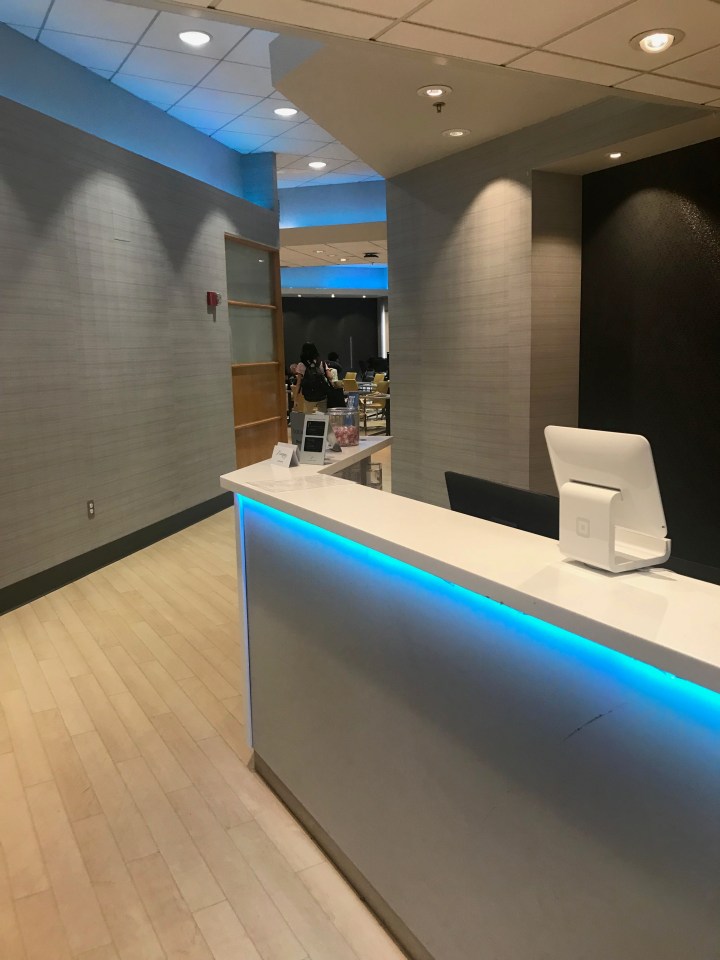
Receptionist Desk at The Lounge
Upon entering, I showed my Priority Pass card, and the receptionist scanned it and told my wife and me we were good to go. The lounge was 3/4 full and filling up when we entered, which is unsurprising considering that we arrived on a Friday at 6 p.m.
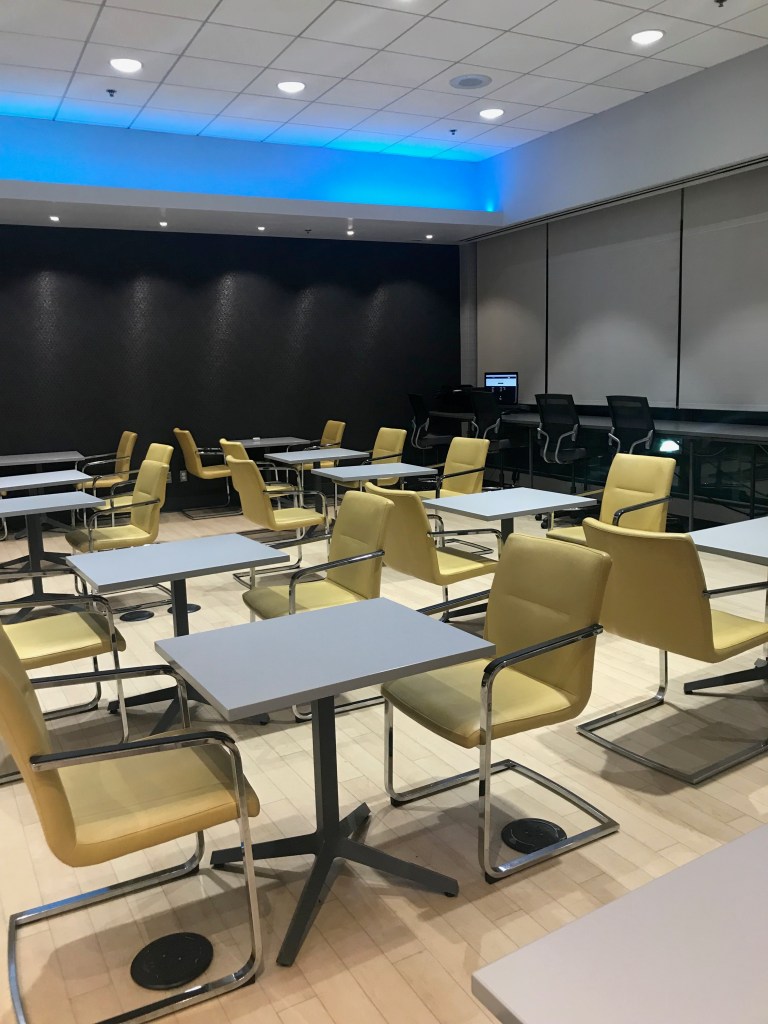
If you’re a business traveler who needs a plug outlet, I highly recommend going to the back of the lounge. There, you’ll find outlets and a semi-partition that will give you privacy.
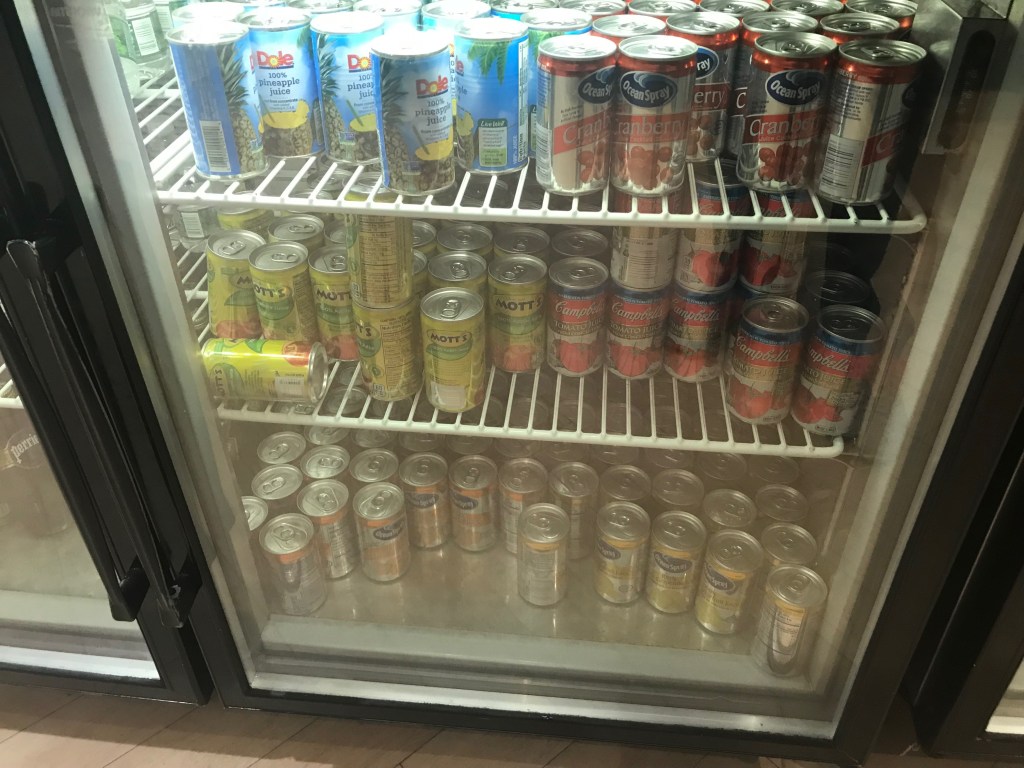
Once we got situated, I went to see the food offerings. I wasn’t hungry, but for the sake of the review, I helped myself with small portions of a few things. They had pasta salad, hummus with pita, a veggie sandwich that consisted of cream cheese and cucumbers, vegetables, salad, soup (clam chowder), and snacks. The pasta salad was ok but nothing special. The hummus was decent and might have been the best item they had out there. The veggie sandwich was simple but surprisingly not terrible. I didn’t have the turkey sandwich, so the jury is out. It seems like their benchmark was just good enough not to be bad. The refrigerator had no shortage of cold drinks, though. That was a big plus.
I don’t partake in drinking alcohol, but for those of you who do, the bar looked like it was stocked pretty well.
Bar area
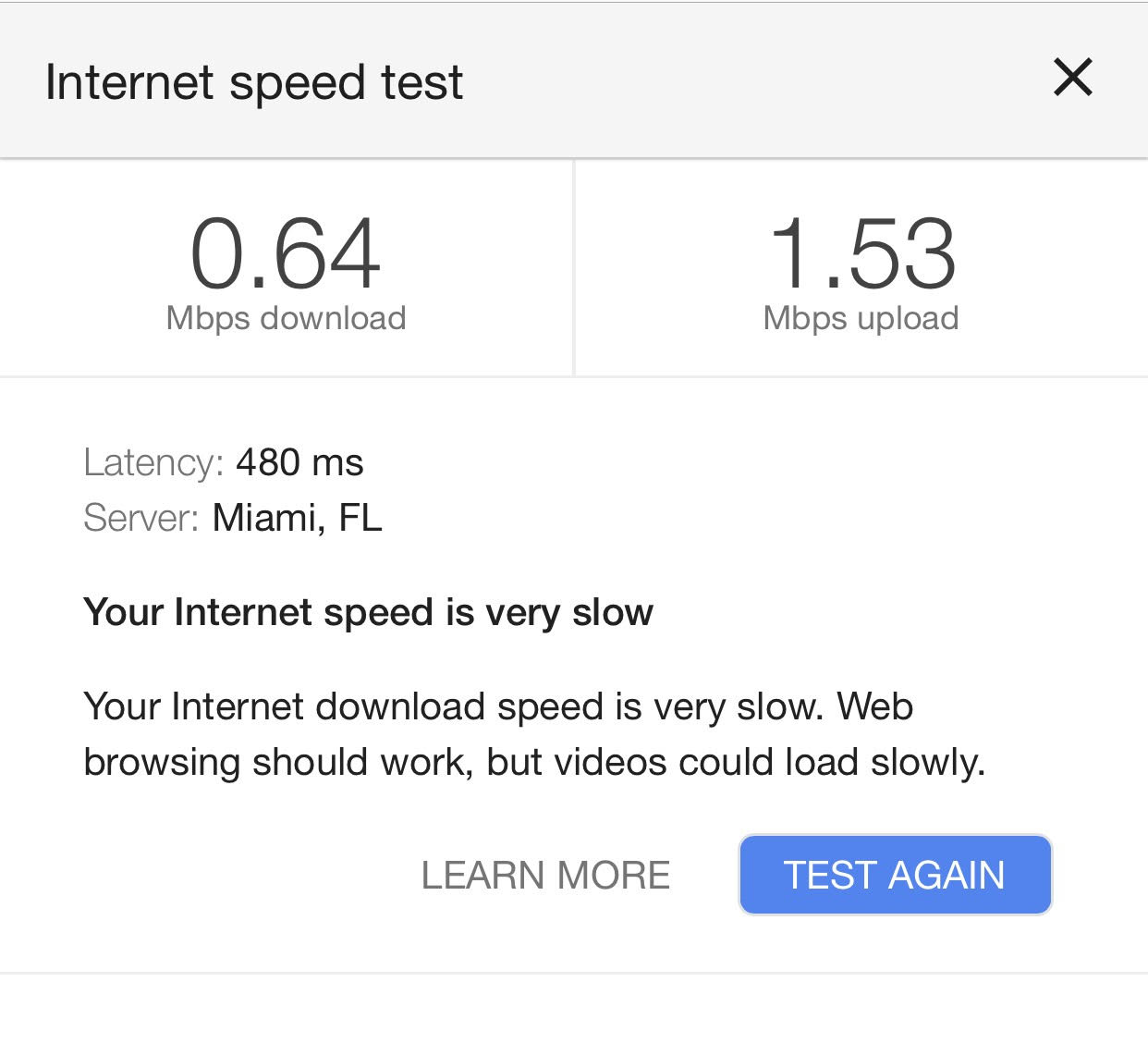
My biggest gripe during my time here was this lounge’s lack of dedicated WiFi. You are forced to use Logan’s public WiFi, and the speed is painfully slow. It’s certainly not business traveler-friendly. The bathrooms were clean, which was a nice plus. I would rate this place a 3.2/5. If you happen to be in Terminal C, being at this lounge would still be sitting in the gate area. However, if you’re departing from a different terminal, I would not recommend visiting Terminal C just to visit this lounge.
Maui was the first of two islands my wife and I visited during this trip to Hawaii. The second island we visited was Kauai, which you can read about here. Our last trip to Hawaii (Feb 2019) covered The Big Island, and if you are interested in reading about our time there, you can do so here. Maui, also known as the Valley Isle, is the second largest island in Hawaii and has endless beauty. Our three days didn’t cover everything, but it covered most of the main attractions. We had seven days in Hawaii (the first day was more like a half day), three of which we spent in Maui and four in Kauai. The question a lot of people ask is if 3 days is enough to see most of the main sights in Maui. It was enough for us for two reasons: First, we woke up at dawn and started our day early. This is absolutely crucial. It’ll be difficult if you’re not in your car by 8 a.m. daily. The weather was the second thing out of our control, but it worked in our favor. We had sunshine all 3 days, and that’s just us gambling on great weather for 3 days and getting lucky. Ideally, you want to have one or two extra days as a buffer for rain.
How We Got There
You’ll probably notice a trend with just about every itinerary I post. We rarely use cash to reach our destination, and this trip was no different. Remember that my wife and I have schedules that mostly allow us to take these trips during peak travel season. This trip to Hawaii happened to be during the last 9 days of December, which is high season in Hawaii. Likewise, the number of miles airlines require to get to Hawaii is double that of most cities. United usually charges 22.5k miles a person one-way to get to Maui. That redemption rate from Chicago, Newark, and D.C. was 45k miles per person one-way. Fortunately, Denver still had the saver award redemption at 22.5k miles, so we decided to spend two days there (we had never visited Denver) and depart to Maui from Denver International Airport.
Arrival
Even though this was technically our first day, we arrived too late to do anything significant. Our flight to Maui arrived at 4:35 p.m., and by the time we deplaned, got our bags, and picked up our rental car, it was close to 5:45pm. At this point, we only had about 15 minutes of daylight left. We checked into our hotel, the Napili Shores by Outrigger, ate an early dinner, and decided to sleep at 8pm. The next day was going to be very long.
Day One: Haleakala National Park & Papawai Scenic Lookout
If you’re visiting Maui, you simply can’t leave without witnessing the sunrise at Haleakala National Park. It can’t be replicated elsewhere, and it’s magical. The ideal day is when a layer of clouds below you allows the sun to rise above that layer. Sometimes, it can get cloudy enough that there is little to no visibility, and that’s the type of day you want to avoid. Your best bet is to keep an eye on the weather. You must pay $25 per car at the entrance and make a reservation for $1.50 if you go there at sunrise. The ticket for the sunrise is valid for three days and can be purchased up to 60 days in advance. My wife and I got there 2 hours before sunrise to ensure a good parking spot. You should aim to get there no later than an hour before sunrise, or the desirable parking spots and viewing areas will fill up quickly. It’s a relatively slow 45-minute with steep curves and hairpin turns after hairpin turns. It requires your full attention, and if you’re the type that gets distracted by a cell phone easily while driving, turn it off until you’re at the top. If you run into fog, it can get a little challenging, but fortunately for us, it was clear all the way through during our drive to the top.
View of the sunrise at Haleakala National Park
A few important things to keep in mind. When you’re at the viewpoint, you are at an elevation of about 10,000 feet. Not only is it cold, it is very windy! You will need a warm jacket and ear covers, or it won’t be pleasant. The air is obviously much thinner, so If you’re sensitive to elevation or have had trouble breathing in elevation before, please reconsider. Once you’re done with the sunrise, you can stop at other viewpoints on the way down. There are fantastic picture opportunities of the surrounding craters and landscape.
View of the craters from one of the scenic lookouts on the way down
Papawai Scenic Lookout
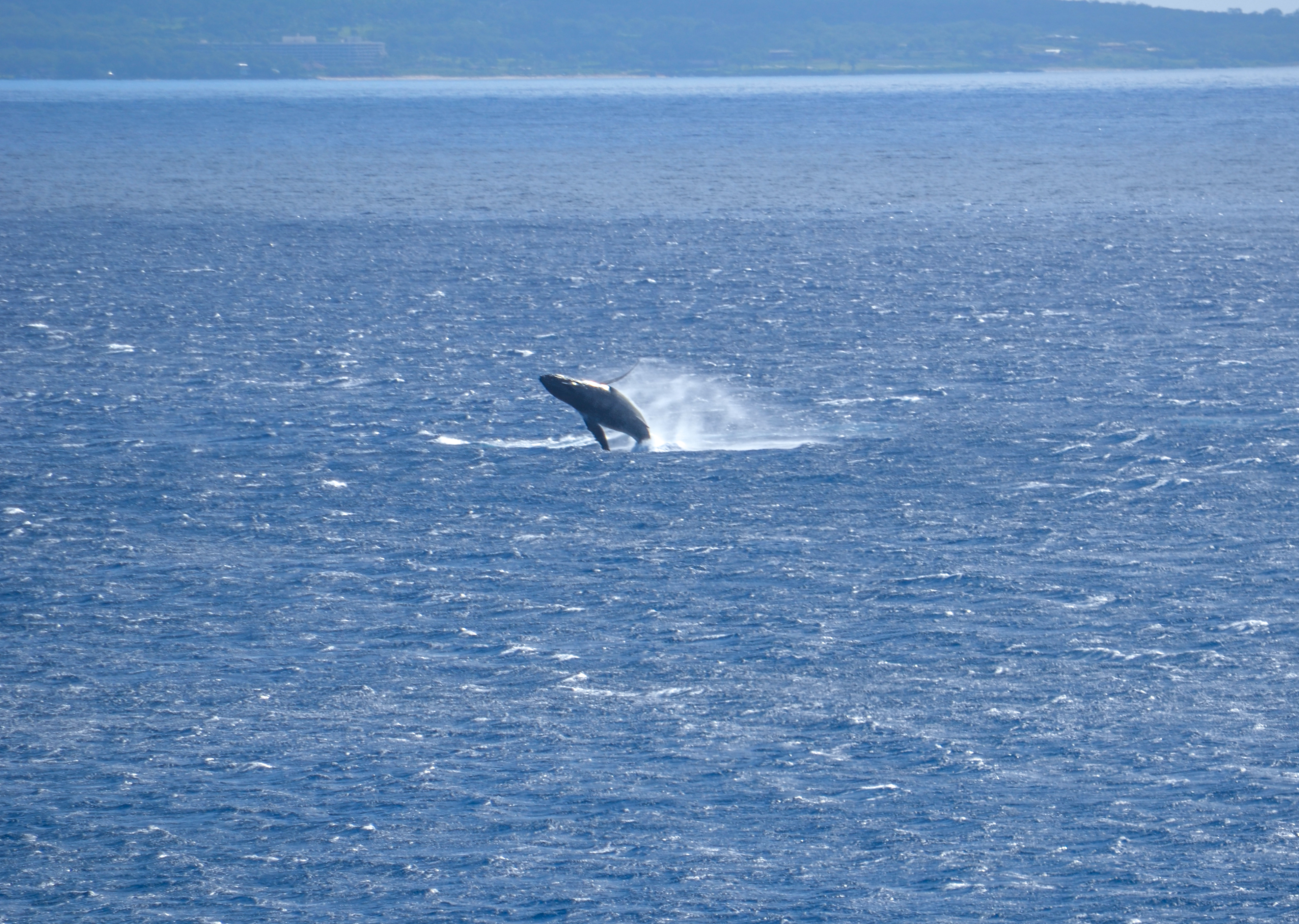
On our way back to Lahaina, we decided to stop at the Papawai Scenic Lookout. Locals recommended this spot as a great place to watch whales from the land. During the winter months, mother humpback whales will birth their calves and teach them essential behaviors in the waters of Maui. It took a little patience, but it paid off, and we got a show of a lifetime. About 15 minutes after arriving, we noticed a water mist sprayed about a quarter mile offshore. And there it was, a baby humpback whale under the watchful eye of its mother practicing breaching behaviors. At first, the calf needed some support to breach halfway.
This was as far as the calf could go the first few times.
After about eight attempts to get halfway up, it completely breached the water. I kept my camera in rapid-fire mode and was fortunate to capture a memorable moment.
The lookout provides excellent photo opportunities even if you don’t see whales.
At night, we walked around Lahaina Town and stumbled upon one of the best ice cream shaves we ever had. It’s called Ululani’s Hawaiian Ice Shave, and they have over 50 flavors. I had the ‘Haleakala,’ a coconut, leche, and condensed milk mix. I wish I had taken a picture to post here, but I guarantee you’ll find whatever you want.
Day Two: Road to Hana
Along with Haleakala National Park, the Road to Hana is another excursion you simply cannot leave Maui without experiencing. It has black sand beaches, waterfalls, bamboo forests, flower gardens, and breathtaking ocean views, and it was one of the highlights of our stay in Hawaii. The Road to Hana from start to finish is about 52 miles. It is a journey that will take most of the day if you factor in the time you will stop at various stopping points. There are over 600 hairpin turns and 54 bridges (46 of which are one-lane), and you will have to concentrate while driving as the roads can get very narrow at certain points. My wife and I had a rental car, so if there were certain stop points we liked better, we could spend more time. You can take a tour bus, but then you’re on their time. If you are driving there, fill up your tank before you start. The last town before starting this journey is Paia, and the gas prices there are high. You’re better off filling up in Kahului. There no gas stations between Paia and Hana. If you are driving yourself, I highly recommend downloading Gypsy Guide – Road to Hana on your iPhone or Android.
It cost me $5, the best $5 I have ever spent on a narration app. The app will recommend which points of interest are worth stopping for, which don’t require much time, and which should be skipped altogether. It felt like we had an actual person with us, and the app even told us about approaching food shacks and cafes. The great thing about this app is that it worked even when we lost data connectivity. On the way back, the app tells you more about the cultural significance of different points in Maui. These are the places we stopped in chronological order:
1. Garden of Eden Arboretum
This is one of the only points of interest on the Road to Hana, where you have to pay to get in since it is privately owned. The cost is $15 for adults, $5 for children, and infants are free. They do offer student and AAA discounts. My wife and I found it worth it, and you can budget about 30 minutes here. They have numerous native and indigenous plants, many of which you might have never seen, and they also offer some great photo opportunities. The garden also has a smaller waterfall, and you’ll see peacocks on the premises.
Garden of Eden Arboretum
2. Waikamoi Ridge Trail
This was a hike that really stimulated your senses. The best thing about this trail? There are mango trees all around, and it smells like heaven. They also have one of my favorite trees, the rainbow eucalyptus tree, which looks like the bark has been colored by a pastel. The trail can get extremely muddy, so if you’re wearing flip-flops or don’t want to get your shoes destroyed, it wouldn’t be a bad idea to skip this and spend more time at Twin Falls (which we skipped).
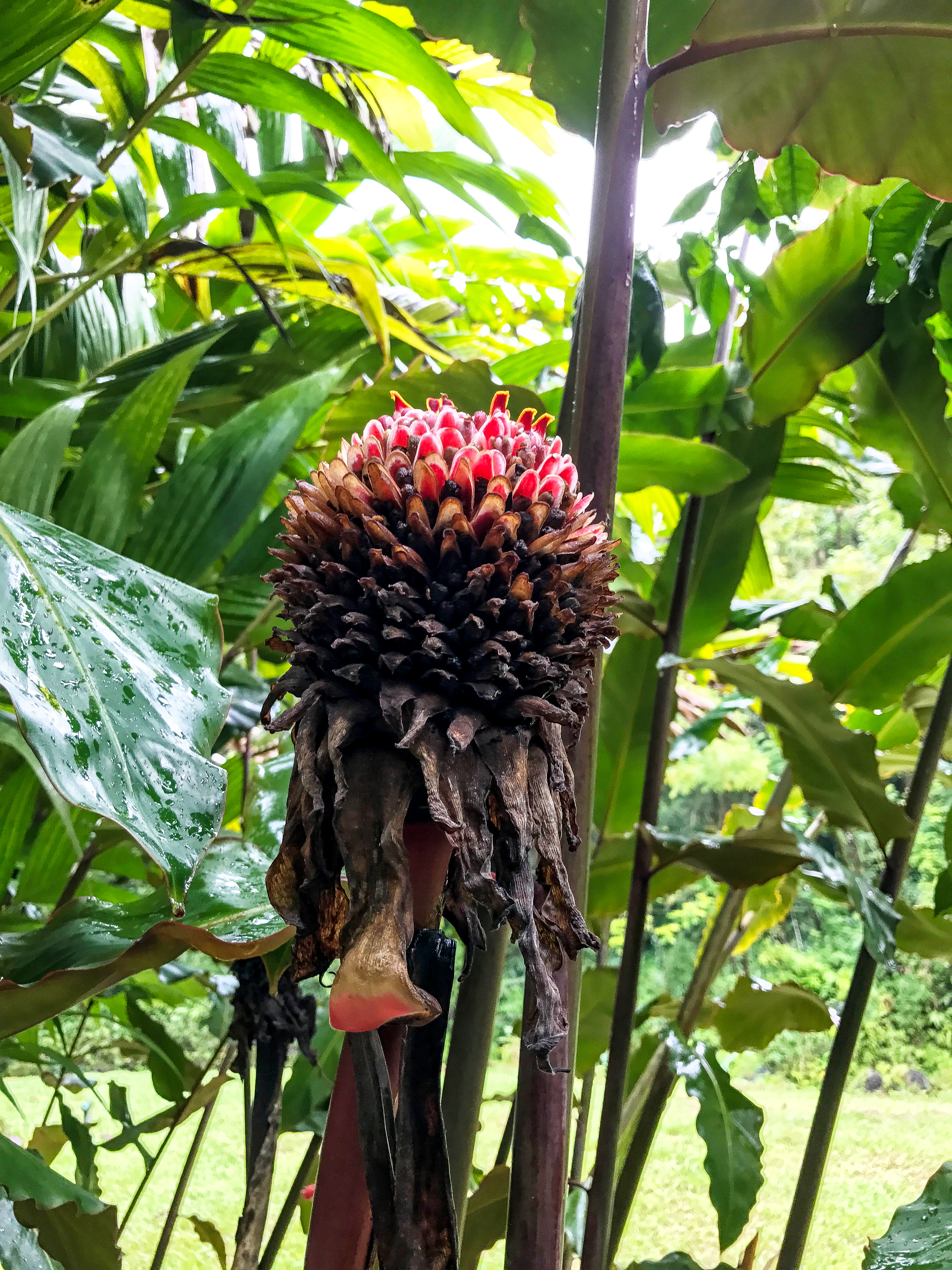
This fruit looks like pineapple, but it is not.
Rainbow-eucalyptus tree
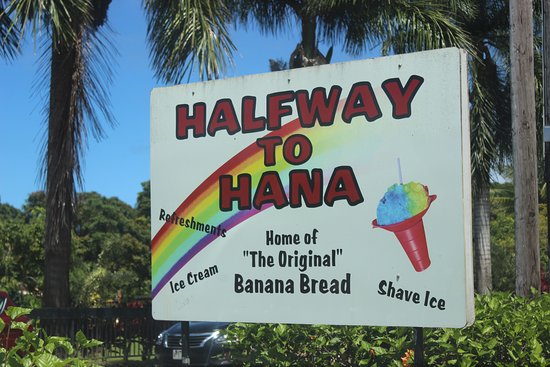
3. Halfway to Hana Stand
They’re known for their banana nut bread, which is delicious. I wouldn’t recommend stopping here if it wasn’t worth the hype. It won’t take long, and you can park on the side of the road.
4. Upper Waikani Falls
There is only room for a couple of cars on the side of the road to see this trio of waterfalls, but they are undoubtedly beautiful and worth stopping at if parking is available.
4. Nahiku Market Place
Two words: fish tacos. This was the perfect place to have lunch. The fish tacos were super fresh and delicious. I wish I had a picture, but I inhaled them before realizing I’d forgotten.
5. Wai’anapanapa State Park
This is one of the places where you absolutely have to stop. It is a beautiful black sand beach with an abundance of volcanic rock. There is also a cave that takes you to the waters, where you can go for a swim. The waves are powerful, so keep that in mind. We spent a solid hour here and honestly wished we could have spent more. As of 2022, you must reserve a time to visit this beach.
Black sand beach and volcanic rocks
There’s a story behind this cave, but I won’t ruin it. Download the app above, and it will tell you all about it
6. Wailua Falls
Another point of interest that you should definitely stop by is that you can park on the side of the road and walk down to the base of the falls. I even saw a few people swimming near the base who seemed comfortable doing so. I don’t know how deep it is, so please be cautious if you go in the water. It’s a beautiful waterfall and probably the largest one on The Road to Hana.
7. Oheo Gulch (7 Sacred Pools)
This was our last stop on The Road to Hana. Unfortunately, due to mudslides, access to these pools was closed during our visit to Maui. We could see some of the falls from the trail, but no one was allowed to swim at the base. Oheo Gulch is located 15 minutes past the town of Hana. Here are significant details to keep in mind. If you go beyond this point in your rental car and if something terrible were to occur, your insurance becomes void! Even your credit card coverage would be voided. The road beyond this point is mostly gravel and dirt; the major rental companies have written this out explicitly in the contract agreement. Many tourists will risk it because some beautiful sites exist beyond Oheo Gulch. But even something as minuscule as a flight tire means you’re alone.
Oheo Gulch
Day Three: Napili Bay
Maui has plenty of amazing beaches where you can spend your day. You can even go beach hopping and taste almost all of them. Since our hotel was at Napili Bay, we decided to spend the day on the beach. This was an excellent spot for snorkeling and seeing marine wildlife. I saw plenty of colorful fish and was lucky enough to see a few sea turtles, one of which was getting by with a missing flipper. You can see the video below.
You can see me snorkeling in the distance with the island of Moloka’i in the background.
If you are in the Lahaina area, I recommend stopping by Gazebo Restaurant for breakfast. Their white chocolate macadamia nut pancakes with homemade whipped cream were terrific, and they were also very generous with their portions.
So, this was Maui for us in a nutshell. We wish we could have stayed longer, but that meant subtracting a day from Kauai. We felt pretty satisfied with our three days here (excluding travel) and thought we accomplished almost everything we wanted to achieve. If you continue reading about Kauai or the Big Island, scroll to the top of this page, and you will find the links. Thank you for reading.
It had been a while since I used an award redemption for a first class ticket on a domestic route. I wasn’t really left with much of a choice since I needed to get home to Chicago and I had the following options if I wanted to book with American Airlines:
Spend $381 for a one-way ticket in economy
Spend $511 for a one-way ticket in first class
Use 25k American Advantage miles to book in economy
Use 12.5k British Airways Avios (transferrable from Chase or AMEX) to book in first class
Given the options above, using British Airways Avios to book first class on this flight was a no-brainer. Had economy tickets been available for redemption using B.A., it would have only cost 7.5k miles. For whatever reason, American didn’t make economy seats available to British Airways. Still, this is a great redemption and one which I’m getting greater than 4 cents per point. As I’ve mentioned before, this is one of the sweet spots when using BA to book on American.
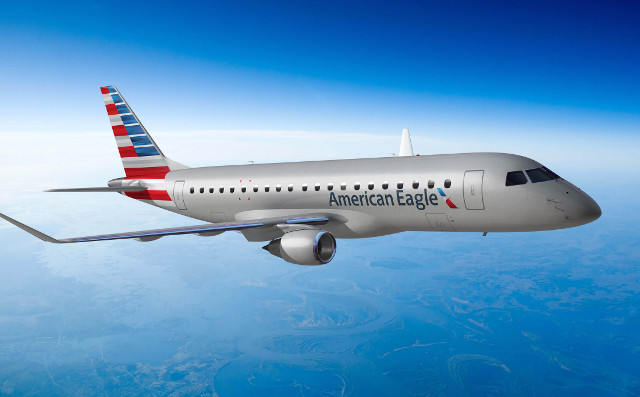
My flight was on an Embraer-175 regional jet operated by Envoy Air, one of American Airlines’ regional partners. Generally speaking, people will roll their eyes when they hear their flight is on a regional jet as opposed to a mainline aircraft. This is especially true when flying in economy. In a surprising twist, I found the first class cabin to be more comfortable in the E-175 relative to a Boeing 737 or Airbus A320/321. One big advantage with the E-175 if you’re flying solo is the left side of the plane in first class is configured with only a single seat. You get to look out the window and not have to worry about asking people to move if you have to use the lavatory. The right side of the plane has the traditional two adjacent seats.
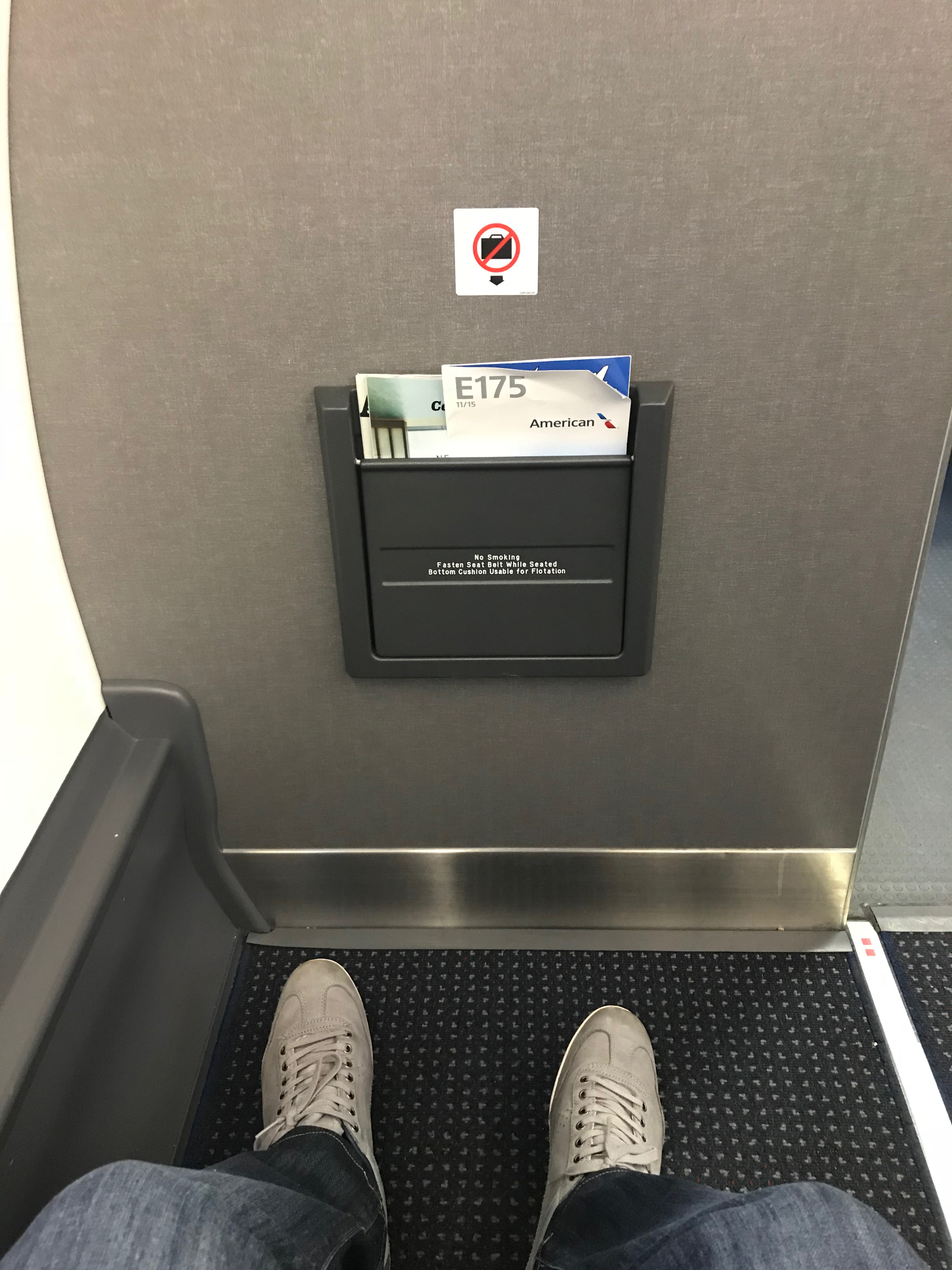
The seat was spacious and comfortable and since I was fortunate enough to have seat 1A, I had more leg room than I needed to stretch out.
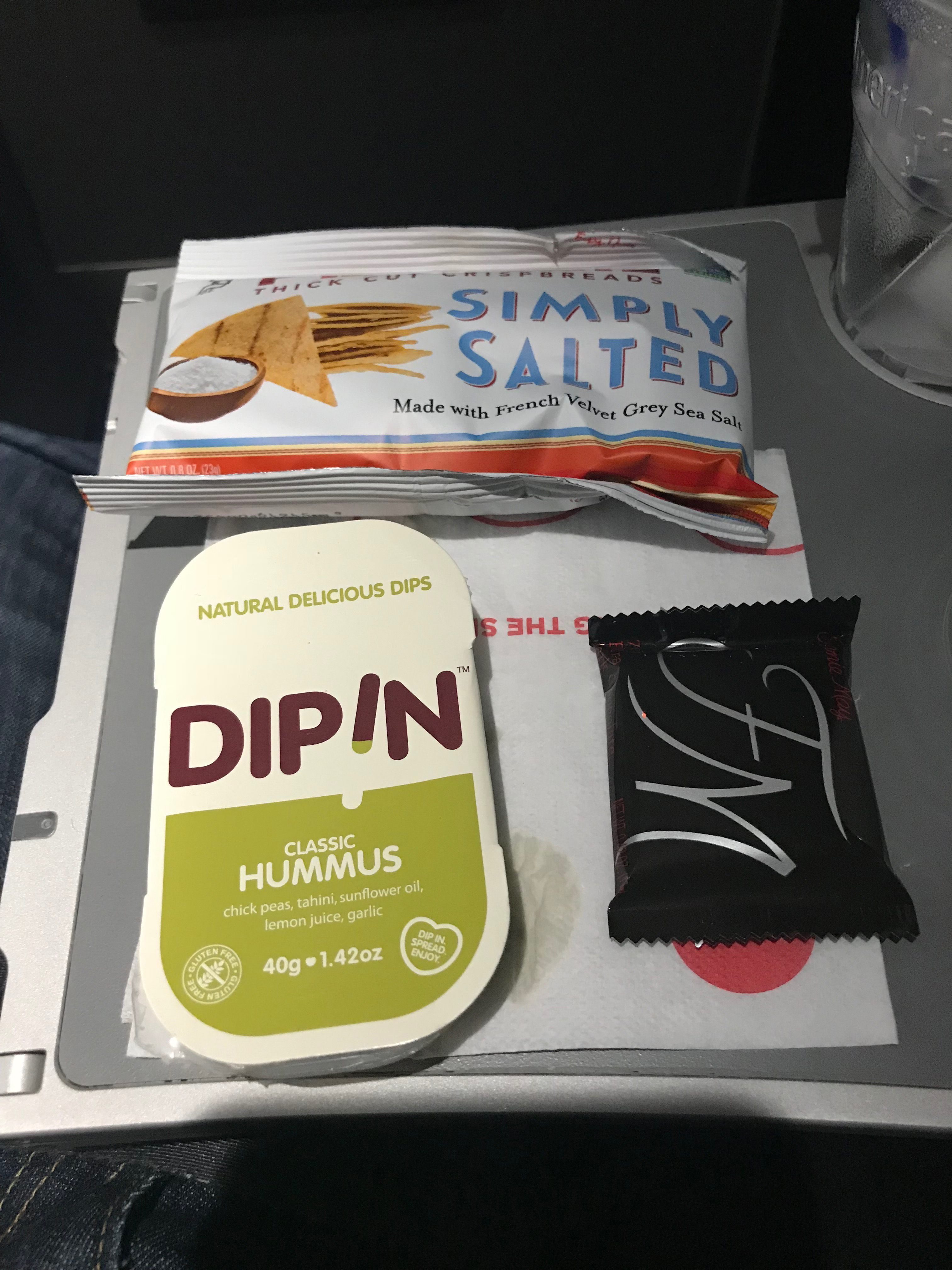
There are only a few routes such as Dallas to Chicago where American Airlines will serve a full dinner on their regional jets for flights under 900 miles. Since we were under that threshold, I was served a snack box with hummus, pita chips, and Fannie May chocolate (Chicago folks are familiar with this).
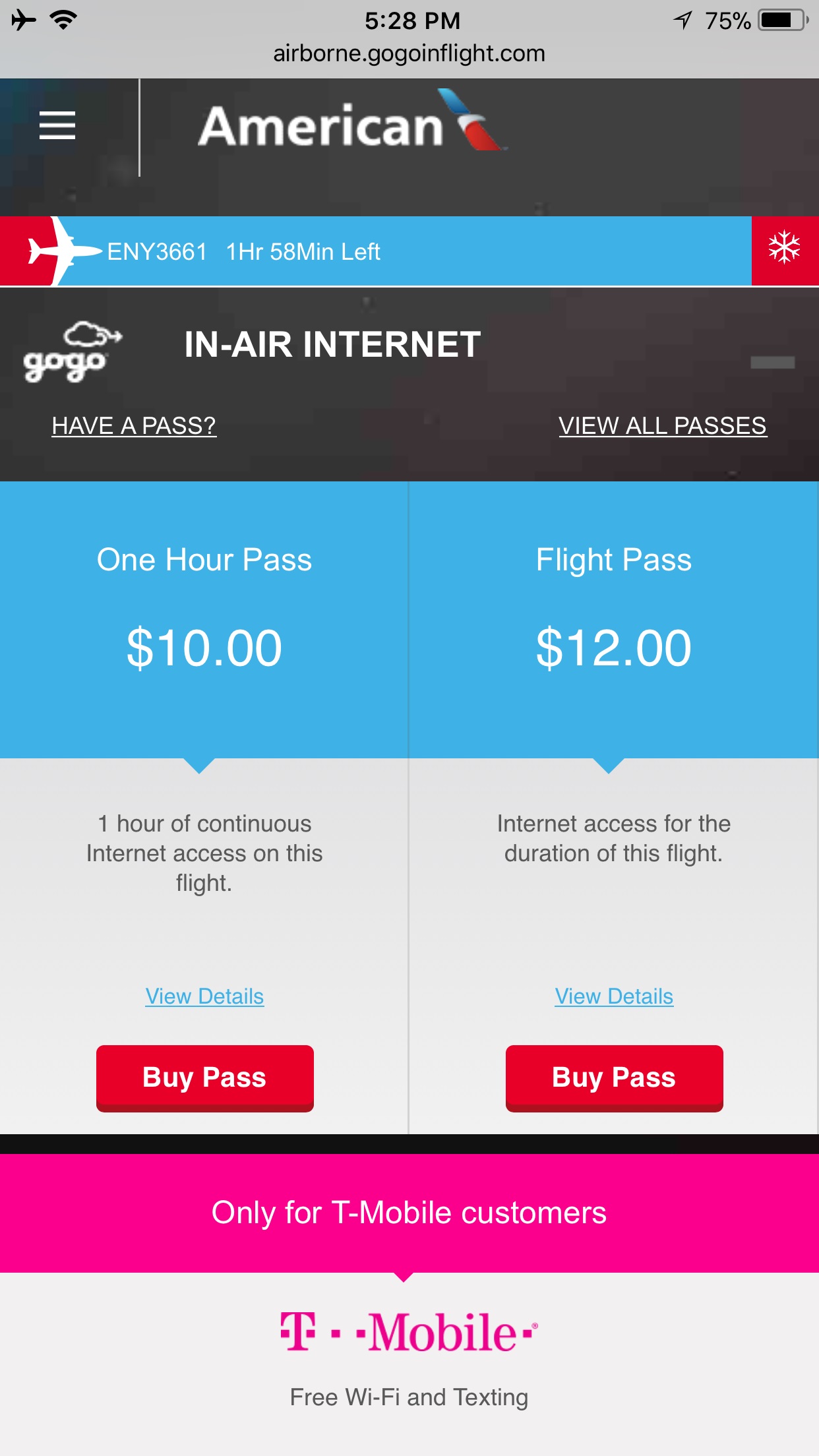
The hummus and pita chips were decent, certainly better than the normal mini-pretzel bag served in economy. The flight attendants came by multiple times during the two-hour flight to ask if I wanted anything to drink so they were certainly attentive. If you’re a T-Mobile customer, don’t forget that you get an hour of free wifi on American Airlines when flying within the U.S. and Canada. You are also able to text throughout the flight for free by turning on your wifi calling.
American Airlines serves 3-course meals on all first-class flights over 900 miles. They have certain routes under 900 miles where they will still serve a 3-course meal in first class.
If you find yourself booking between Chicago and any of the cities above, you would get enhanced value with the 12.5k Avios redemption for first class because dinner is included. Since BA has a distance based award chart, you can travel as far 1,150 miles from your departure city to get the 12.5k redemption in first class.
One of my friends asked me a pretty good question regarding Ultimate Rewards point transfers into partner programs: Which one should he avoid? While I’ve gone through many of the transfer partners that provide excellent value, I haven’t really addressed the transfer partners or scenarios that provide poor value and thus should be avoided. There are also certain situations where even a good frequent flyer program won’t provide good value if you transfer Ultimate Rewards points into the program. At the very least, you want to get a value of 1.25 cents per point if you’re using the Chase Sapphire Preferred (CSP) and 1.5 cents per point if you’re using the Chase Sapphire Reserve (CSR). How did I arrive at those numbers? If you book through Chase’s UR portal, that’s how much value you would get. For example, by booking a flight using the Chase Ultimate Rewards portal, a ticket worth $150 will require 10,000 UR points if you have the CSR. $150/10,000 = 1.5 cents per points. That same ticket would require 12,000 UR points if you have the CSP $150/12,000 = 1.25 cents per point. Here is what you should do to ensure you get the best value using your points: Make a comparison of the number of UR points required if you were to book through the Chase portal, the number of points required if you were to book through the hotel or frequent flyer program, and the dollar amount required if you were to pay with cash. For certain programs, the answer will be obvious and you will get a clear idea of what not to do. For others, there might be a tie and you won’t come out on the losing end either way. Let’s take a look at some transfer partners and see what type of value they might provide…
IHG
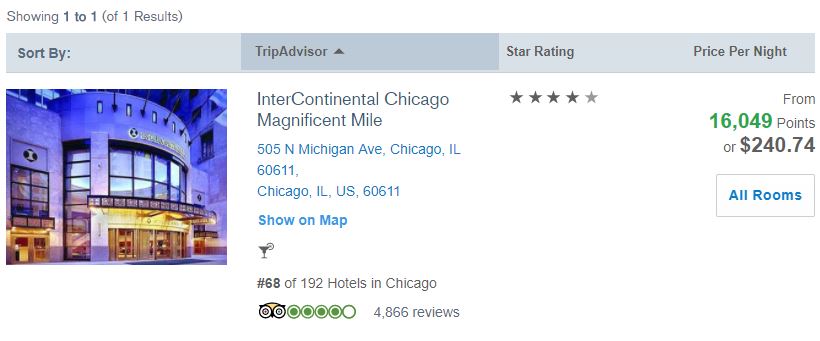
I’m going to use IHG hotels, the least valuable of all transfer partners in my opinion, as the first example. Ultimate Rewards points can be transferred into IHG on a 1:1 transfer ratio in increments of 1,000. Among the brands that are under the IHG umbrella are Holiday Inn, Intercontinental, Indigo, Kimpton, and Candlewood Suites. Let’s say you wanted to stay in Downtown Chicago between June 29th and July 1st at the Intercontinental Hotel on Michigan Avenue….
This would cost $233 a night. If you were to book as a CSR card holder straight through the Ultimate Rewards portal…..
A good redemption of just over 16k points a night. This is a value of 1.5 cents per point and the litmus test you should use if you’re a CSR card holder booking through Chase. Last but not least, let’s see how many points you would have to transfer into IHG’s program from Chase if you were to use their loyalty program to book this hotel:
A ridiculous 50,000 points per night, meaning you’d have to transfer a total of 150k UR points for 3 nights. If you’re reading this, please don’t ever transfer 150,000 Ultimate Rewards points to make a booking like this in which you’re getting absolutely ripped off. If you do the math, $233/50,000 = 0.4 cents per point. You read that right. You’re getting less than a penny per point value if you transfer 150,000 UR points to book 3 nights at the Intercontinental Chicago on Michigan Avenue when the cash price is $233 per night. It’s unfortunate but these types of redemptions are the norm when using IHG points to book hotel stays. This particular redemption is so bad, you would be better off exchanging 69,900 UR points for $699 cash and then using the cash to book the 3 nights at the hotel. For this scenario, we would book straight through the Chase portal at just over 16k points per night. The only scenario you should consider transferring Ultimate Rewards points into IHG is if you need to top off your account and you’re just 5k or fewer points away from getting an award night at a higher redemption level. For example, if you’re at 29k IHG points and 30k would get you an award night, go ahead and transfer that 1k from Chase. The more you need to transfer, the more you’re losing value.
Marriott
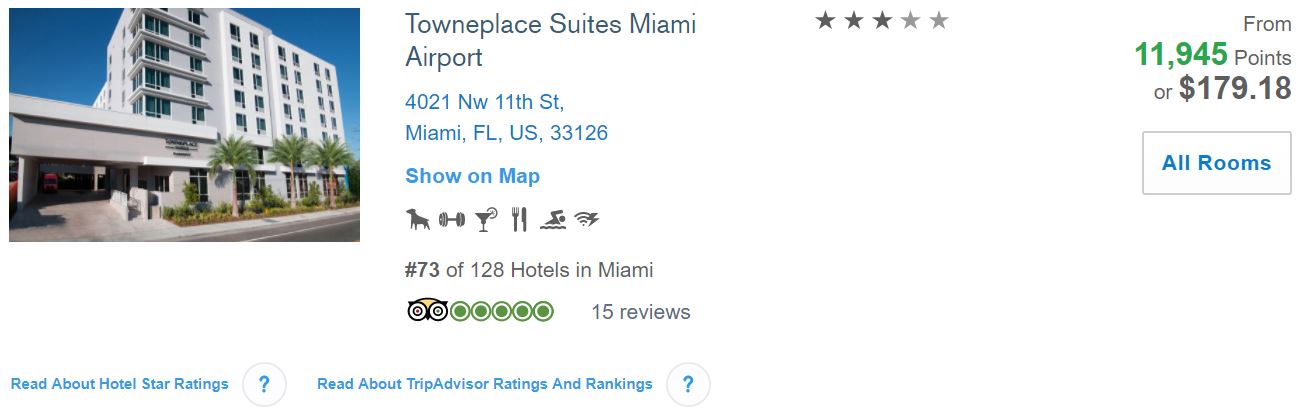
Another transfer partner which provides terrible value when transferring points from Chase Ultimate Rewards is Marriott. Ultimate Rewards points can be transferred into Marriott on a 1:1 ratio in increments of 1,000. Don’t get me wrong, they have a very nice portfolio of properties which include upscale brands such J.W. Marriott and Ritz Carlton. But when you’re redeeming points, it’s all about getting maximum value and getting the most for your redemptions. Let’s say you wanted to stay in the Miami area from March 29th-March 31st in a location close to the airport:
The TownPlace Suites would cost $175/night or a ridiculous 50k Marriott points per night for a total of 150k points. This redemption is even worse than the one we saw above. Please do not, and I repeat do not transfer 150,000 UR points for this type of redemption. $175/50,000 = 0.35 cents per point redemption (lol). To put it into perspective, 60k UR points when transferred into United can get you a round-trip ticket to Europe. 60k UR points when transferred into FlyingBlue can get you two round-trip tickets to Hawaii. If you were to book straight from the Chase portal…..
A far more palatable redemption of nearly 12k per night, giving you the baseline value of 1.5 cents per point if you were a CSR credit card holder. If you carried the CSP instead, your redemption would require approximately 14,300 points per night for a value of 1.2 cents per point. In this scenario just like the one above, booking directly from the Chase Ultimate Rewards portal rather than transferring points into Marriott is the way to go.
Hyatt
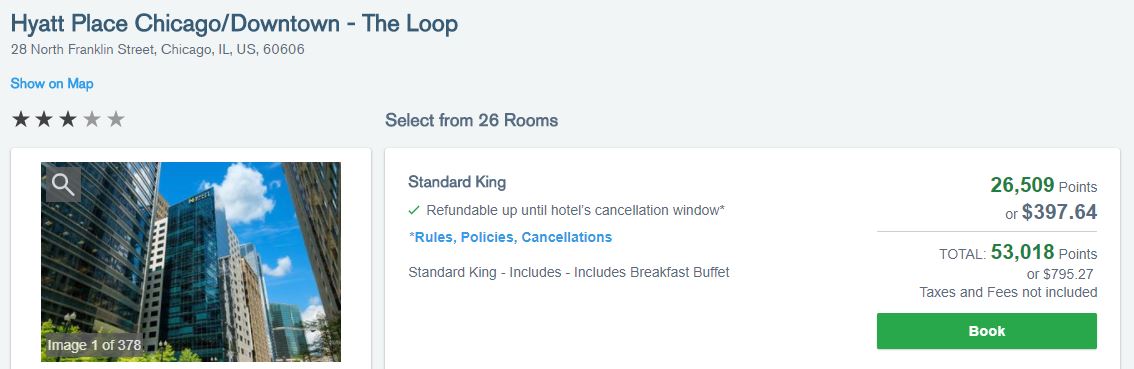
On the opposite end of the spectrum, I’m going to use Hyatt, one of my favorite transfer partners and one that provides excellent value as an example. Let’s say you wanted to make a booking at the Hyatt Place in Downtown Chicago between June 29th-July 1st. Here is the cash price you would have to pay per night: At the very minimum, $531 per night (!!).
If you were to book straight through the Chase Portal as a Chase Sapphire Reserve card holder:
At the very minimum, you’re spending 26,509 points per night. This gives you a redemption rate of 1.5 cents per point, the value you would get when booking through Chase as a CSR card holder. And finally, let’s see how many Hyatt Points would be required to make this booking…..
We have our clear winner. For 12k Hyatt points per night, you can find yourself in a room that would cost you $531 per night were you to pay with cash. If you do the math, $531/12,000 = 4.4 cents per point. This would qualify as a fantastic redemption and one where it would be a no-brainer to transfer your points from Chase UR into Hyatt. Prior to transferring into Hyatt, make yourself a World of Hyatt account on their website. This is free and you will get an account number which you will need to link with Chase in their Ultimate Rewards Transfer Portal. Below is just a simple schematic showing you where to go to transfer UR points.
When you click on your point balance, this will be the first page you see. Bring the cursor to “use points” and click on “transfer to travel partners”
Click on World Of Hyatt and transfer the total number of points you would need. Since Hyatt requires 12k points per night for our redemption and we searched for 3 nights, we would transfer a total of 36k UR points into Hyatt. The cash price for those 3 nights would have been nearly $1,600. The only downside of Hyatt is it’s relatively small footprint. They only have about 750 properties worldwide so finding a location where you can take advantage of this value can be challenging, particularly if you’re looking at international destinations.
Airline Transfers
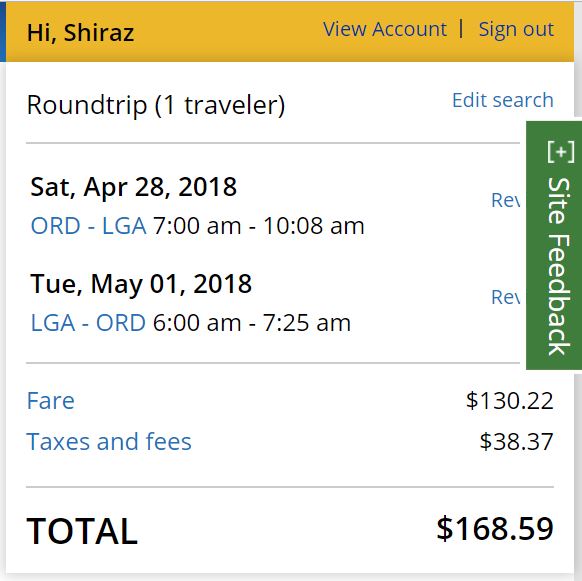
Generally speaking, transferring to the frequent flyer program of Chase’s airline partners provides very good to excellent value. A prime example of this would be transferring to British Airways Avios for domestic flights on American Airlines or transferring to FlyingBlue, the frequent flyer program of KLM/Air France for a round-trip ticket to Hawaii on Delta Airlines. However, there are certain situations where you’re better off booking a ticket by redeeming UR points through the Chase portal or using cash rather than transferring the points into a frequent flyer account to book a ticket. For this example, I’ll use a round-trip ticket from Chicago (ORD) to New York City (LGA) from April 28th-May 1st.
Pretty good price for a round-trip ticket between Chicago and NYC. Keep in mind, these are economy seats, not basic economy which can be had for $129 round-trip but with limitations such as no carry-on bags and no advanced seat assignments. Now if you wanted to use United miles for this trip…..
25k miles for a round-trip itinerary. How much value would you get if you transferred 25k UR points into United? $169/25,000 = 0.67 cents per point. This would be a terrible way to use UR points since you’re getting less than a cent worth of value per point. If you were to hold a Chase Sapphire Reserve and you booked through the Chase Ultimate Rewards portal, your redemption would require…..
Just 11,240 UR points for a round-trip ticket. You would save yourself nearly 14,000 points, or enough for possibly another round-trip ticket by using Chase’s portal versus transferring into United. If you had the Chase Sapphire Preferred, your redemption would be about 13,500 UR points, a significant number of UR points saved.
Recap
Prior to transferring into a program, evaluate whether you’re getting at least 1.5 cents per point if you’re a Chase Sapphire Reserve holder or 1.25 cents per point if you’re a Chase Sapphire Preferred holder. This is done by taking the cash price/the points required by the loyalty program.This should always be your litmus test prior to transferring. If you’re value matches or exceeds those numbers, transfer the points into the loyalty program. If not, then book directly through the Chase portal. The wildcard is if you happen to have status with a hotel chain. From my experience, hotels won’t extend status benefits if you don’t make the reservation through their own website or toll-free number. What what I do? I would still forego the benefits for IHG and Marriott if it means I’m going to get killed on the redemption when transferring UR points into either of those two brands. A free breakfast or room upgrade is not worth sacrificing a round-trip ticket to Europe, South America, or two round-trip tickets to Hawaii. If you want to read about the transfer partners that can provide tremendous value, you can read that here and here.
For all you last-minute travelers/procrastinators, there are many frequent flier programs that penalize travelers if they book an award redemption close to the departure date. For example, if you book a ticket using miles on either American or United and your departure date is less than 21 days away, you will have to pay a $75 ticketing fee. Sometimes this fee will wipe out the value of a redemption and on the rare occasion, it will be more than the entire cost of the ticket were you to pay in cash. Delta doesn’t charge a ticketing fee but will charge additional 5k points per one way ticket (and even more for business class). Alaska Airlines does not charge a close-in ticketing fee and neither does JetBlue. Southwest does not charge a ticketing fee but the number of miles required will increase significantly. If you have status with an airline, that might be enough to skirt around the close-in booking fees. There are a couple of ways to bypass the close-in fee and I’ll demonstrate how.
Using British Airways to Book on American Airlines
I talked about the benefits of using British Airways Avios to book on American Airlines here.
One valuable aspect of British Airways Avios is the ability to redeem it on American Airlines as close to a few hours prior to departure.
British Airways has a distance based chart so certain redemptions can be made using fewer miles.
If economy saver award tickets are available on AA.com, they will usually be accessible through British Airways.
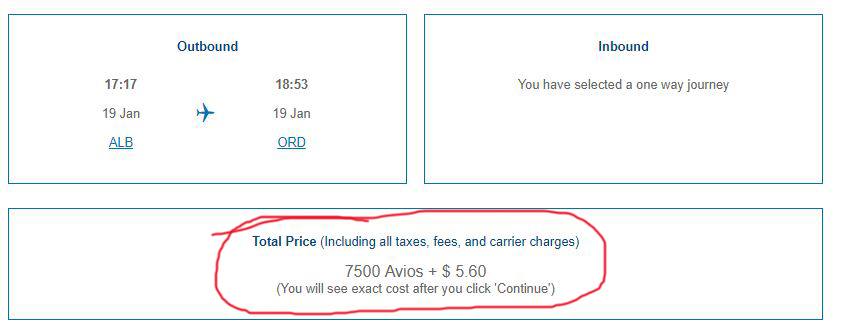
Here is an example of the exact same flight from Albany, NY to Chicago (ORD) and the costs associated with the two different programs.
If I were to book this one-way ticket using AA miles, the cost is $12,500 miles plus a $75 ticketing fee (the mandatory 9/11 security fee is $5.60 making it $80.60). Now let’s see the price using British Airways Avios…..
No $75 ticketing fee and only 7.5k Avios as opposed to the 12.5k AA miles that would have been required. It is important to note that if you have a connecting flight, it will cost double the Avios for a trip since BA charges 7.5k per segment. I’d still rather dish out 15k Avios rather than 12.5k AA miles with the $75 ticketing fee tacked on.
Using Singapore Krisflyer Miles to Book on United
If I want to book a one-way flight to Chicago for this Friday using United miles, it’s 12.5k miles + $80.60
Similar to AA’s policy, United also charges a $75 ticketing fee for flights booked within 21 days of departure.
Singapore Airlines allows you to book via United up until 24 hours prior to departure if saver award redemptions are available on United.
Unlike the American Airlines example, this ticket cannot be booked online. You need to call Singapore Airlines reservations and they will book it for you. Just make sure you have a Singapore Krisflyer frequent flier account set up prior to calling.
Both British Airways and Singapore Airlines are transfer partners of Chase Ultimate Rewards, American Express Membership Points, and Starwood Preferred Guest. Singapore Airlines is also a transfer partner of Citi ThankYou points. If you are booking on United Airlines via Singapore miles, DO NOT transfer any points into Singapore Airlines until you have confirmed seat availability for your travel dates on United. Transfers into an airline’s frequent flier program are not reversible.
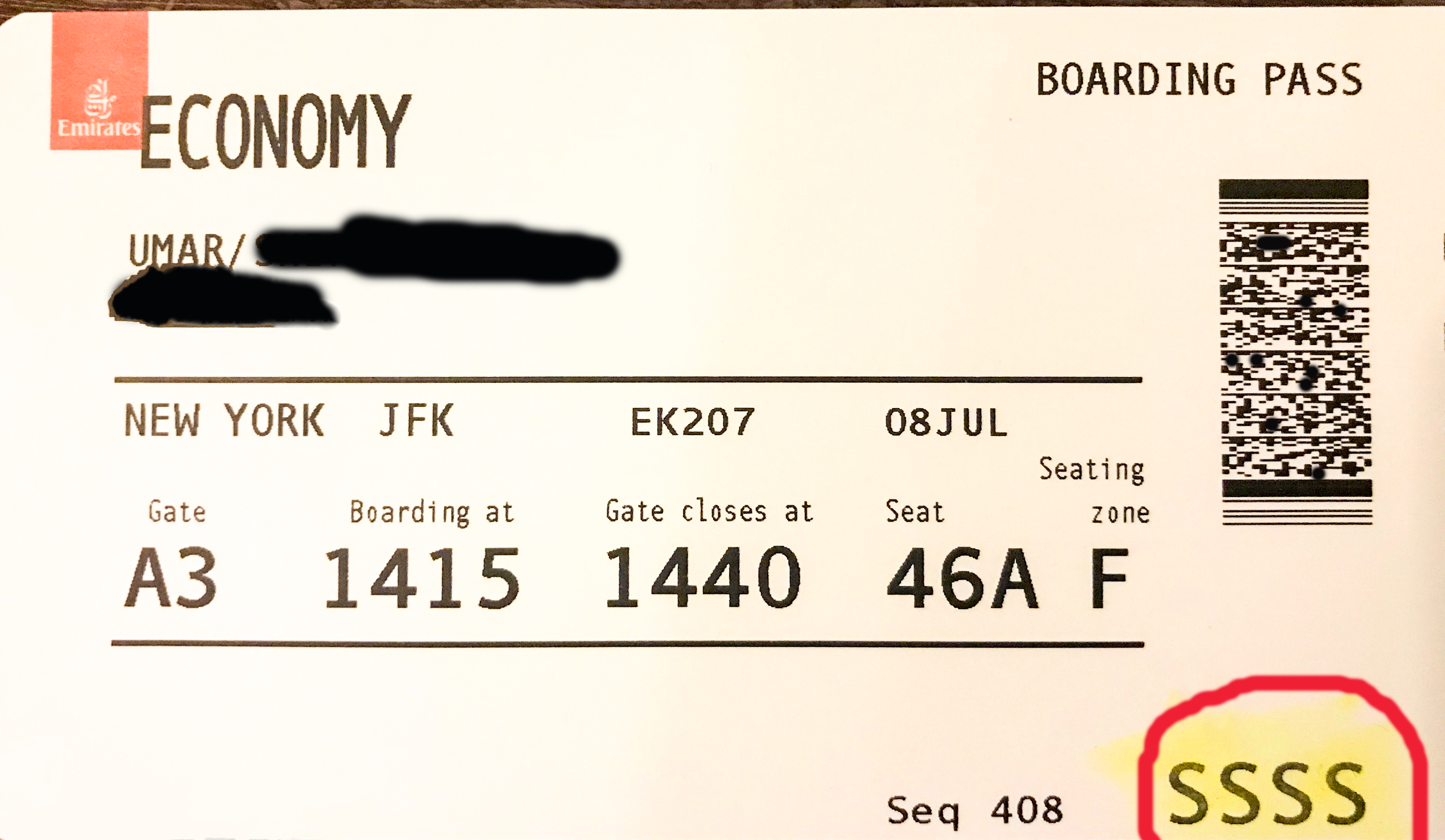
Traveling using frequent flier miles and points certainly has many advantages, such as making business class travel attainable for the casual traveler, and regardless of the ticket class you purchased, you’re saving money compared to booking with cash. However, there are instances where you might book using points from one airline in getting to your destination and use points for a different airline during your return. As far as I can remember, I haven’t ever used miles for the same airline going and coming back. For example, I’ve flown on United miles going to Europe while flying on American miles coming back multiple times. I minimized the miles expenditure by planning my itinerary this way. The only issue? Booking international tickets one way will increase the likelihood of getting the dreaded SSSS on your boarding pass. SSSS stands for secondary selective screening selection. For me, thebiggest giveaway that I’ll end up with SSSS on my boarding pass on the return trip is when I’m unable to check in for my flight 24 hours before takeoff. The mobile app will have some variation of the same message, “check-in unavailable,” or I’ll get an error message. For a traveler who is designated SSSS, the only way to check in is at the ticketing counter at the airport. When you receive your boarding pass at the airport, the capitalized SSSS will be highlighted by the ticketing agent. Once you are in line and the customs officer scans your boarding pass, a red light will flash, or there will be a beeping sound, alerting the agent of your SSSS designation. It’s also important to note that other factors may also be in play. Your name (someone with the same name or similar may be on the watch list), the region you are traveling to and from, and your citizenship status could all play a role.
My SSSS designation from Dubai to NYC last summer
Every country differs in its protocol for conducting secondary screening. In Reykjavik, Iceland, I was taken to a separate room, and all the contents of my carry-on bag were removed. All electronics were swabbed and scanned, and the procedure was completed in 10 minutes. The personnel were friendly and explained what they would do in advance. In San Jose, Costa Rica, the security personnel gave me a pat down and searched my bag right at the gate. I hated this experience since almost everyone on my Southwest flight headed to Baltimore was already in the waiting area. 170 pairs of eyeballs glaring at me as one agent thoroughly searched and swabbed my backpack and all its contents while the other gave me a thorough pat down.
There are also instances where you might get SSSS on your boarding pass when traveling domestically. This occurred in 2015 when my wife and I returned from Istanbul, Turkey. Istanbul was deemed a high-risk travel area then, and anyone returning home from that area was getting SSSS on their boarding pass for the ensuing months. Upon returning, my wife and I had a domestic flight from Chicago (ORD) to NYC (LGA), a flight we had taken countless times. This time, we both received the SSSS on our boarding pass, much to our surprise. The TSA officer asked if we had been anywhere recently. I told him we were in Istanbul the prior week, and he explained that everyone returning from that region was being selected for secondary screening. He wasn’t wrong; even people with TSA Pre-check and Global Entry were flagged from secondary screening. In this instance, we were both given thorough pat downs (more like a massage) and had every electronic device swabbed and scanned. Our laptops had to be taken out and powered on. Even The Points Guy (Brian Kelly) had a similar experience upon returning from Turkey around that same time.If you get an SSSS on your ticket, be cooperative and understand that the security personnel are just following protocol and doing their jobs. It will make the process easier and quicker, and you’ll be on your way a lot sooner.
Over the last 10 days, I was fortunate to transit through two airports that feature a Centurion Lounge. You can read about the Centurion Lounge at Miami International Airport right here and the Centurion Lounge at Buenos Aires Ezeiza International Airport right here.
Prior to my flight to Buenos Aires, Argentina, I had some free time at Miami International Airport. I had heard many great things about the Centurion Lounge at MIA, so as an AMEX Platinum cardholder, I figured I might as well give it a visit.
This lounge can be found on the fourth floor of the north terminal near gate D12. If you have been to the Centurion Lounge in Dallas, this one offers some of the same services and amenities. It’s roomy, and there is plenty of space available. First thing I did (like I do at every lounge), I surveyed the food offerings. Since many people were in front and behind me, I didn’t want to act like a first timer and take pics (I’m really sorry). But the offerings were lamb, Indian-style chickpeas or chole, salad, brown rice, and apple crumble for the dessert. I sampled everything but the lamb and found everything to be delicious. Again, I wish I took pictures and perhaps next time I won’t care whether people are around me. The espresso machine had various offerings such as latte, cappuccino, espresso, etc.
If you are more of a tea person, they also have you covered.
As I mentioned above, there is plenty of seating available. Many of them give you access to USB and plug outlets. The cushioned seats are very comfortable if you must stay there for a few hours.
If you want to sit near a window and airplane watch, there is there is plenty of room for that.
Shower availability is convenient for those who have arrived from a far away destination and want to freshen up before a connection.
You can even get a manicure and pedicure done in the lounge.
I love the family room aspect of the lounge. Keeps the kids busy while the adults can adult. I wish more lounges would do this.
This was my one major issue with this lounge. The internet speed is unacceptable for a brand that touts itself as business-friendly. Those are some dial-up caliber speeds that I encountered, and in my two hours at the lounge, the speed only got worse.
Final Thoughts
Overall, I’d rate this lounge a 4/5. It has just about all the comfort, food offerings, and amenities needed in a lounge. It’s also one of the few designed with kids in mind. If the slow Wi-Fi connectivity is addressed, this lounge would be a perfect 5.
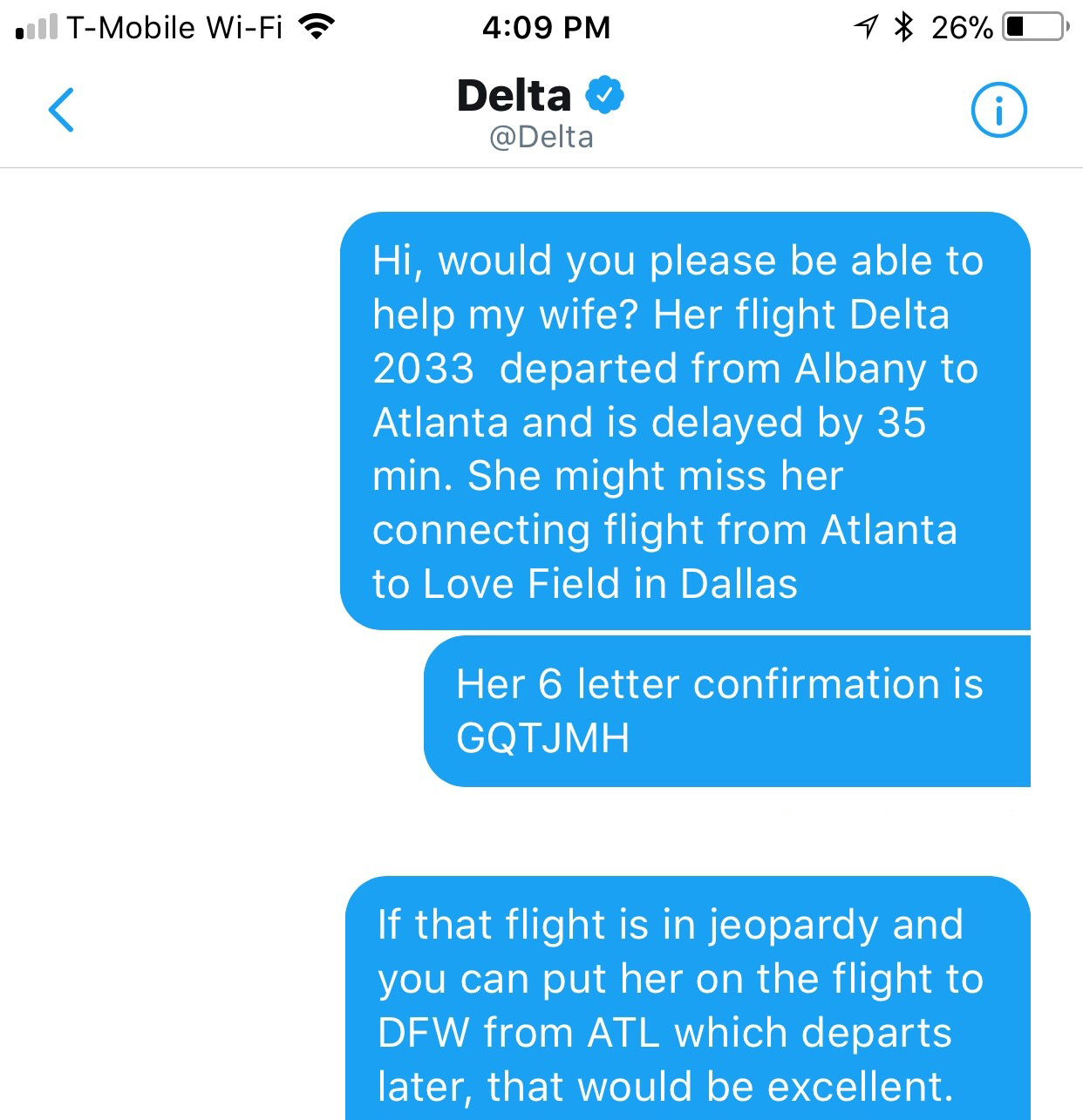
If you find yourself in a situation where your flight is delayed, cancelled, or your connecting flight is in jeopardy due to a delay, try using Twitter for assistance. A few months back, my wife’s flight from Albany to Atlanta was delayed by 35 minutes. Normally this is nothing more than a minor inconvenience. However, since her flight had a tight connection window of only 50 minutes to continue on from Atlanta to Dallas (Love Field), she was more than likely going to miss that flight. I was flying from NYC- Love Field and we booked so that we would land around the same time. Unfortunately, my wife’s connecting flight was the last flight from Atlanta to Love Field. Luckily for her, there was still a later flight from Atlanta to Dallas-Fort Worth and I would just drive over from Love Field and pick her up. I tweeted Delta and asked if they can put her on that flight. Delta responded back on Twitter and confirmed that they saved her a seat on that flight.
That simple. This saved me the hassle of being put on hold and pressing God knows how many numbers to find someone that would help. Kudos to Delta for their fast response and helping us avoid what could have been a pretty ugly experience. So if you find yourself in a similar situation and need a contingency plan ASAP, social media might end up working better than the old fashioned customer service number. Just about every U.S. airline has a dedicated social media team for this purpose and even the airline that was slow to embrace it (Spirit Airlines) has finally embraced social media to assist customers.

 Like the Polaris Lounge, this lounge also had bedrooms available upon request. My wife wanted to take a nap, so they gladly unlocked a room for her and provided her with a blanket.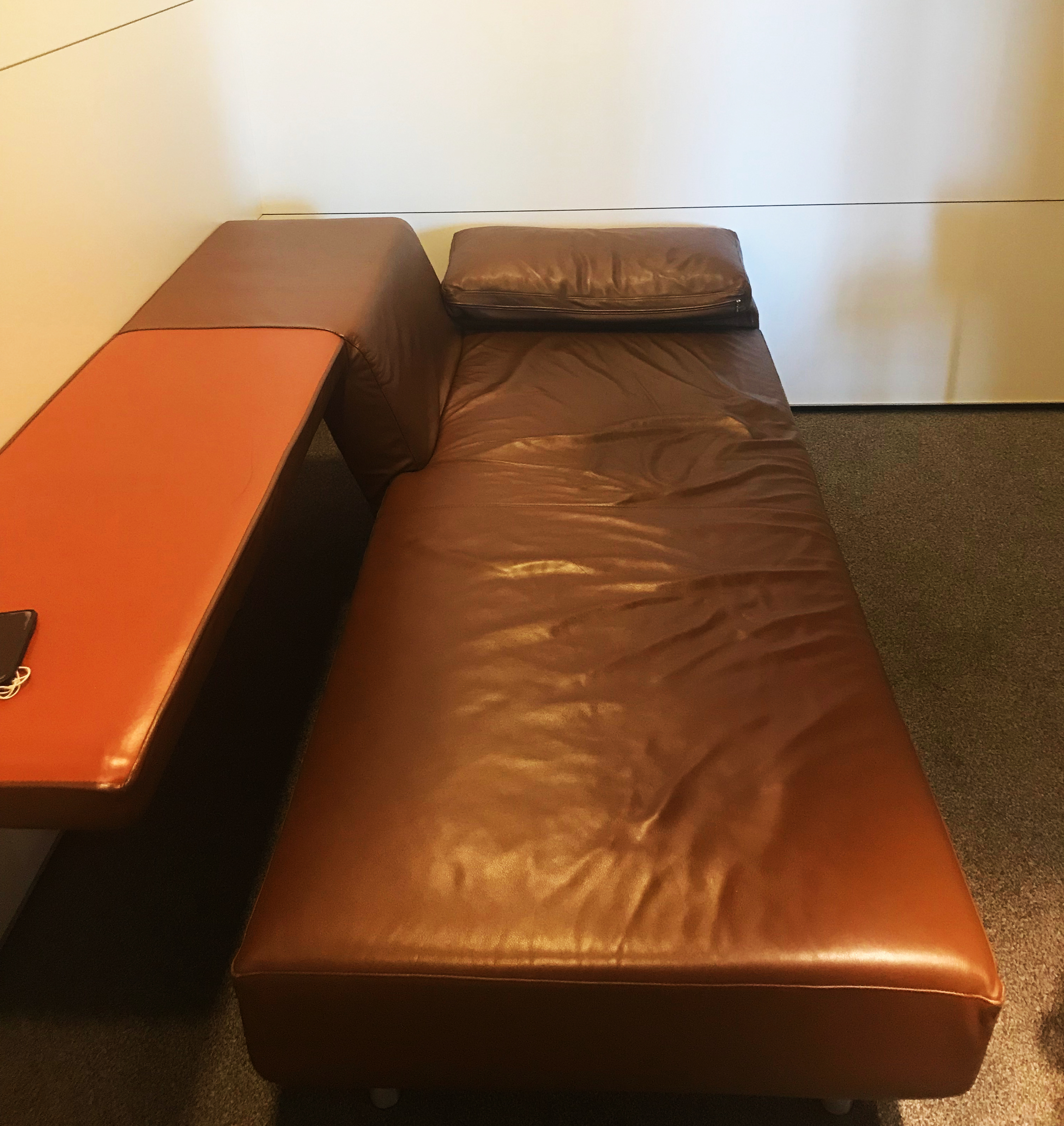














































 Miles for places