I decided to give Turo a shot during my recent trip to The Big Island of Hawaii since car rental prices for a five-day trip were ridiculously expensive. When I entered my travel dates on Kayak, the cheapest rate I found was $568 for a Ford Fiesta. Having a car on The Big Island is almost necessary if you don’t plan on spending your entire time on a resort because the island is bigger than all the other Hawaiian islands combined. If you’re staying near one of their two major towns, Kona or Hilo, on opposite sides of the island, the driving time to get from one to another is about two hours. Hawaii Volcanoes National Park is closer to Hilo and a two-hour drive from Kona without stopping. The time will increase significantly if you stop at viewpoints and other points of interest along the way (you really should). You can also take the mass transit bus, but it’s more than 3 hours each way, and you’ll regret not being able to stop at places along the way. But man, $568 for a Ford Fiesta. I was looking for a compact car with great gas mileage and comfortably fit an infant car seat, such as a Honda Civic or Toyota Corolla. Those types of cars were going for $615 for five days, and since my goal was not to offset my savings on my flight (I redeemed AA miles) by splurging on a car rental, I turned to Turo and saw what they offered.
Booking Process
Turo markets itself as the Airbnb for cars. Regular people make their cars available to rent, and you can often get luxury cars or convertibles for the price of a standard car at a rental company like Hertz. I found a compact car (Dodge Dart) going for $280 for 5 days on Turo, and the car owner had a near-perfect rating with over 30 reviews. I booked the Dodge Dart, which included 500 miles (an extra 45 cents/mile if I went over), and bought their standard insurance coverage for $10 daily. Even after adding that to the rental cost, it was still significantly cheaper than the standard car rental agencies offered. It is important to note that credit card companies will not cover damage on car rentals from Turo. If you decide not to purchase any of Turo’s three tiers of collision coverage, you will be liable for any damages.
Picking Up The Car
Before departing DFW for our flight to Kona, I gave the car owner our flight info, and he responded immediately with directions on how to get the car. Once we landed, he sent me a video that showed me where the car was parked in the airport parking lot and how to walk over to the parking lot. It was right across the street from the baggage claim with the keys in the glove compartment. No lines, no waiting, no hassle. Since he took a ticket to get the car into the parking lot, he told me to pay the total amount upon exiting and keep the receipt. That fee would be reimbursed. He also gave me his cellphone number and told me to give him a call in case any issues would arise.
The Dodge Dart I rented was big enough to fit two suitcases in the trunk and had plenty of space to install the base of the car seat and the car seat itself. Gas was $3.62/gallon for regular, so having a fuel-efficient car was optimal since I knew I’d be driving at least 450 miles in the 5 days we were there. I drove 494 miles, most of that being the round-trip from Waikoloa to Hawaii Volcanoes National Park. Everything worked as it should, and the AC was very cool and needed for the mid-80s temperatures.
Returning The Car
We were set to return our car to the airport parking lot by 8 p.m., but our flight was closer to midnight. Our car owner (Anthony) said it wouldn’t be a problem if we returned the car at 10:15 pm so we would not have to spend close to four hours at the airport. I got to the airport parking lot, pulled out a ticket, and parked near the same area where I picked it up. I took a picture of the car and texted it to show him where it was parked. This was basically the “checkout” process. The picking up and dropping off process may differ with every car owner. I was very happy with my experience renting from Turo as it saved me both time and money. Turo can be a great alternative to a traditional car rental, especially if you’re going to a destination with high demand.
Big Island was the fourth Hawaiian Island my wife and I visited. This trip was also our first long-distance trip with our 5-month-old son, so there was a bit of uncertainty on how he would handle being in a plane for 8+ hours. Fortunately, he was well-behaved, which gave us a ton of confidence in making future trips with him. During this trip to Hawaii, we encountered a day of heavy rain and another day when the eastern half of the island had rain, so we could not see specific points of interest. This forced us to cancel several sights we planned to visit. However, there was a positive trade-off of being “stuck” at the resort, and you will see why as you keep reading.
Day One: Arrival
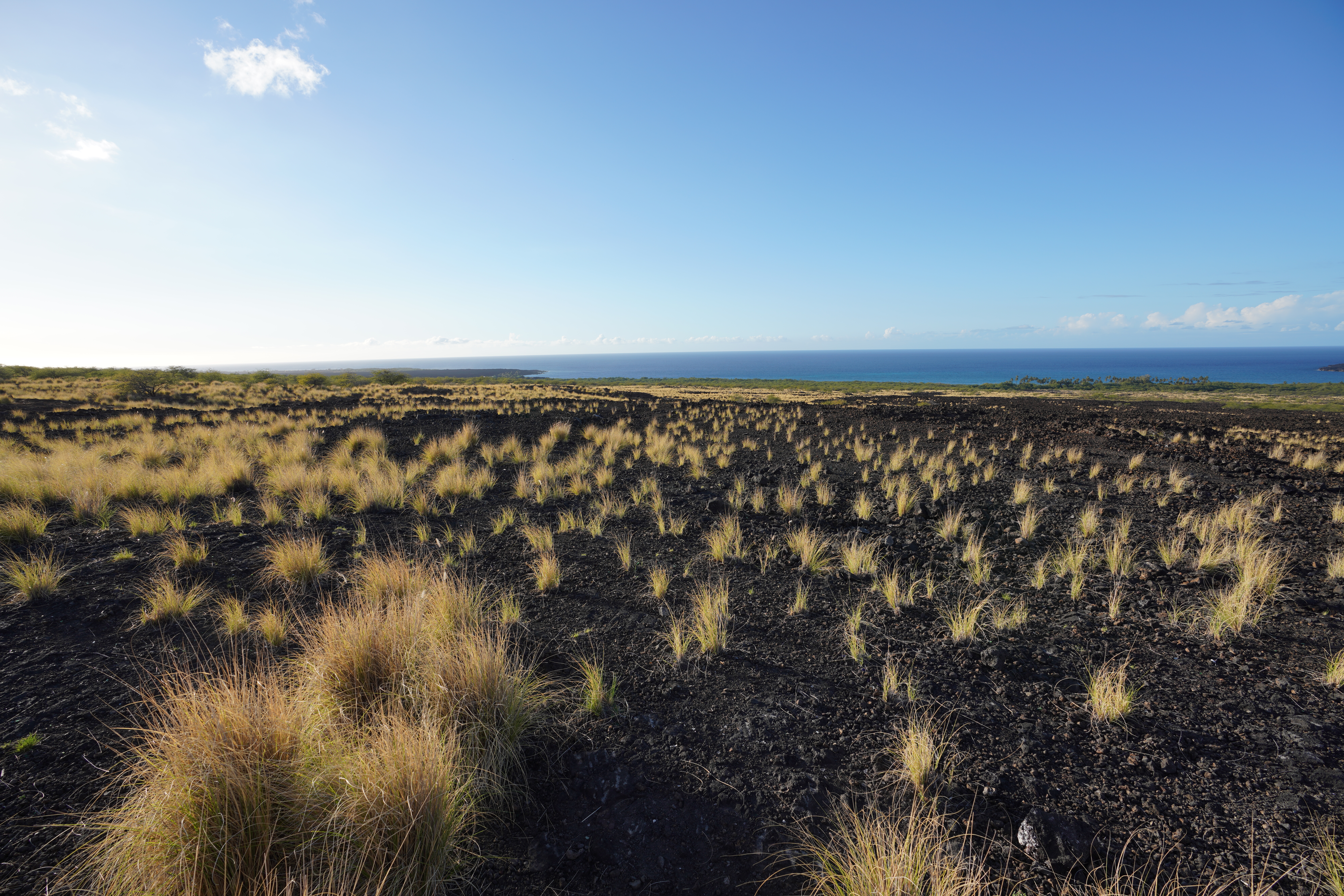
We arrived at Kona International Airport on the Big Island around 3pm. We rented a car from Turo (you can read my review on Turo and our experience here), collected our luggage, and walked to the airport parking lot, where our car was already waiting for us with the keys inside. The distance to Hilton Waikoloa Village from the airport was about 20 miles and a 30-minute drive. On the way to the resort, we stopped at a lookout point to take in the scenery. If you see a lookout point anywhere, just stop your car and enjoy the views.
Vegetation growth on volcanic rock at a lookout point. The Big Island is home to multiple volcanoes, some of which are still active.
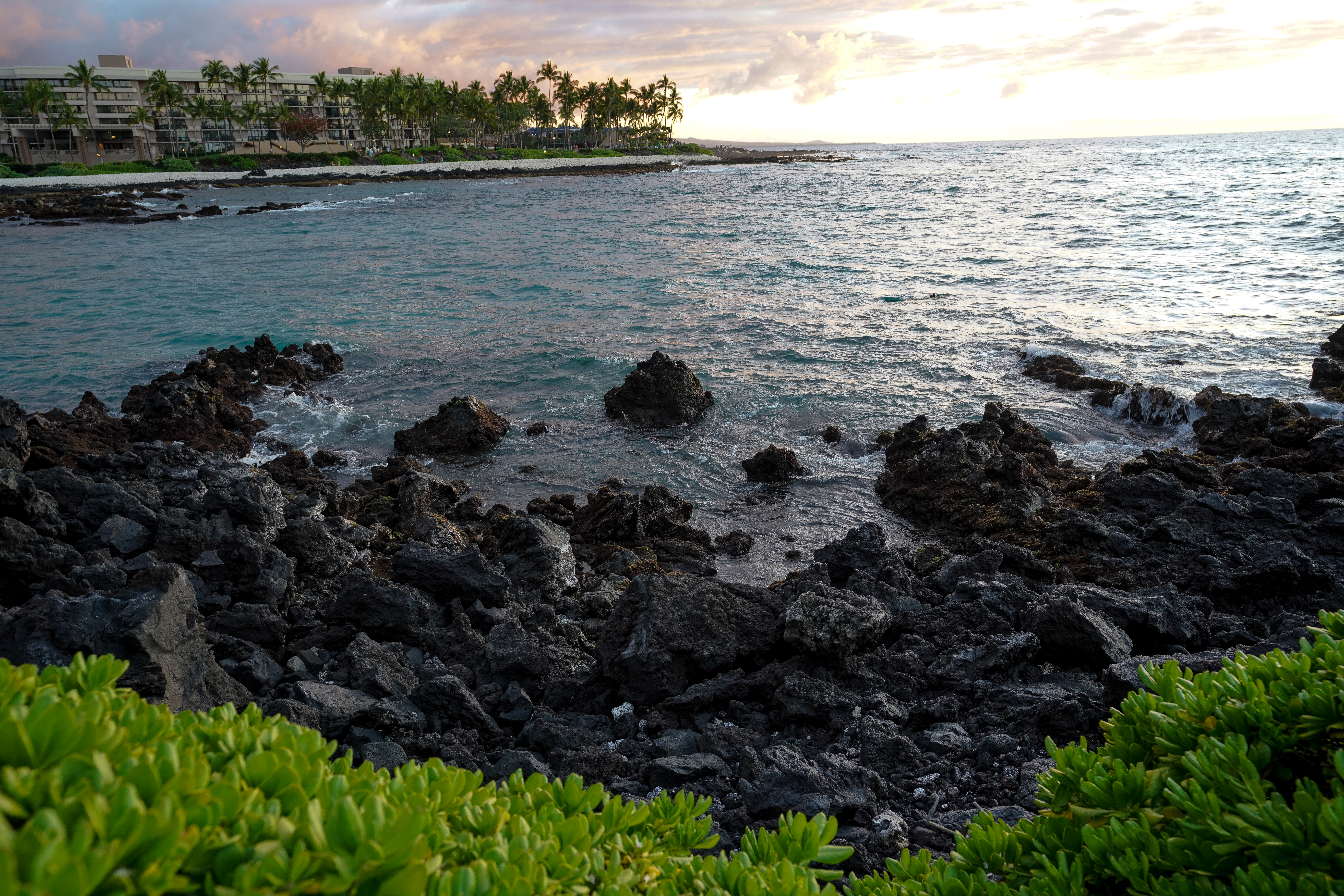
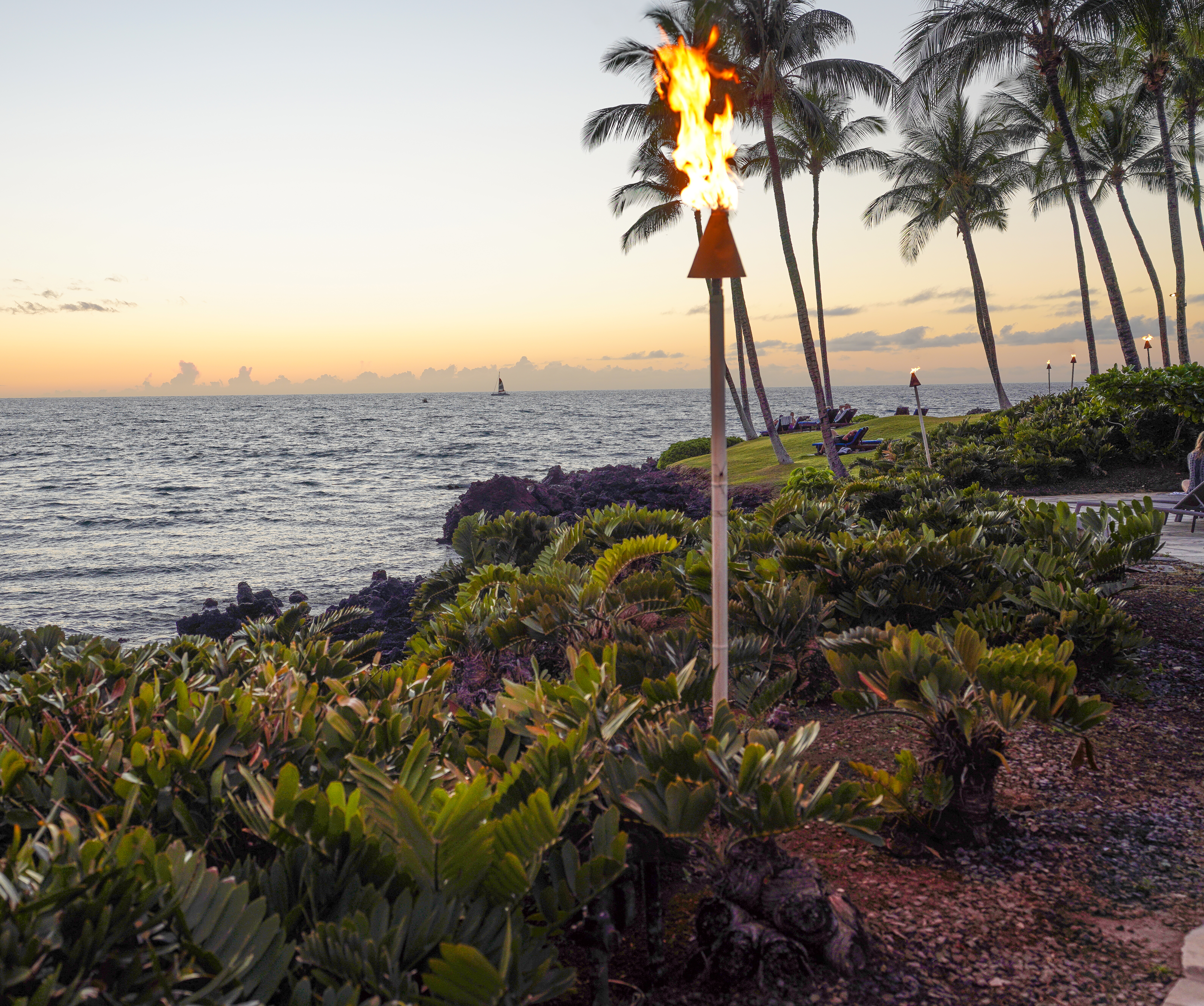
Since sunset was around 6:15 p.m., and by the time we got situated, it was already close to 5 p.m., we spent the rest of the time at the resort enjoying the sunset views.
I’ll have a separate review on the Hilton Waikoloa Village, but this was a wonderful, kid-friendly property.
Day Two: Hawaii Volcanoes National Park and Stops Along the Way
On the second day, I drove from Waikoloa to Hawaii Volcanoes National Park while making a few stops in between. I downloaded the Gypsy App specifically for the Big Island, and it guided me on where to make stops between Waikoloa and Volcanoes National Park. It costs $9.99, and you do not need to have data to work with it. The most appealing aspect of this app is that the narrator gives you historical context concerning culture and geology at various stopping points and why it might be worth stopping or skipping. The app is a knowledgeable tour guide, and I highly recommend using it for Big Island.
The Gypsy App is available for each Hawaiian Island. I highly recommend it.
Places of Interest En Route To Volcanoes National Park
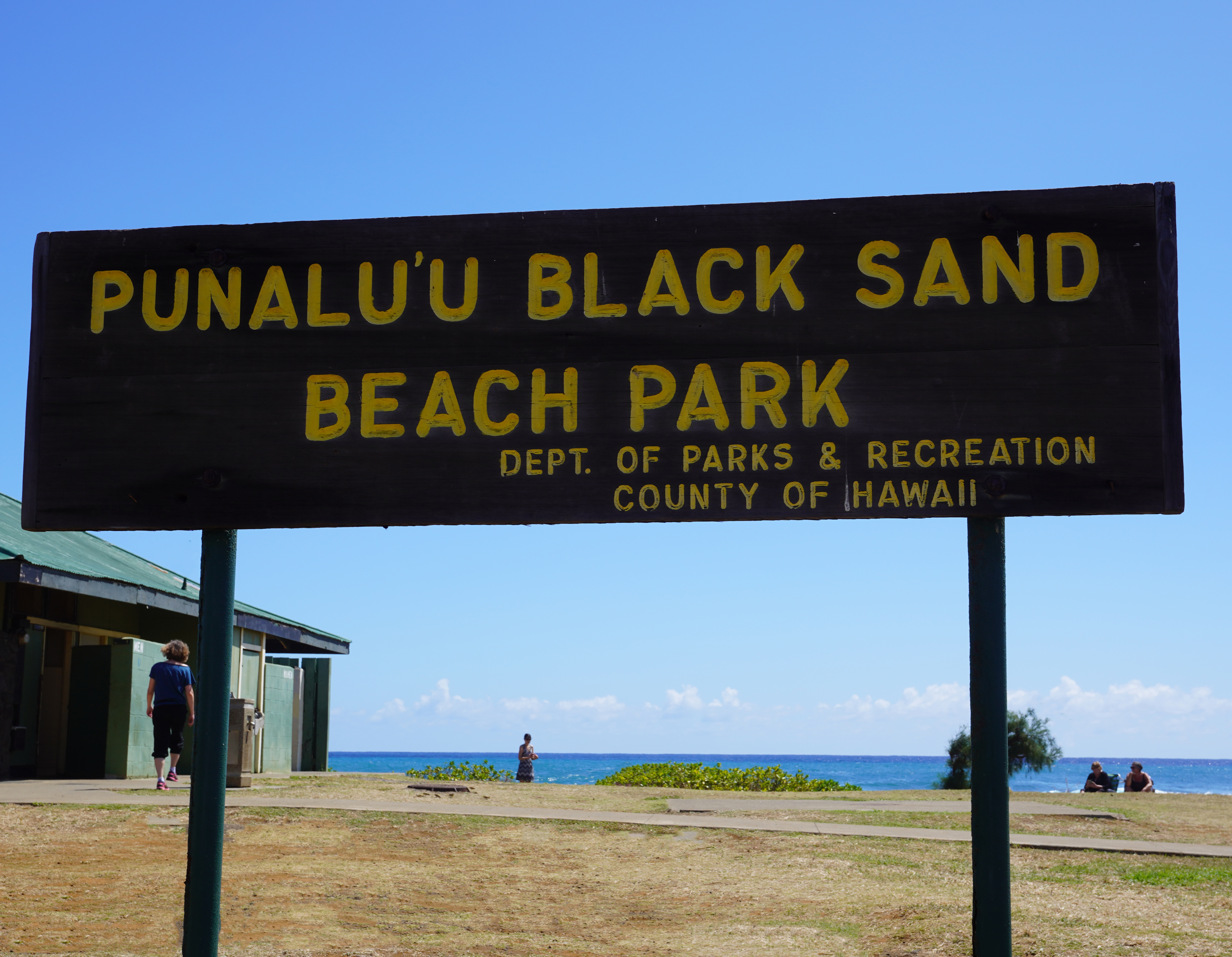
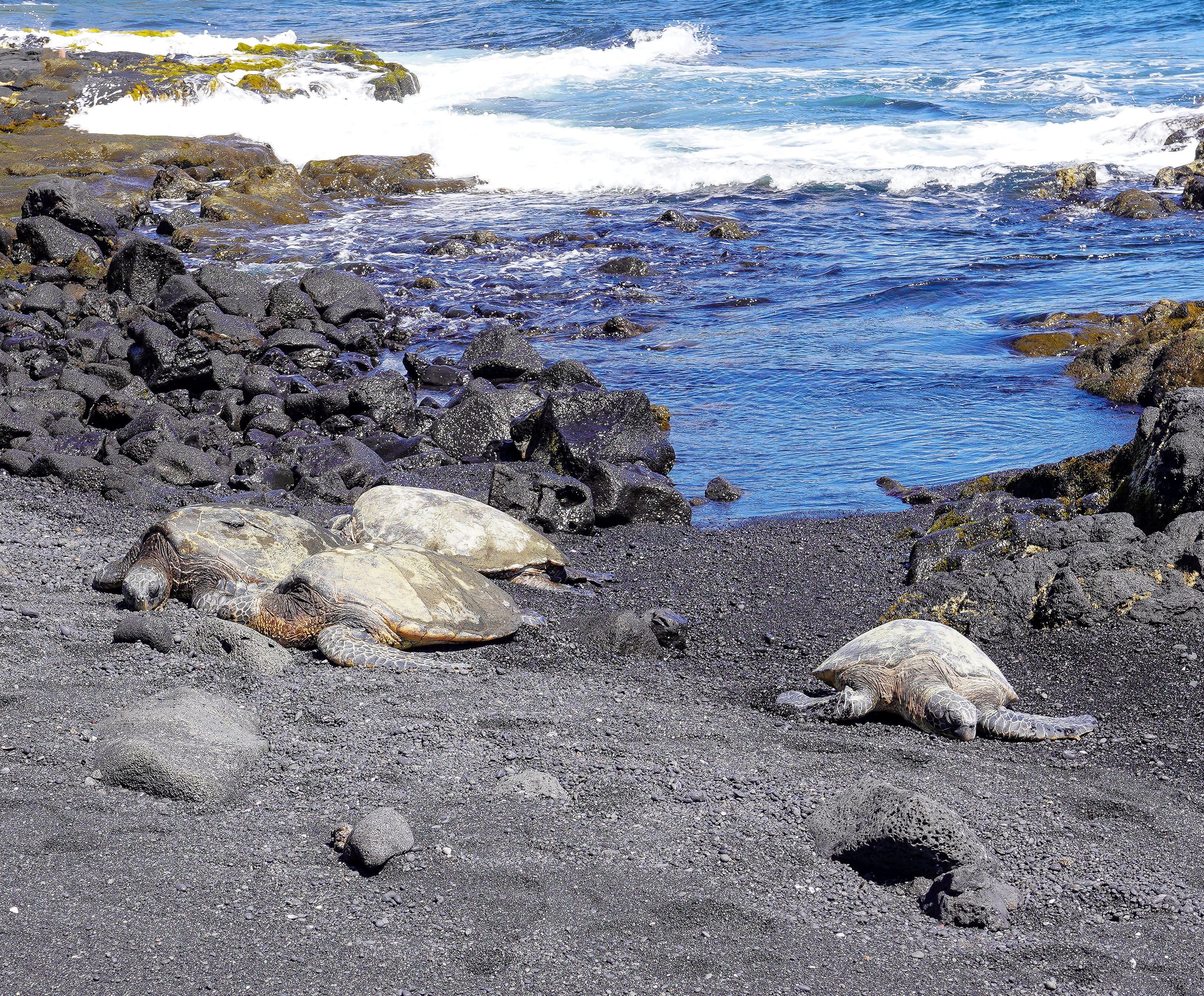
A lava field lookout point on the way to Volcanoes National Park.This viewpoint is right off the side of the road.This is one of the places you should stop by on the way to Volcanoes National Park.Punalu’u Black Sand BeachSea turtles basking in the sun at Punalu’u Black Sand Beach.
Punalu’u Black Sand Beach Park was the last place I stopped before entering Hawaii Volcanoes National Park. After this one, there are a few other points of interest, such as South Point (the southernmost point out of all the 50 states) and Papakolea Beach, a green sand beach. Getting to the beach does require over two hours of hiking, and I did not want to run out of daylight where I’d be hurrying at Volcanoes National Park. I skipped these two, but if you leave Kona before sunrise or stay in Hilo, you’ll have plenty of time to see both places.
Hawaii Volcanoes National Park
I’ve been asked if I brought my 5-month-old to this park, and the answer is no. Since the steam vents emit sulfur dioxide and hydrogen sulfide gas, I did not want to expose my son to potential lung irritants. If you’re pregnant, have heart problems, asthma, or COPD, it’s probably best to avoid the steam vents at Hawaii Volcanoes National Park.
One of the many steam vents that are found in the park.The Kilauea Caldera. You can either park at the visitors center and take a half-mile hike to get here or park on the road and walk a few hundred feet. I chose to do the hike so I could see most of the steam vents along the path.
Some parts of the park were still closed due to the eruptions from 2018, and the lava tubes were also not accessible during this time. As you continue your drive through the park, I highly recommend taking Chain of Craters Road down to the coast. It’s about 20 miles from the caldera, and the drive is among the best in any of the 50 states. Pictures don’t do it justice, so I took a short video to give you a better idea.
You will also find plenty of fantastic photo opportunities and other points of interest.
One of the scenic viewpoints on Chain of Craters Road.Pu’u Loa Petroglyphs Field
You will find a sign for the Pu’u Loa Petroglyphs Field closer to the shore. This area is considered sacred to the people of Hawaii, and you will find many symbols and images carved into the hardened lava. It’s a 1.4-mile round-trip hike, and I highly recommend it. Further down the road, you will see cliffs made from lava. This is the newest land on the Big Island, and it’s made when lava hits the water and solidifies into rock.
Chain of Craters Road on the way back also has stunning views.
Day Three: Pololu Valley and Stops Along the Way
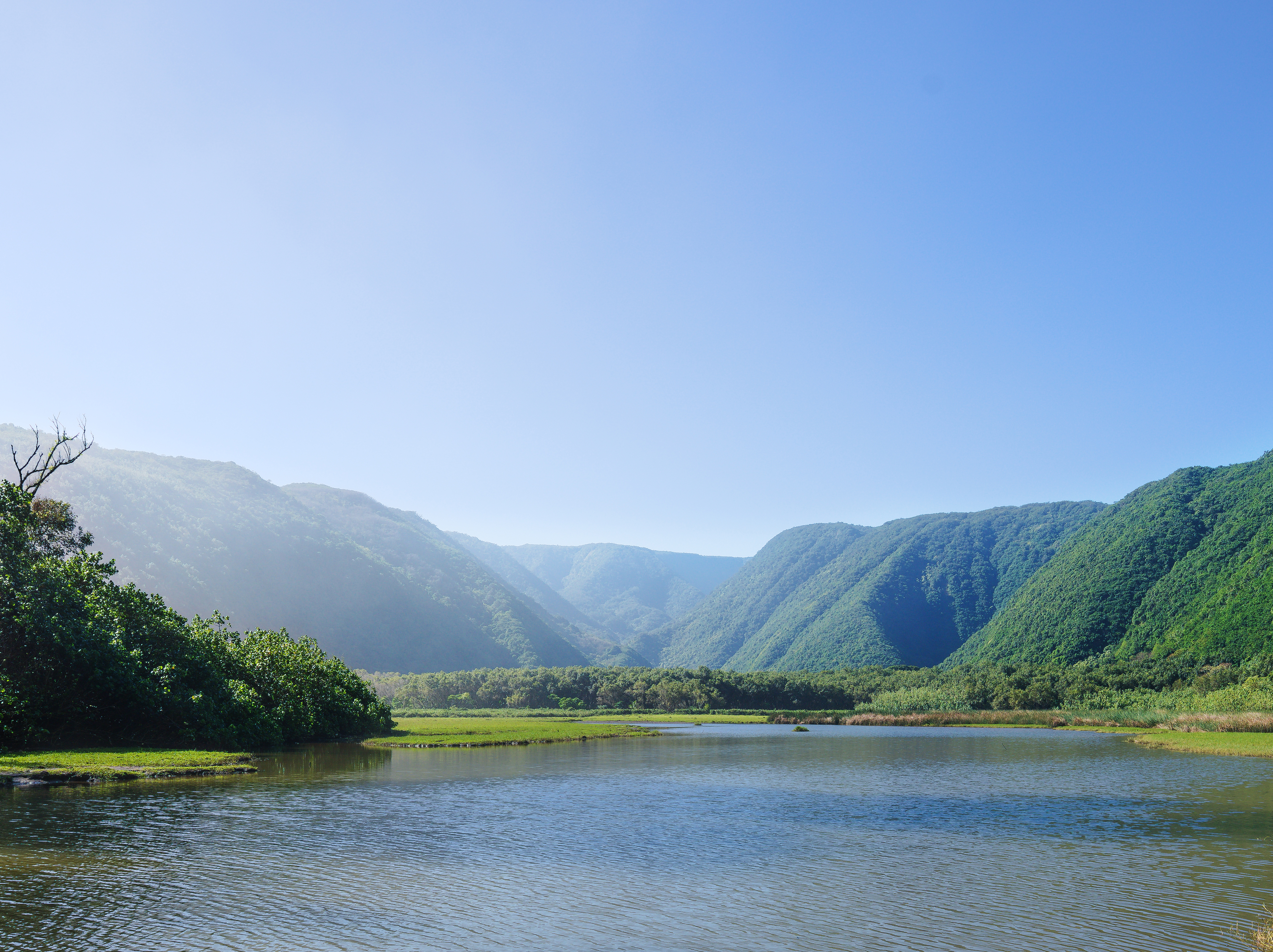
On this day, there was rain in the forecast after 2 p.m., so I made it a point to get this hike done as early as possible. The mornings also have cooler temperatures, making a much more comfortable hike. Pololu Valley is about a 45-minute drive from Waikoloa and about 1 hour and 15 minutes from Kona. You can just park your car on the road and enjoy the views from the lookout, but if you want to get the splendid views of the valley, you should go on a hike. The hike down isn’t challenging, but it can be slippery due to the frequent rainfall in the area. Returning up the hike is moderately difficult, and you will need plenty of water and some granola bars.
Pololu Lookout. You can still enjoy these views even if you decide not to hike.Pololu Valley from the parking areaThe Black Sand Beach once you hike your way to the bottom.
This is the view you hike down for.
Waimea Valley is nearby and also offers spectacular views. However, hiking there requires entering private property, which would be considered trespassing. You can also drive down there but need an AWD or 4WD vehicle with some clearance.
Day Four: Whale Watching From Hilton Waikoloa Village (due to rain)
On this day, the plan was to go to Akaka Falls. If you are on the Big Island, visit Akaka Falls because it is beautiful from the many pictures and videos I have seen. Unfortunately, a lot of rain moved in and spanned the entire island. But there was a silver lining. As I’ve mentioned before, winter is humpback whale season in Hawaii. Mothers and calves are near the coasts of every Hawaiian island, and this is when mothers teach their young how to be whales. Since our resort was right on the shore, I took my camera and started filming when someone pointed out the whales in the distance. Then they started coming closer and closer.
Out of nowhere, the mother whale breached the water, and I was lucky enough to have my camera recording. I’m sorry for the grainy quality.
Two humpback whales right off the shore of Hilton Waikoloa Village
Whales were seen four out of the five days we stayed at Hilton Waikoloa Village, and it really made it fun and exciting for the kids who were also whale watching.
Day Five: Snorkeling in the Hilton Waikoloa Village Lagoon and visit to Kona
Day five was supposed to visit either Akaka Falls or the green sand beach. Both places had rain in the forecast, while our side of the island was bright and sunny. I used this time to go snorkeling.
This property does not have an oceanfront beach due to the powerful waves and riptide currents common along the Big Island. However, it has a sand lagoon that functions as a beach, which is excellent for swimming and snorkeling. I saw plenty of colorful fish and several sea turtles, one of which I could follow for almost two minutes.
Kona
The owner of the vehicle we rented from Turo recommended Umekes Fishmarket Bar and Grill in Kona for dinner. We ordered Tempura-Battered Fish and chips and Cajun-Style Ahi Fish Tacos, both of which were perfect.
This concluded our trip to the Big Island in Hawaii. A popular question I get asked is, among the four islands I have visited, which is my favorite? I really can’t say I have one. Each island has its own unique charm and offers something different for everyone. The Big Island has a volcanic landscape that’s so vast it can’t be seen anywhere else in Hawaii. It also has stunning valleys, excellent beaches, and a green sand beach that can’t be found on any other Hawaiian island. Since it is not as heavily trafficked by tourists, you get a better flavor of Hawaiian culture throughout the island. Big Island is also known for its coffee and macadamia nuts. If you have the time, you should visit a coffee or a macadamia nut farm. But just like the other Hawaiian islands my wife and I have been fortunate to see, the locals are wonderful. They are some of the nicest and friendliest people in the world. The physical beauty of the islands is undoubtedly attractive and makes for great pictures, but the Hawaiian people and their hospitality keep us coming back. We look forward to coming back. As always, thanks for reading.






 I’ve been asked if I brought my 5-month-old to this park, and the answer is no. Since the steam vents emit sulfur dioxide and hydrogen sulfide gas, I did not want to expose my son to potential lung irritants. If you’re pregnant, have heart problems, asthma, or COPD, it’s probably best to avoid the steam vents at Hawaii Volcanoes National Park.







 Miles for places