
On a recent trip to Chicago, which I had to book 10 days before departure, I lucked into one of Frontier Airlines’s deeply discounted flash sales. I was able to score a one-way ticket from Syracuse to Chicago (ORD) for $15.

From Albany International Airport, a one-way ticket was going for nearly $400. Even when I factored in the $31 Amtrak ticket from Albany to Syracuse and the $10 Lyft ride from the train station to the airport, the savings were significant and hard to ignore. I used to be very averse to low-cost carriers such as Spirit and Frontier because of their poor on-time performance and lack of suitable contingency plans if a flight was canceled. Based on OAG’s data from June 2018 to May 2019, Spirit has improved its punctuality as it now ranks fourth among U.S. carriers in on-time performance.
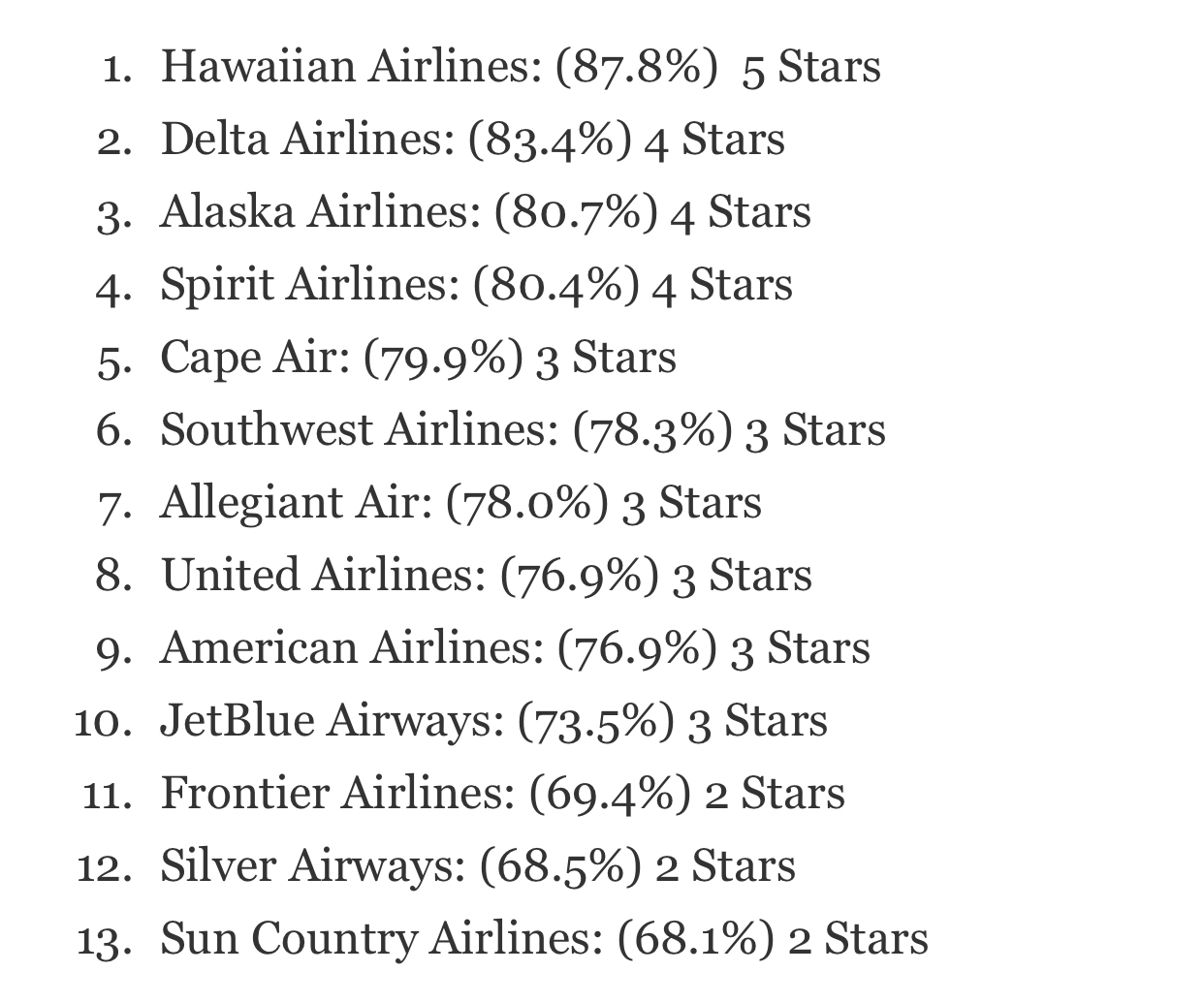
Frontier, on the other hand, is still struggling with on-time performance. I had to deal with a cancellation on a Frontier flight, which I took about two weeks after this one (they handled it very well and compensated me for my ticket on American Airlines). For $15, I just had to it. That’s a ridiculously cheap price to get from point A to point B, which is almost 700 miles away. Frontier was also the last of the major remaining U.S. carriers I had yet to fly on, so this was also a great way to experience their product.
Checking In

I used Frontier’s mobile app to check in. The key with Frontier much like Spirit is knowing how their model works before flying. When you pay for your ticket, you are only entitled to the space under the seat in front of you. Carry-on bags cost $41 if you purchase them in advance and $60 if you have to pay for them at the gate. This is the part where many people who have never flown on Frontier end up getting sticker shock. My bag fit comfortably under the seat and fit above with a little nudge to push it down. Checking in a bag costs $37 if paid for during booking, $40 if paid for during check-in, and $55 if paid for at the airport. I could fit enough clothes for 3 days in the bag shown and my laptop in the laptop compartment. Something else to remember when flying on Frontier (especially when traveling with family) is that you can’t choose your seat assignment unless you pay. If you simply choose not to pay, Frontier will assign you a seat during mobile check-in. This is similar to the basic economy structure on the larger carriers and
Spirit Airlines.
Boarding

Frontier boards its elite members, active military members, and customers in Zone 1 (customers who have paid for their carry-on bags) first. That’s followed by Zones 2, 3, and 4. During the boarding process, the gate agents eyeball everyone’s personal items, and if they look too big to fit under the seat, they will have you put them in the bin to see if they fit (or mostly fit).
In-Flight
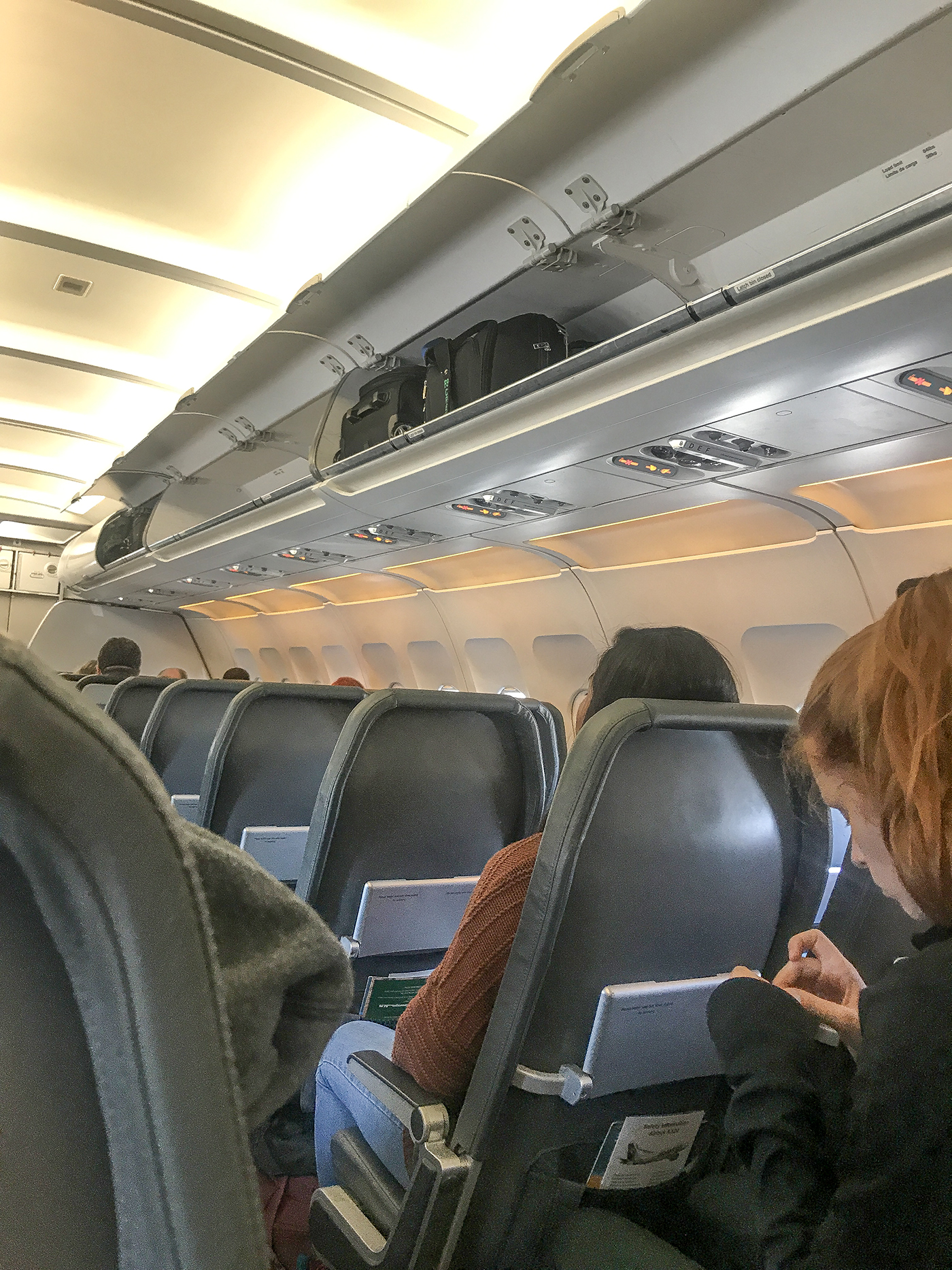
One of the beneficial aspects of having people pay for carry-on bags is that the boarding process flies by. Since people aren’t haggling for overhead bin space and attempting to stuff oversized bags, most find their seats and are seated rather quickly. The picture above illustrates this point perfectly. My flight had a lot of unused overhead bin space since most people would not pay $41 to carry a bag. I’d guess the people that did bring in a carry-on bag were Frontier Airlines Credit Card holders who have a free carry-on as a perk.

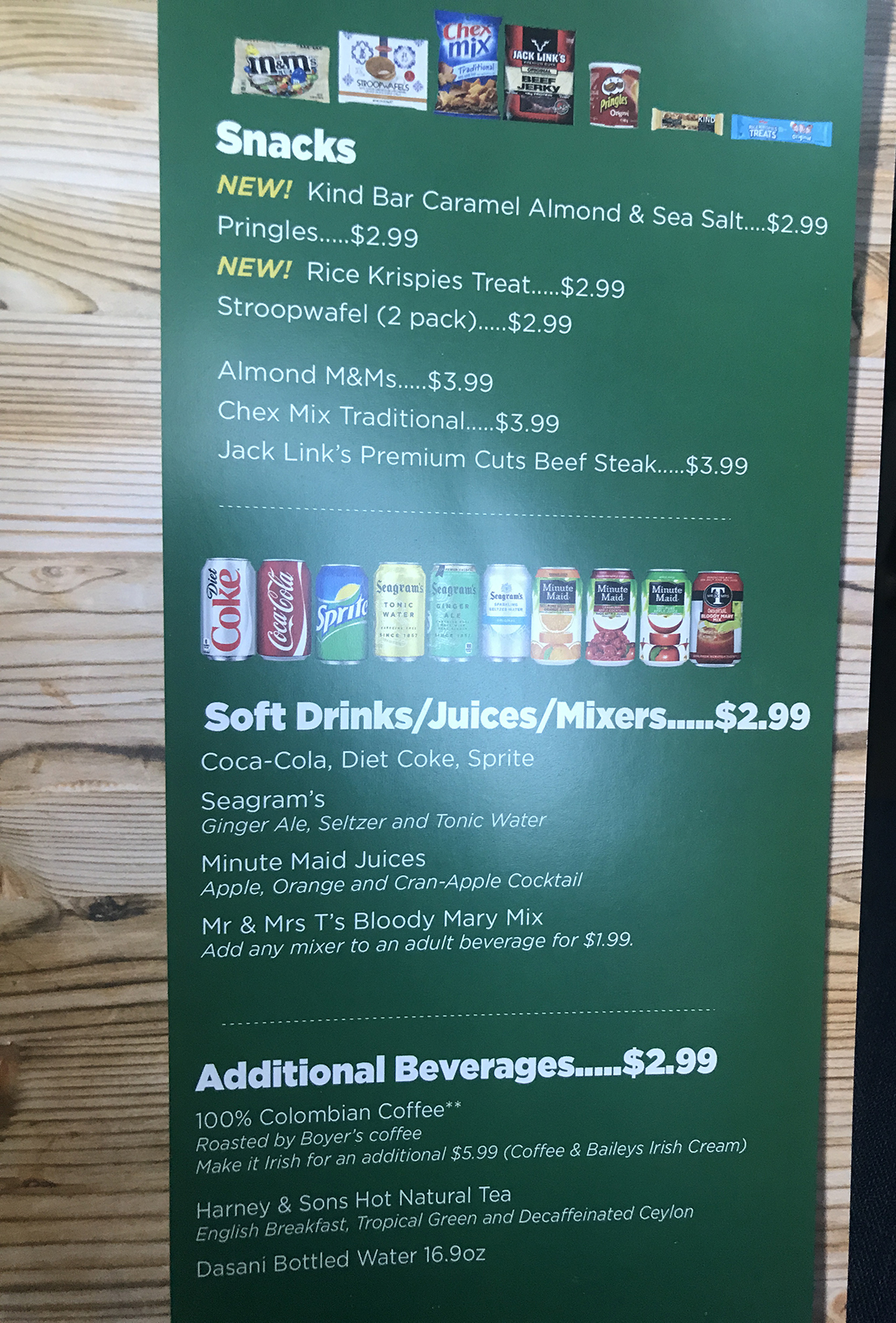
As a low-cost carrier, Frontier does not serve complimentary snacks on-board. They do serve complimentary Dasani water, which is appreciated. They do have a variety of snacks and beverages for purchase. Another thing I noticed was their tray tables being very small. It certainly won’t hold a laptop and it’s just big enough to hold a large smart phone.


There is no online WiFi or in-flight seat-back entertainment, so make sure your phones are charged, and you have downloaded a movie prior to your flight. Frontier’s business model is cramming as many seats as possible onto its Airbus airplanes. This means you won’t get a ton of leg space unless you pay extra for a “stretch seat” with additional pitch. The seats were thin, but I did not find them uncomfortable for my flight.

Conclusion
My first flying on Frontier was a good experience, and I went about as expected. If you fly on Frontier, remember to sign up for their frequent flier program as there are a few benefits. First of all, Frontier awards miles based on distance flown rather than dollars spent. This means a really cheap transcontinental flight can earn you nearly 3,000 miles. A second benefit of their frequent flier program is no blackout dates. This becomes extremely valuable during peak travel times such as the Wednesday before Thanksgiving or the day before Christmas. Frontier prices these award tickets at 10k miles each way although I would assume there is probably a limited number of seats they allot for redemption. My only gripe about Frontier is their poor on-time performance and the bind it can put you in if your flight was cancelled. Since Frontier operates many routes just three or four times a week, a missed flight due to weather-related issues could mean waiting two or three days to reach your destination. If cancellation was due to their shortcomings (mechanical, lack of a pilot, etc.), they send you a link to book on a different airline and reimburse you up to $400 to get to your destination. This happened during my second time flying Frontier but I was able to book with American for a flight that departed an hour later and it didn’t end up ruining my trip. If you absolutely have to get to a place on time, say for a wedding, a job interview, etc be aware that a weather related cancellation would yield you a refund or booking on a later Frontier flight. You would have to pay your own way to make it to your destination on time.
 Miles for places