
I first visited Iceland ten years ago as a solo traveler, taking advantage of Iceland Air’s generous stopover policy, which allows up to 7 days in the country en route to another destination. That visit was brief—just two days—but long enough to explore parts of the Golden Circle and soak in the Blue Lagoon. I found Iceland stunning and always hoped to return.
This time, it was a completely different experience. My wife hadn’t joined me on the first trip due to grad school, and we weren’t yet parents, so now—with our kids in tow—it felt like seeing the country through fresh eyes. Much of our itinerary included places I hadn’t visited before, and we waited until our youngest was steady on his feet before planning a trip filled with hikes and outdoor adventures, without relying on a stroller.
As with many of our travels, we were drawn to Iceland for its natural beauty, mountainous terrain, and abundance of kid-friendly outdoor activities. It’s a magical destination that offers all of that and more. As our children grow and progress in early elementary school, we’re shaping our travels to be both fun and educational. Our hope is that when they open a textbook to learn about volcanoes or glaciers, they’ll recall the places they’ve seen and the experiences they’ve had—turning abstract lessons into something personal and lasting.
Useful Mobile Apps for Iceland
If you are in the planning stages of a trip to Iceland or have already booked your trip, here are a few mobile apps that can be useful:

EasyPark – This can be used for street parking in Reykjavik and at several waterfalls and points of interest around Iceland. Of all the parking payment apps, this is the one that I used the most.

Parka – This is an alternative to EasyPark, although I experienced lag when submitting payments twice. It can also be used in and around Reykjavik, as well as at sites on the Golden Circle and Ring Road. The most helpful feature of this app is the ability to reserve and pay for campsites throughout Iceland. If you are renting an RV, this app is highly recommended.

Faero og Vedur – This app is handy if you’re planning to drive on the gravel roads in Iceland, known as F-roads. Vedur will provide you with current road conditions, weather, and notify you of hazards and closures.

SafeTravel-Iceland – This app is a must-have for anyone planning to hike or trek through the highlands or other challenging terrain. If you find yourself in an emergency, it will use GPS to alert emergency services to your exact location. This app works even if you don’t have data service.

Hopp– The most popular ride-sharing app in Iceland. It is helpful if you don’t plan to drive or simply need a ride after a late-night out.
Renting a Car in Iceland
If you plan to drive in the highlands of Iceland, you will need to drive on F-roads. F-roads are gravel roads that require 4-wheel drive (4×4) vehicles or all-wheel drive (AWD) vehicles with higher clearance. These roads may have river crossings and rough terrain, and a higher-tier insurance must be purchased to use them. It’s essential to review the terms and conditions of your rental agreement before driving on an F-road. If your car becomes disabled on an F-road or if you cause any damage, you may be liable for the entire cost of the vehicle. To avoid these scenarios, I rented with Lotus Car Rental and purchased their platinum insurance coverage. When booking your vehicle, they will let you know whether it is F-road compatible.

Except for a couple of river crossings, platinum coverage from Lotus will cover any type of damage at the time of this post. Always check their website for the most up-to-date information. If you plan on crossing rivers and want peace of mind, choose a larger SUV with higher ground clearance. The platinum insurance package with Lotus also includes a portable Wi-Fi device. We had high-speed connectivity throughout our trip in Iceland thanks to this device. If you rent a pocket Wi-Fi separately from a different company, you will pay about $80 for one week. If you want my recommendation, rent with Lotus, opt for platinum coverage, and drive worry-free while staying connected to the world.
Day One
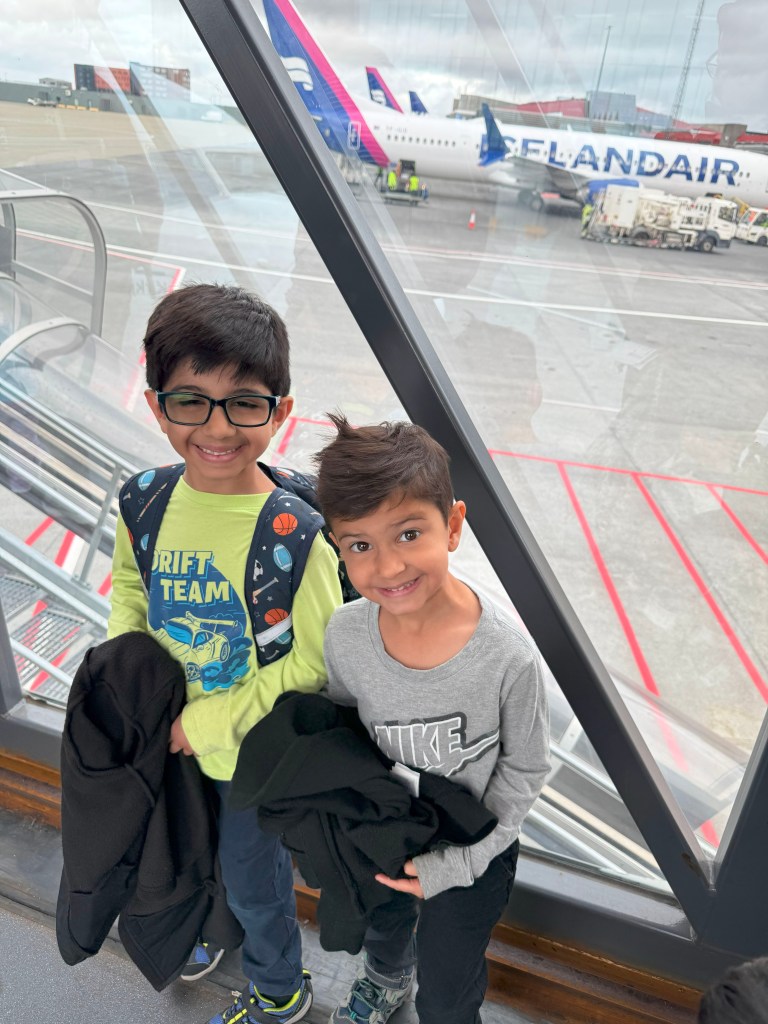
We had a redeye flight departing from Chicago (ORD) at 10:45 p.m. and arriving at Keflavik International Airport shortly after 9 a.m. Even though our flight was operated by an international carrier, Icelandair operates like a budget carrier, so it doesn’t serve complimentary meals on the flight. They offer a complimentary beverage service, and hot items, such as sandwiches and pasta, are available for purchase. Snacks are not complimentary and must be purchased separately. They do provide kids with a complimentary snack box that has a juice box, baby carrots, and a mini pretzel mix. Wi-Fi costs 24 Euros for the duration of the flight, and the speed was consistently good for most of the flight, reaching over 35 Mbps. Unfortunately, the in-flight entertainment is underwhelming for kids with a limited selection of movies. The flight was approximately five hours and thirty minutes long.


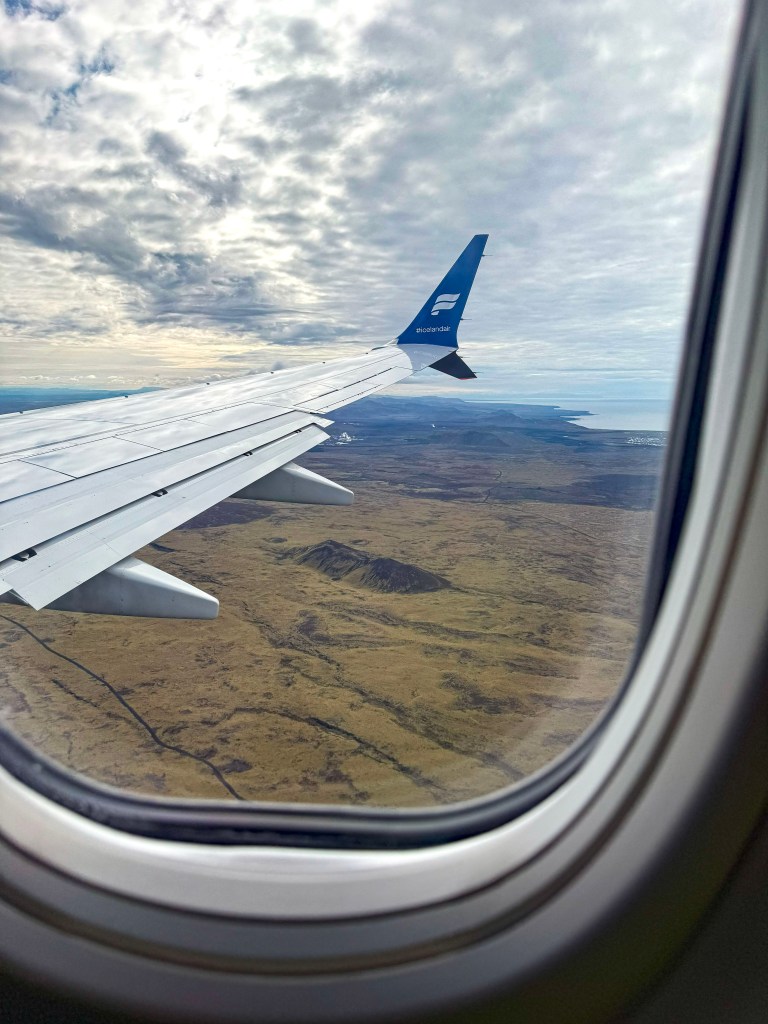
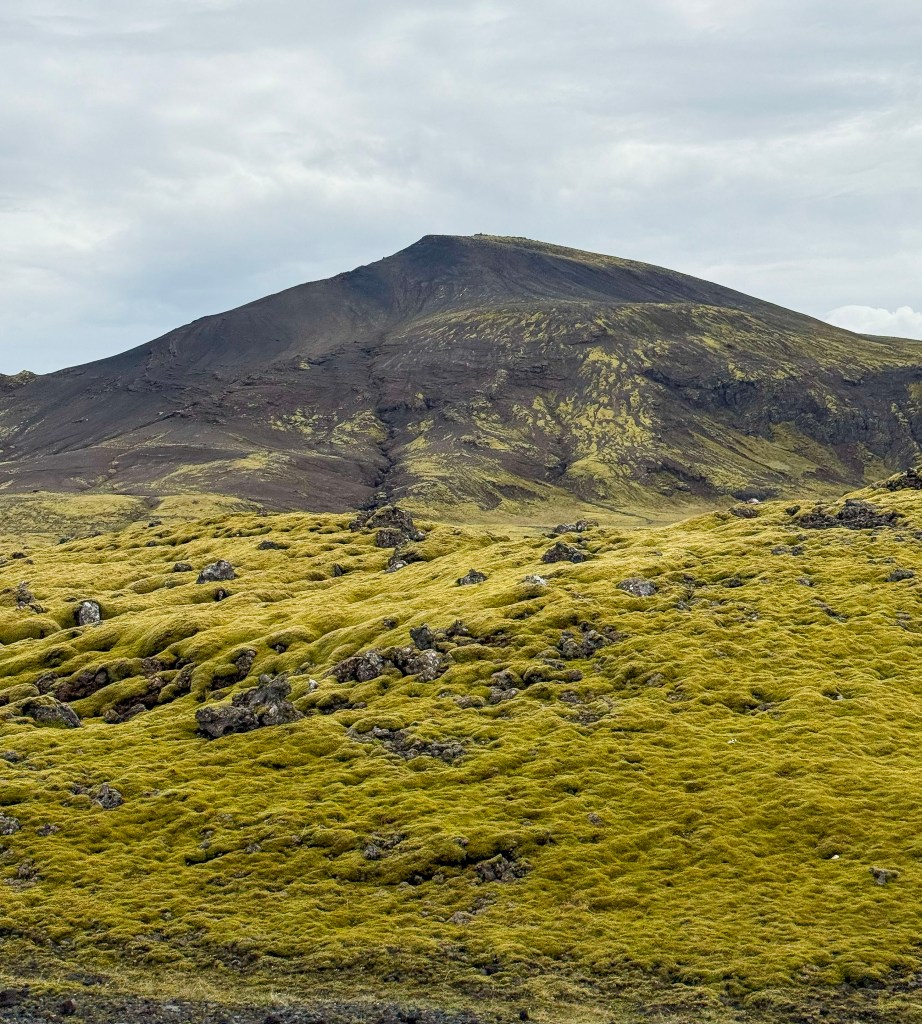
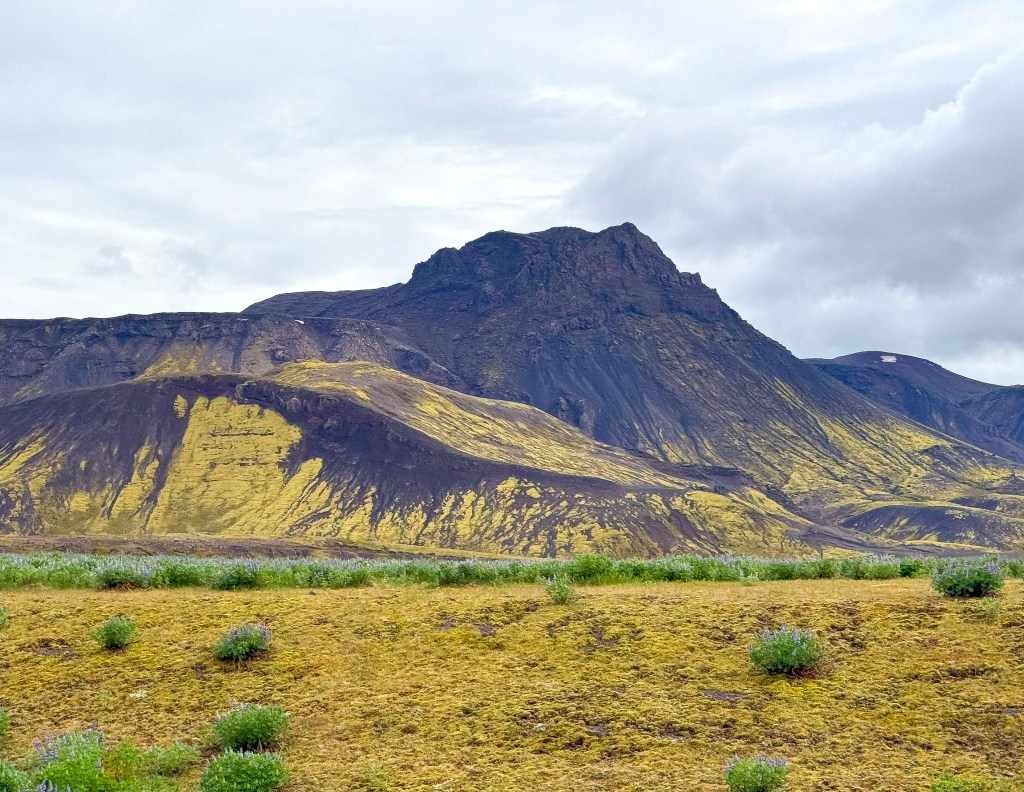
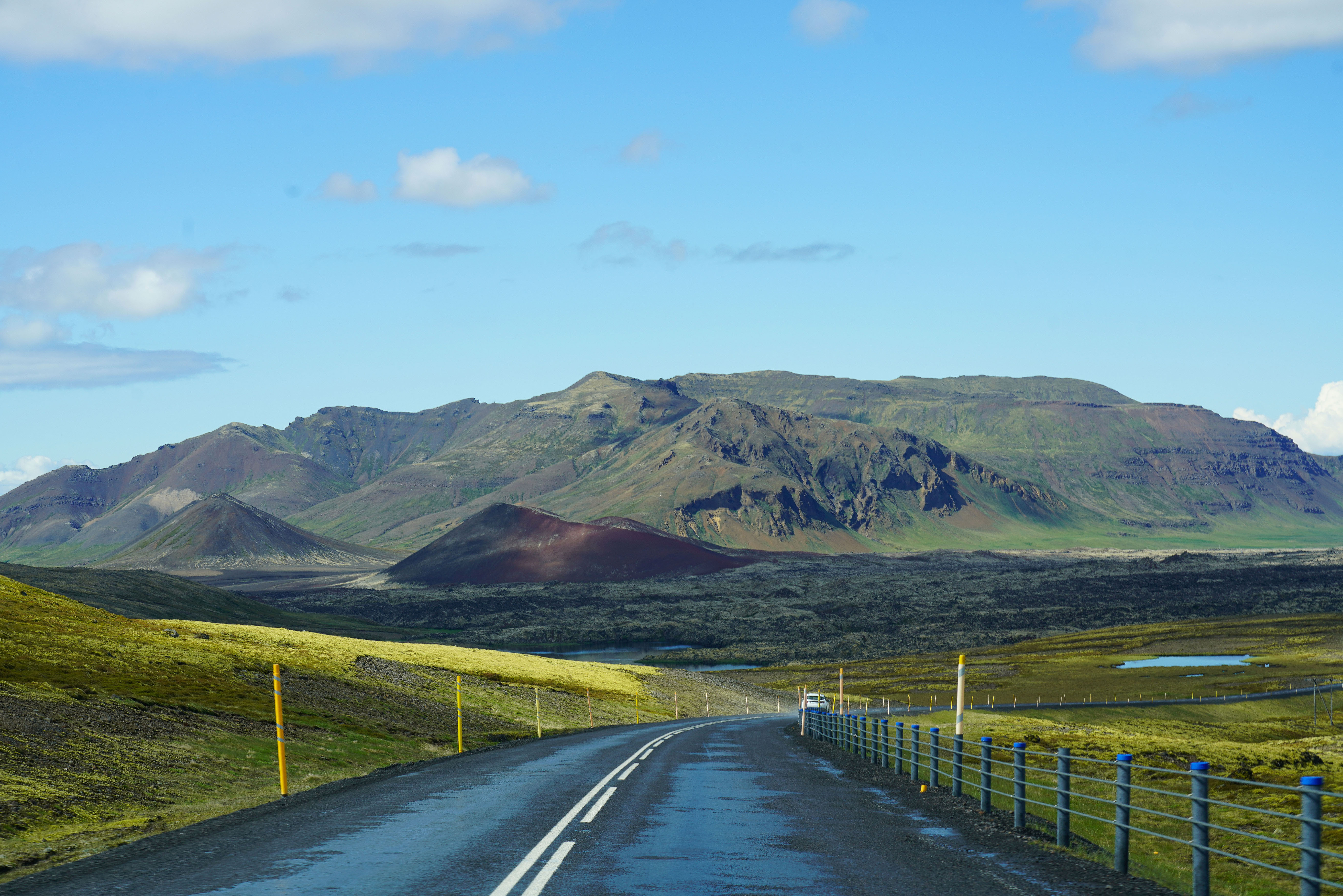
The line through customs and passport control at Keflavik International Airport was short, and our bags were on the belt by the time we got to baggage claim. Once we retrieved our bags, we headed to the meeting point area, where our shuttle driver from Lotus Car Rental greeted us. Lotus is about a four-minute shuttle ride from the airport, and our SUV was ready for us. No human interaction was required as we were given a code to retrieve our keys from the lockbox. After grabbing some essentials, such as water bottles, granola bars, and Gatorade, from the local grocery store, we headed to Southern Iceland, to the town of Hella, about two and a half hours from Reykjavik. The drive was beautiful, and the vivid green moss for which Iceland is known was on full display. Ideally, we would have loved to be in Vik on this night, but due to limited hotel and Airbnb inventory, prices were extremely high.

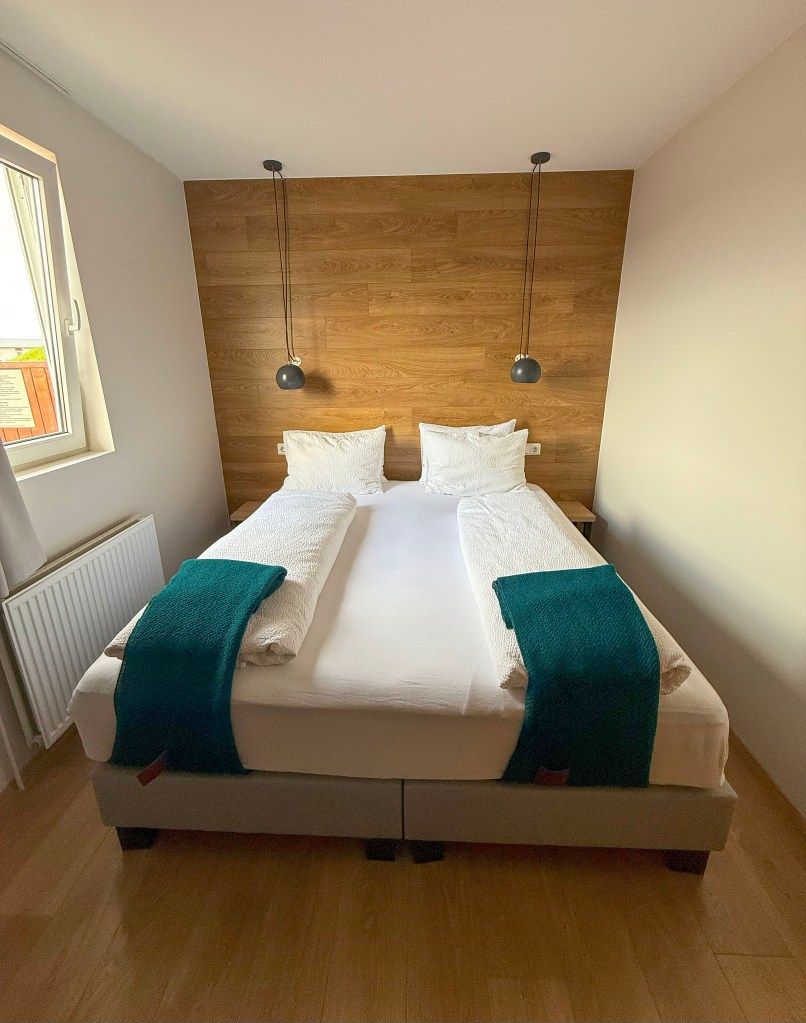
The Stracta Hotel in Hella was an excellent choice, and the kids loved the private hot tub in our apartment suite. If you’re visiting with kids, the two-bedroom suite is a comfortable and spacious accommodation. Since this was the conclusion of a long, tiring day, we soaked in the hot tub for a bit and called it a night soon thereafter.




Day Two
The itinerary for our second day had multiple points of interest, so after a quick breakfast at the hotel, we continued east on Route 1, known as the Ring Road. Here’s a recap of the places we visited in chronological order:
Seljalandsfoss and Gljufrabui
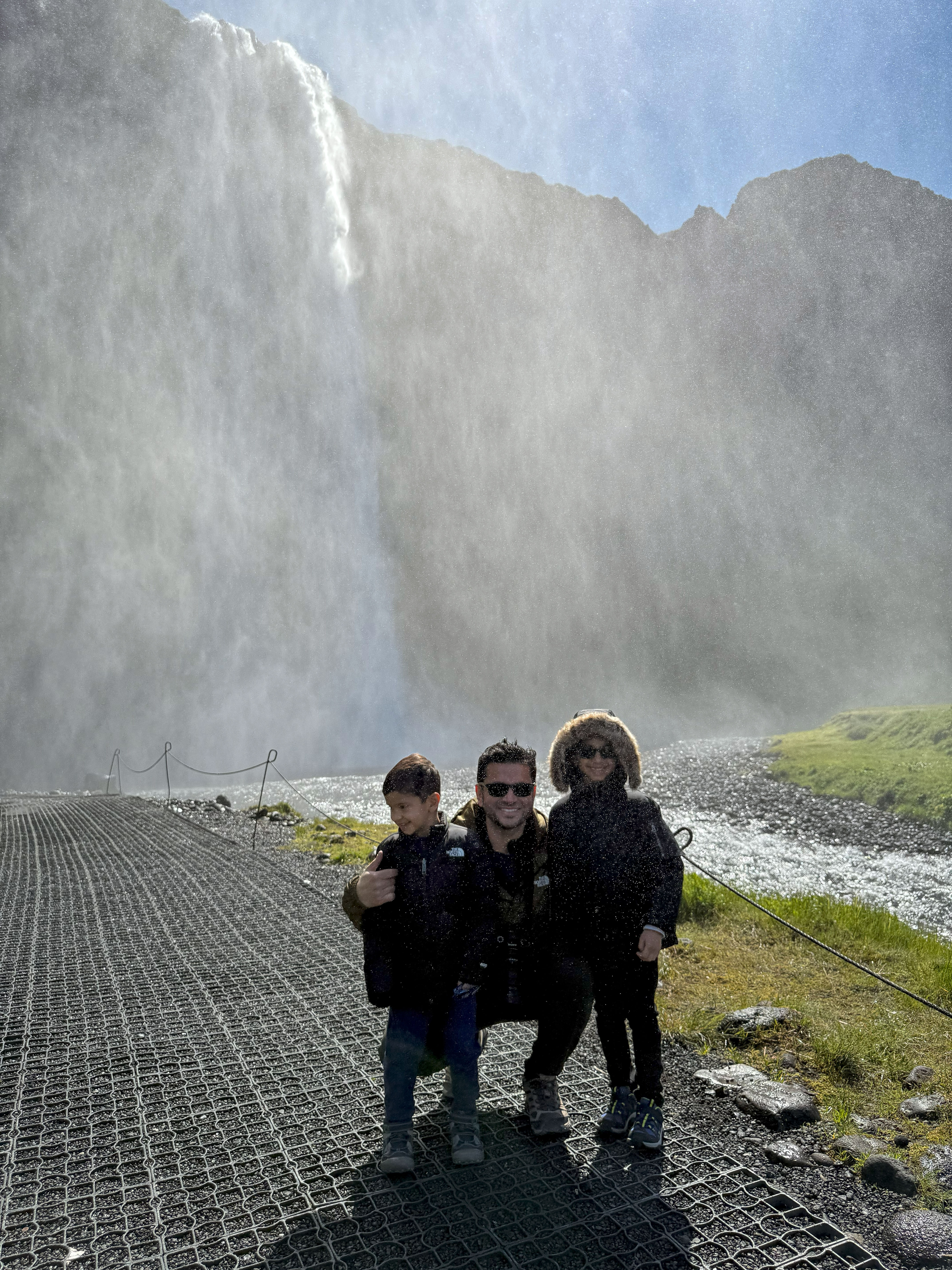
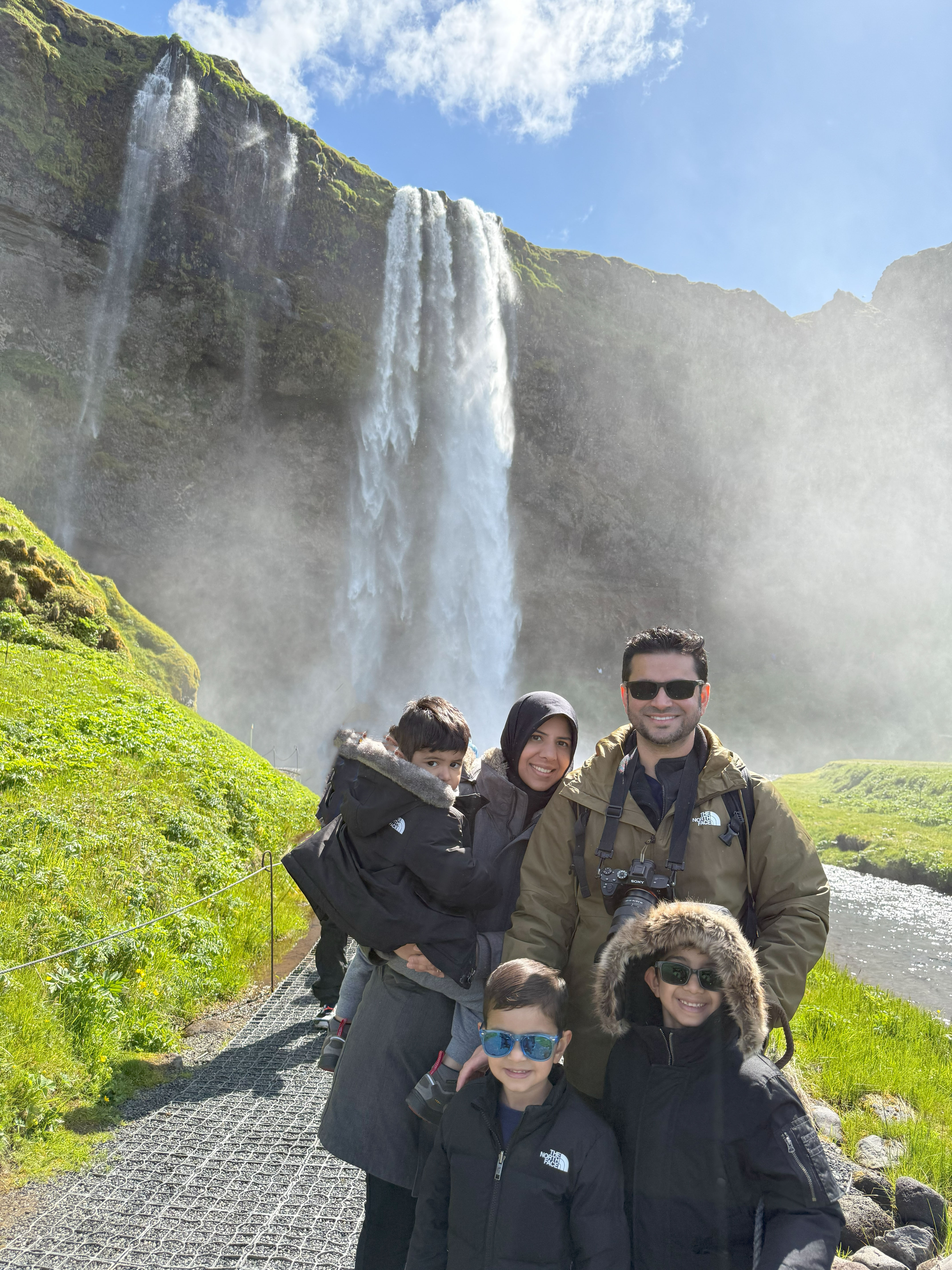
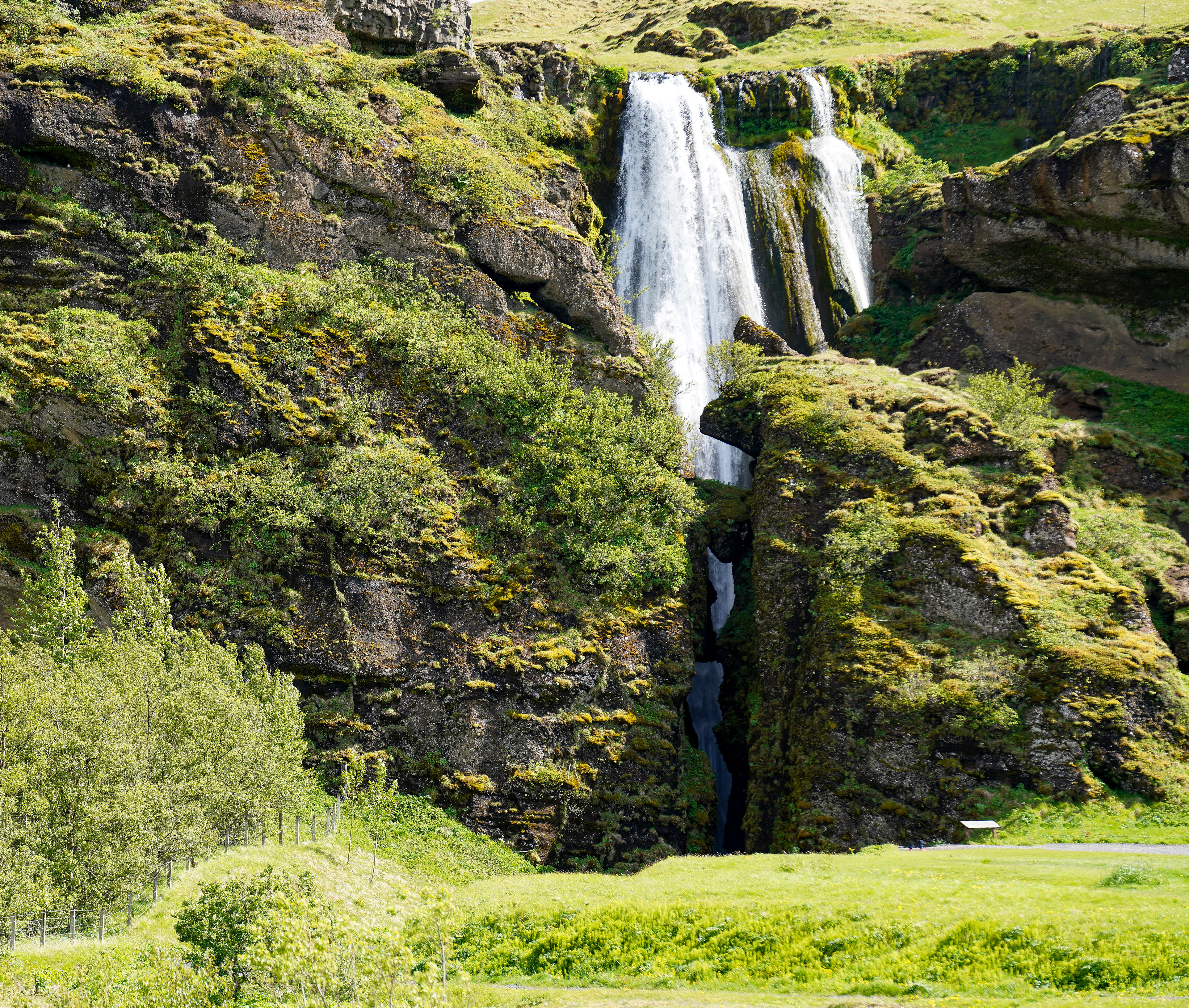
This was our first stop for the day. Seljalandsfoss and Gljufrabui are two beautiful waterfalls, a short walk apart and sharing the same parking lot. Seljalandsfoss is the more renowned of the two due to its visibility from afar and relative ease of access. The path to Seljalandsfoss is wheelchair- and stroller-friendly, and the waterfall can be seen from the Ring Road. It’s over 200 feet in height, and you can walk behind the waterfall if you are willing to get soaked. Gljufrabi is also beautiful, and getting close means walking through ankle-high water and also getting soaked. This one is not wheelchair or stroller-friendly.




What to bring
If you wish to walk behind Seljalandsfoss and/or get up close to Gljufrabúi, bring a raincoat, waterproof pants or synthetic pants that dry quickly, a sturdy pair of hiking boots (waterproof recommended), and a waterproof pouch for your phone. If you have a waterproof camera such as a GoPro, this is the perfect place to use it. If you plan to use a DSLR, get a waterproof cover and don’t forget your tripod!
Skógafoss
Skógafoss is another beautiful and majestic waterfall, located approximately 30 minutes from Seljalandsfoss. While you can’t walk behind Skogafoss, you can take a short walk from the parking lot and walk pretty close to it. If it’s a sunny day, you are guaranteed to see a rainbow due to the mist this waterfall produces. Skógafoss has about the same drop but a wider width than Seljalandsfoss, making it more powerful due to its higher flow rate. Visitors can also climb the staircase to the right of the waterfall to a viewing deck for a different perspective. The path to Skógafoss is mostly gravel and is not suitable for strollers or wheelchairs. There is a restaurant adjacent to the parking lot, where you can grab a bite to eat.


What to Bring:
Hiking boots, a raincoat, a camera, and definitely some water if you plan on walking up the stairs. If you have a DSLR camera, bring a tripod and slow down the shutter for a silky smooth waterfall picture
Reynisfjara Black Sand Beach
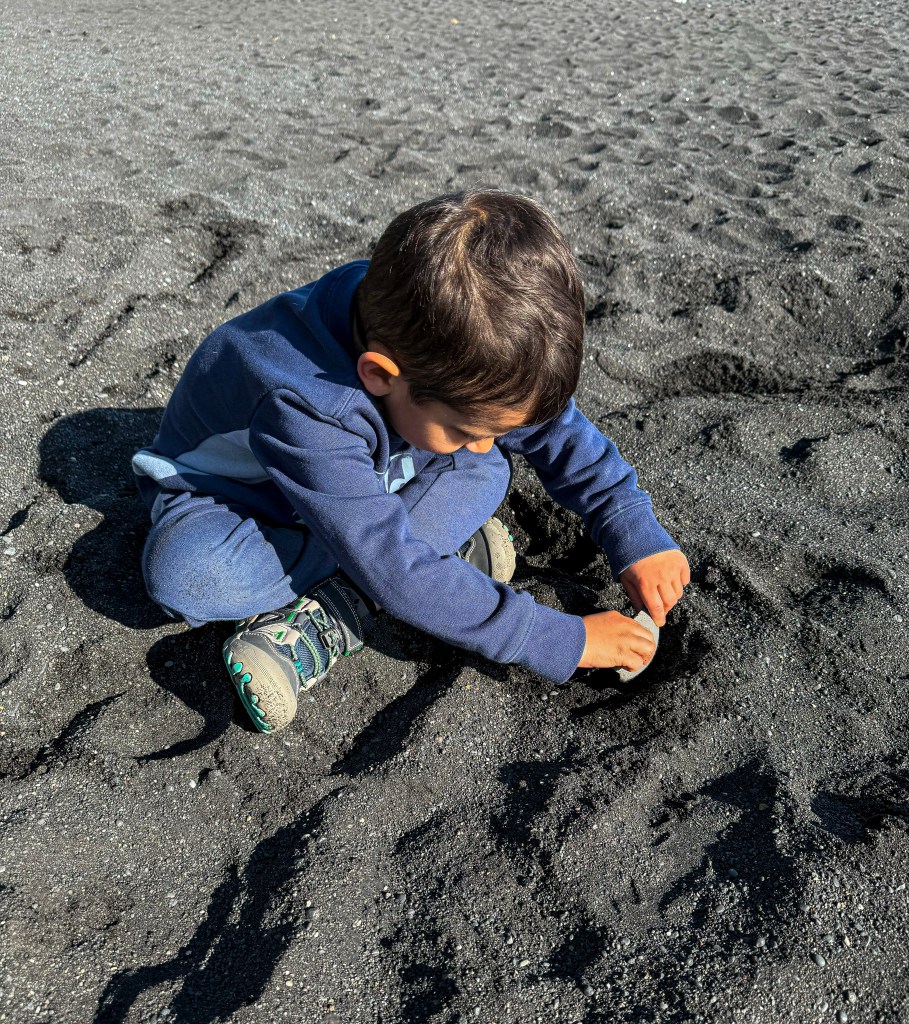
Located about 30 minutes southeast of Skógafoss on the Ring Road near the town of Vik, Reynisfjara Black Sand Beach offers a unique experience, with the contrast of waves crashing against the black sand making for fantastic photography. The black sand is the result of volcanic rock, specifically basalt, being eroded. The basalt columns are another popular feature of this beach, and if you are a Game of Thrones fan, you have probably seen them in season seven. This was easily the highlight of the day for my kids, and if you’re traveling with kids, I would highly recommend pinning Reynisfjara Black Sand Beach as a must-visit. Unlike black-sand beaches in tropical locations such as Hawaii, the black sand on beaches in Iceland is not scalding hot in bright sunshine. During our visit, the air temperature was approximately 58 degrees Fahrenheit, while the black sand was about 7 to 10 degrees warmer, creating a comfortable temperature for the kids to play in.
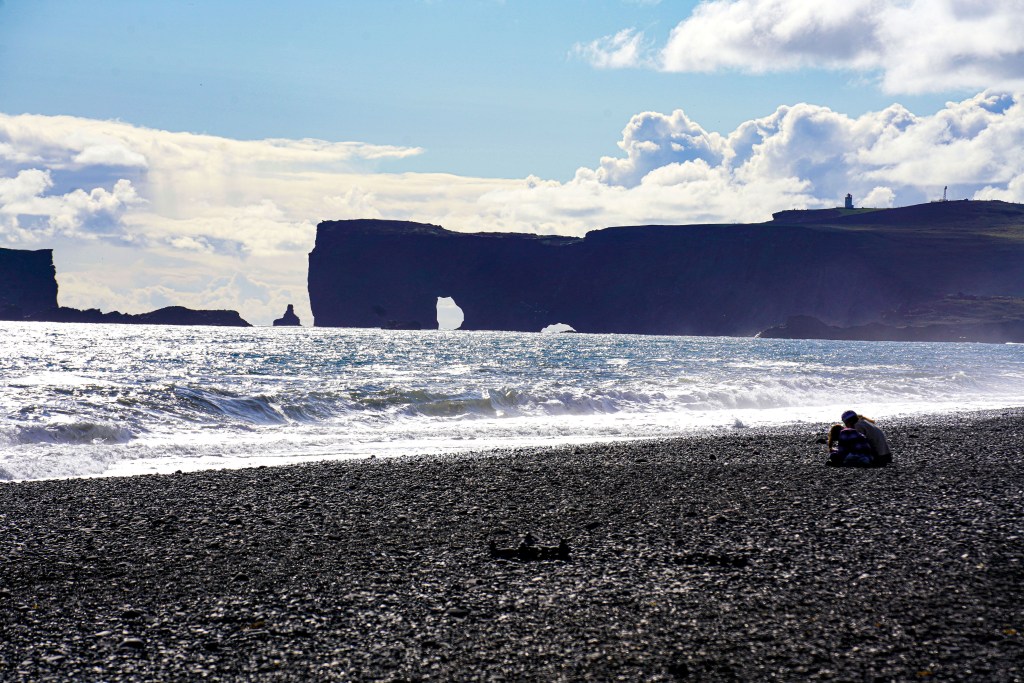
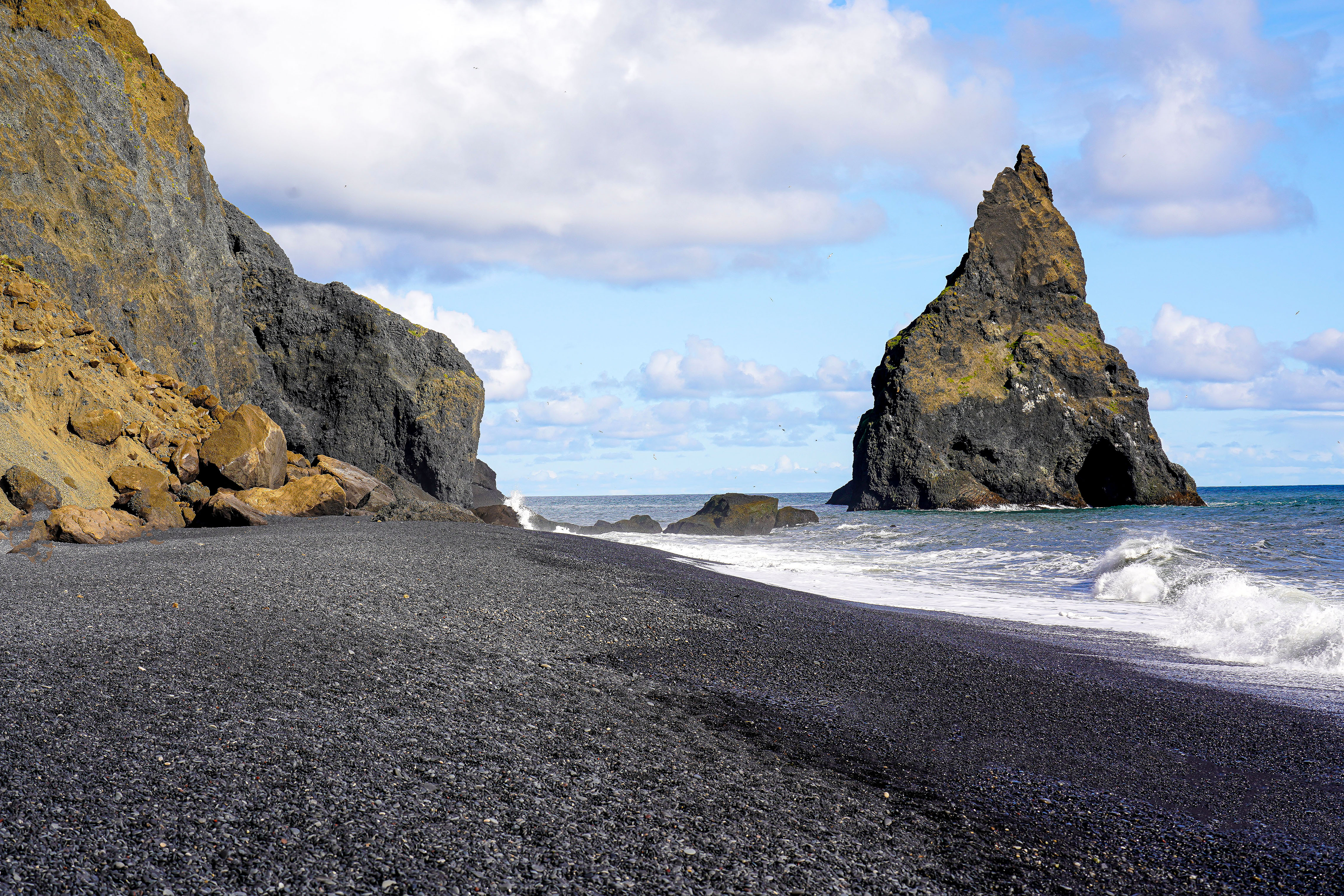


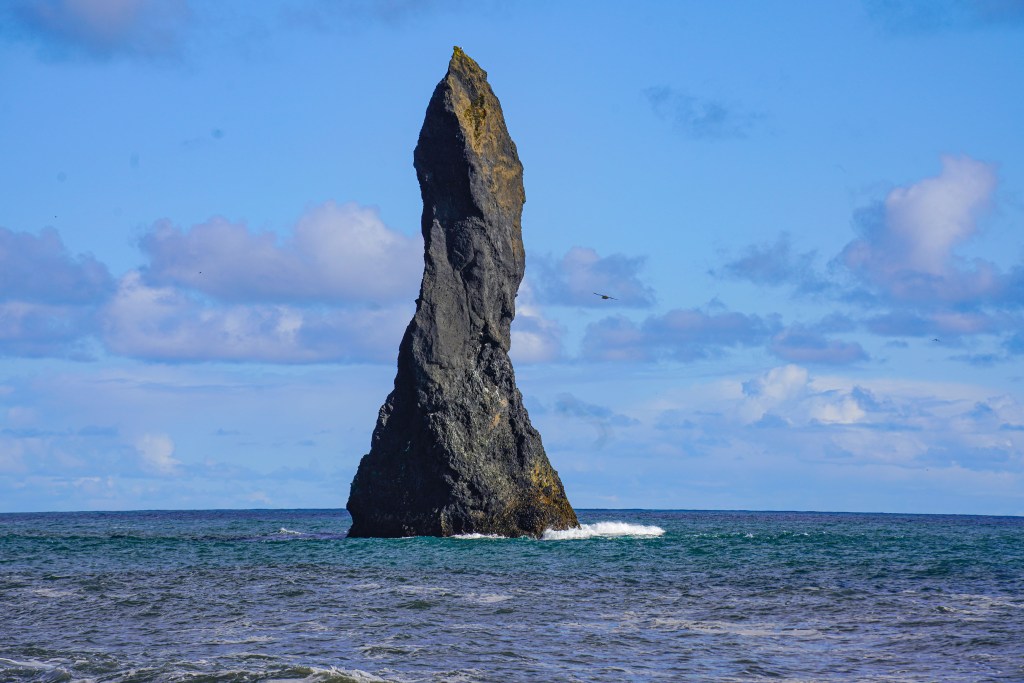

This area is also known for its migratory birds, such as puffins, which can be seen flying from the cliffs and floating on the water about 100 yards offshore. We were able to spot several from a distance. When visiting Reynisfjara Black Sand Beach, don’t ignore the warnings of sneaker waves. These large waves can appear suddenly and drag you into the ocean, leaving you fighting for your life. There have been several people killed on this very beach due to sneaker waves, so it is best to stay on the dry side of the beach. It goes without saying that you should not swim at this beach, as the water is cold and the strong waves and rip currents can be life-threatening. This was our final stop for the day. After dinner at a local pizzeria, we headed to our Airbnb in Hafnarfjörður. This would be our base for the remainder of our trip. The drive back was beautiful, offering us many photo-worthy views.
Tip
There is a public bathroom stall located outside the restaurant (which is quite dirty). Still, if you have paid for parking, you are also entitled to use the much cleaner restrooms inside the café, as restroom privileges are included with your parking fee.



Airbnb Review
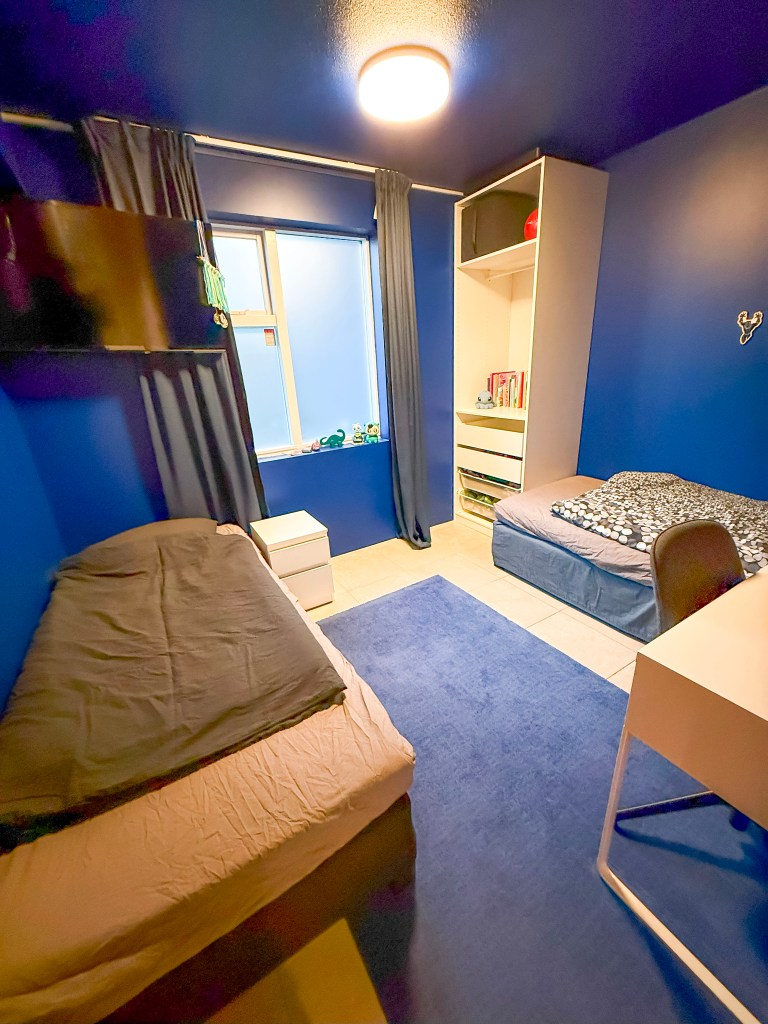
If you are visiting Iceland with younger children and want to have a base near Reykjavik, I highly recommend Elisa’s home in Hafnarfjörður. You can find the posting for her Airbnb here. Her three-bedroom home was perfect for our family of three young boys, and she had plenty of books and toys, as well as Disney TV and Apple TV, to keep our boys occupied. This home also has an outdoor jacuzzi and is close to restaurants and grocery stores. If you decide to rent an electric car, they even have an EV charger for guests to use. It is only a 15-minute drive to Reykjavik and a 30-minute drive to Keflavik International Airport.



Day Three
Blue Lagoon
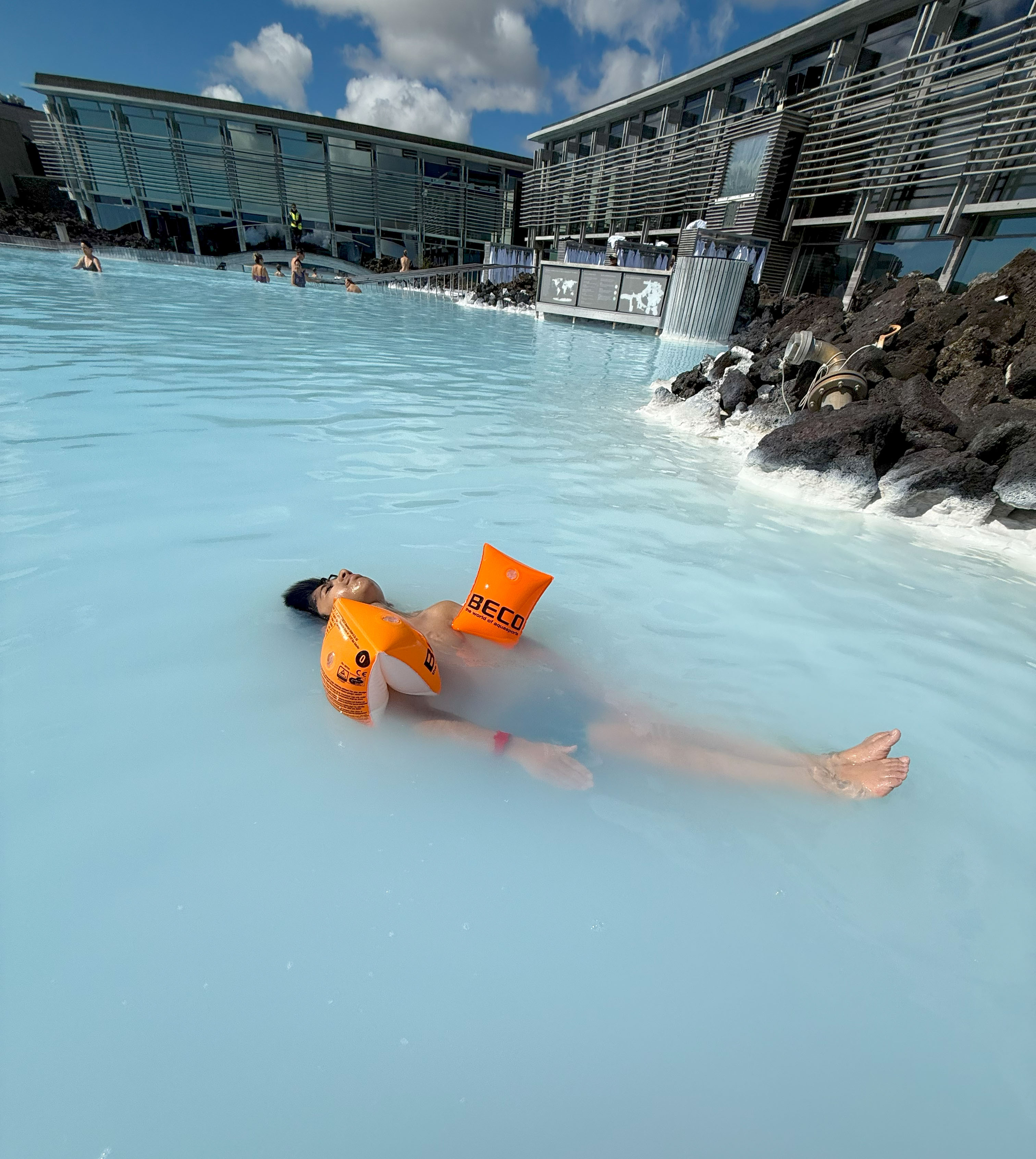
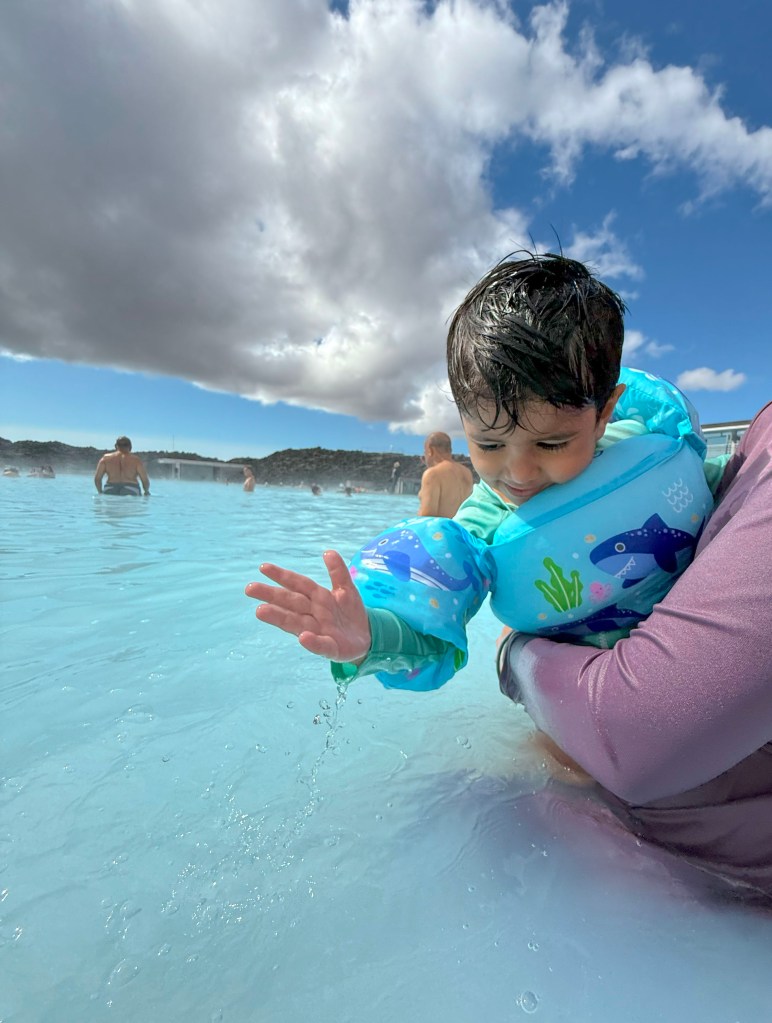
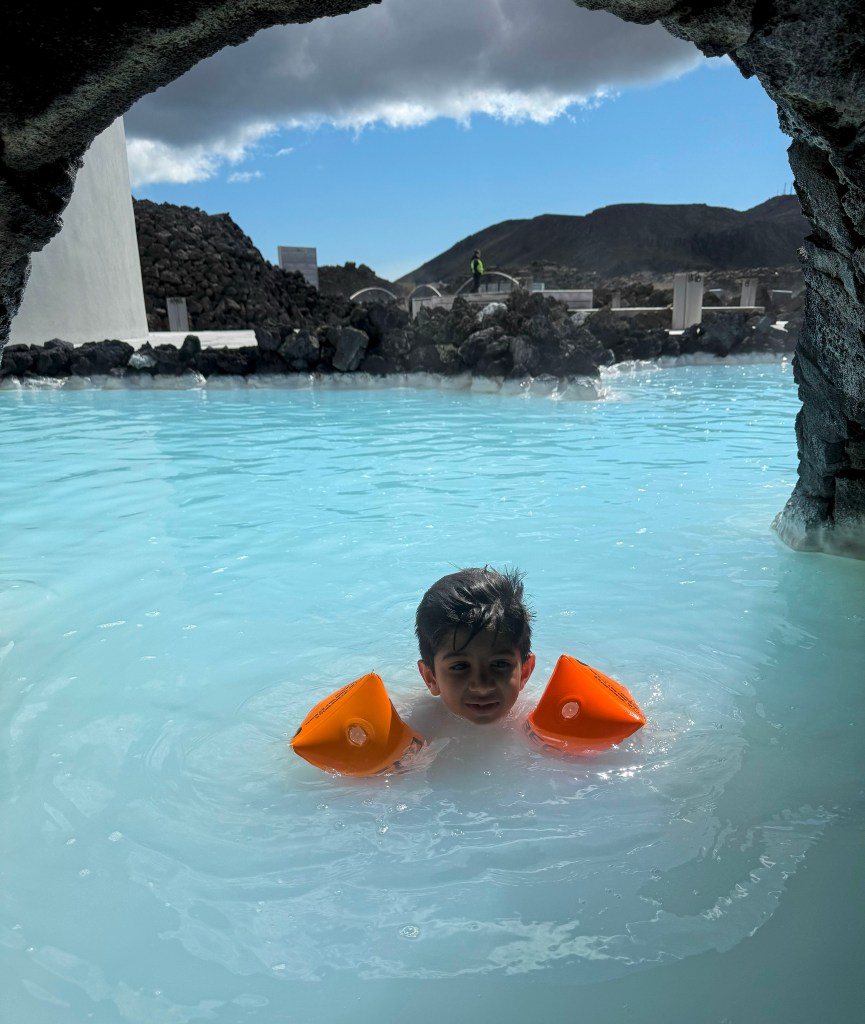
For first-time visitors, a trip to Iceland wouldn’t be complete without visiting Blue Lagoon, one of the most famous and most photographed spas in the world. Blue Lagoon is located in Grindavik, about a 20-minute drive from Keflavik International Airport and about 50 minutes from Reykjavik. Reservations are required, and the peak summer months tend to fill up several days in advance. Kids under 12 are free with a paying adult. What I love about Blue Lagoon is that they allow kids ages 2-8 to enjoy the lagoon if they are wearing floaties and are accompanied by a parent. Competitors to Blue Lagoon, such as Sky Lagoon, have a minimum age requirement of 12 years, making it impossible for families with younger children to enjoy an Icelandic spa experience together. My kids had a fantastic time here and wanted to stay longer than the four hours we spent there.


When to Reserve
Book an early morning time slot between 8:00 a.m. and 10:00 a.m. or after 7:00 p.m. on weekdays to avoid the crowds. Weekends are generally crowded and require booking further in advance. Once you’re there, you can be there as long as you like.
What Package to Book
Blue Lagoon offers three package tiers: Comfort, Premium, and Signature. We decided on the Premium package, which includes the following:
- Admission to the Blue Lagoon (stay as long as you like)
- Use of a towel
- Use of a bathrobe
- Silica mud mask and two additional masks at the Mask Bar
- Two drinks of your choice at the Lagoon in-water bar
What to Bring
Bring a pair of flip-flops or slippers to avoid walking barefoot in the locker and shower areas. If you bring your phone, I highly recommend getting a protective pouch. The blue lagoon is rich in silica, which can damage a smartphone. If you have a GoPro, that is the way to go. And last but not least, don’t forget to bring sunglasses! If you’re there on a sunny day, the glare reflecting off the lagoon can be powerful and uncomfortable for your eyes.
Other Tidbits on Blue Lagoon
The silica-rich water of Blue Lagoon is excellent for the skin. People come from all over the world to treat eczema and psoriasis. The Blue Lagoon also offers hotel accommodations, but nightly rates range from $1,500 to $2,000.
Golden Circle
Kerid Crater
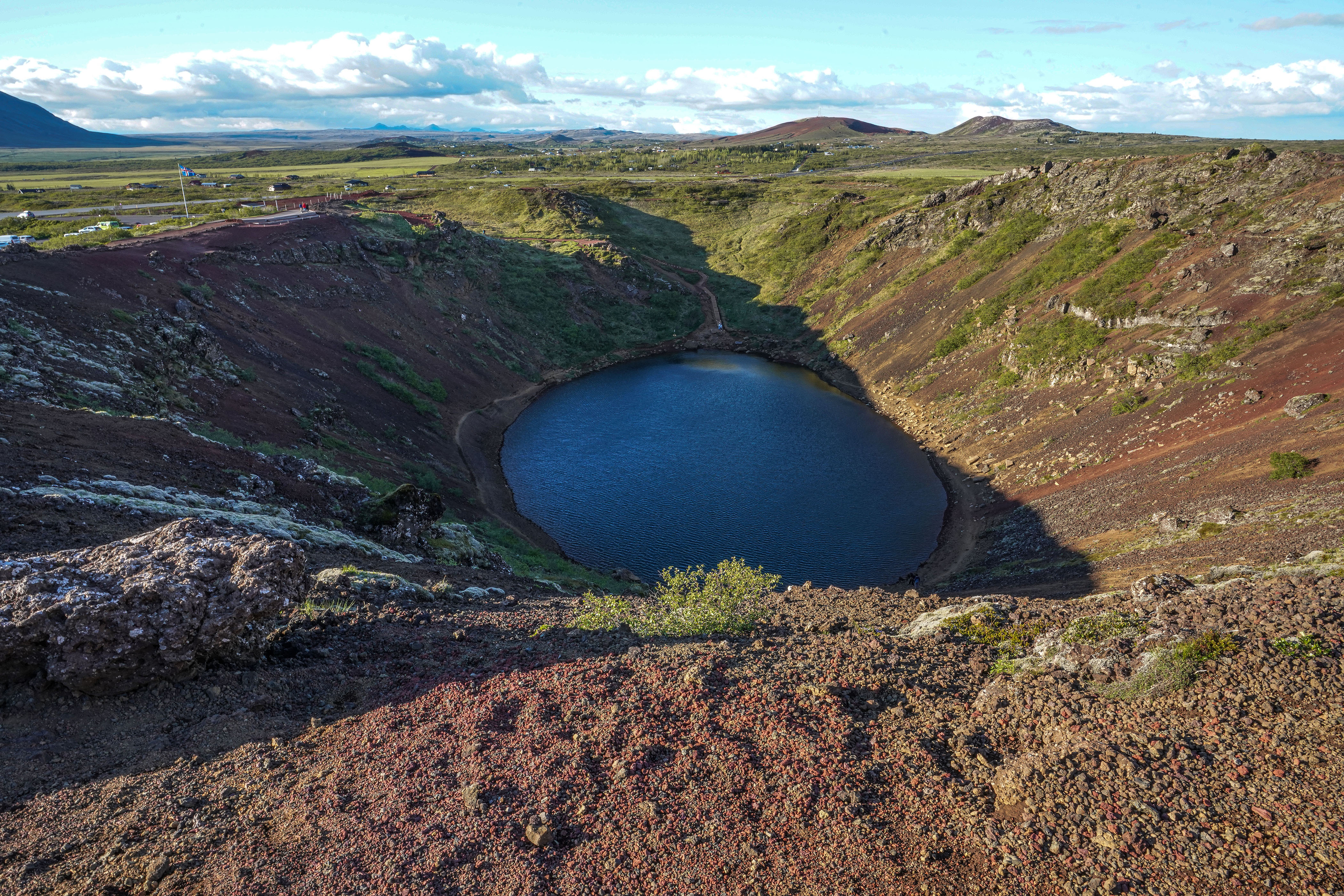
After visiting the Blue Lagoon, we drove the Golden Circle, a 190-mile loop that includes several points of interest. Although technically not part of the Golden Circle, Kerid Crater was our first stop. Kerid Crater is classified as an extinct volcano and has a clearly defined caldera and a lake. It costs $5 USD to visit Kerid Crater, and you can climb down the stairs to get to the lake. Although the trail around the caldera is short, it is not stroller- or wheelchair-friendly. If you don’t hike to the lake, 20-25 minutes is sufficient time. If you’re visiting Iceland with kids in early elementary school, I highly recommend making this stop. When they learn about earth science and volcanoes, they will be able to draw on their real-life experience.
Gulfoss Waterfall
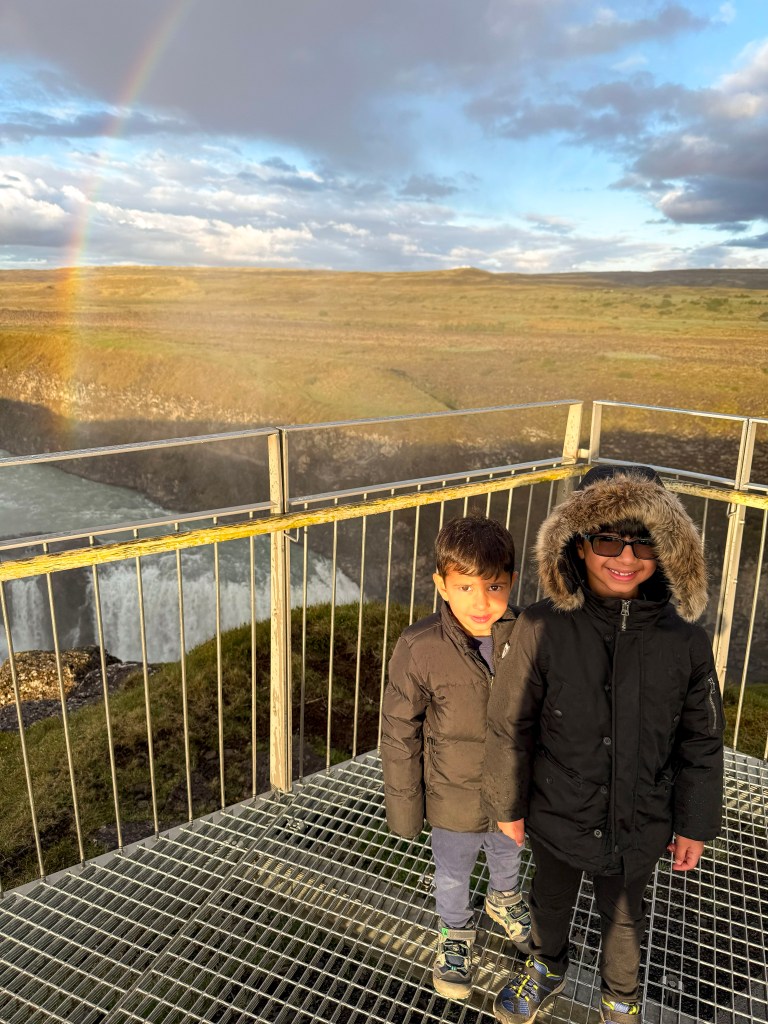
Located about 45 minutes away from Kerid Crater, this was our second stop on the Golden Circle. Gulfoss is a beautiful, two-tiered waterfall with two viewpoints. The upper viewing platform is stroller- and wheelchair-friendly, offering a bird’s-eye view of the falls. The lower viewing platform requires descending stairs and a short hike. The lower viewing platform is surrounded by a strong mist emanating from the waterfall, so you may get a little wet. This is one of the few sites in Iceland that is entirely free. Parking is free, and there is no fee to see the falls. There is also a gift shop adjacent to the parking lot.

Haukadalur Geothermal Valley
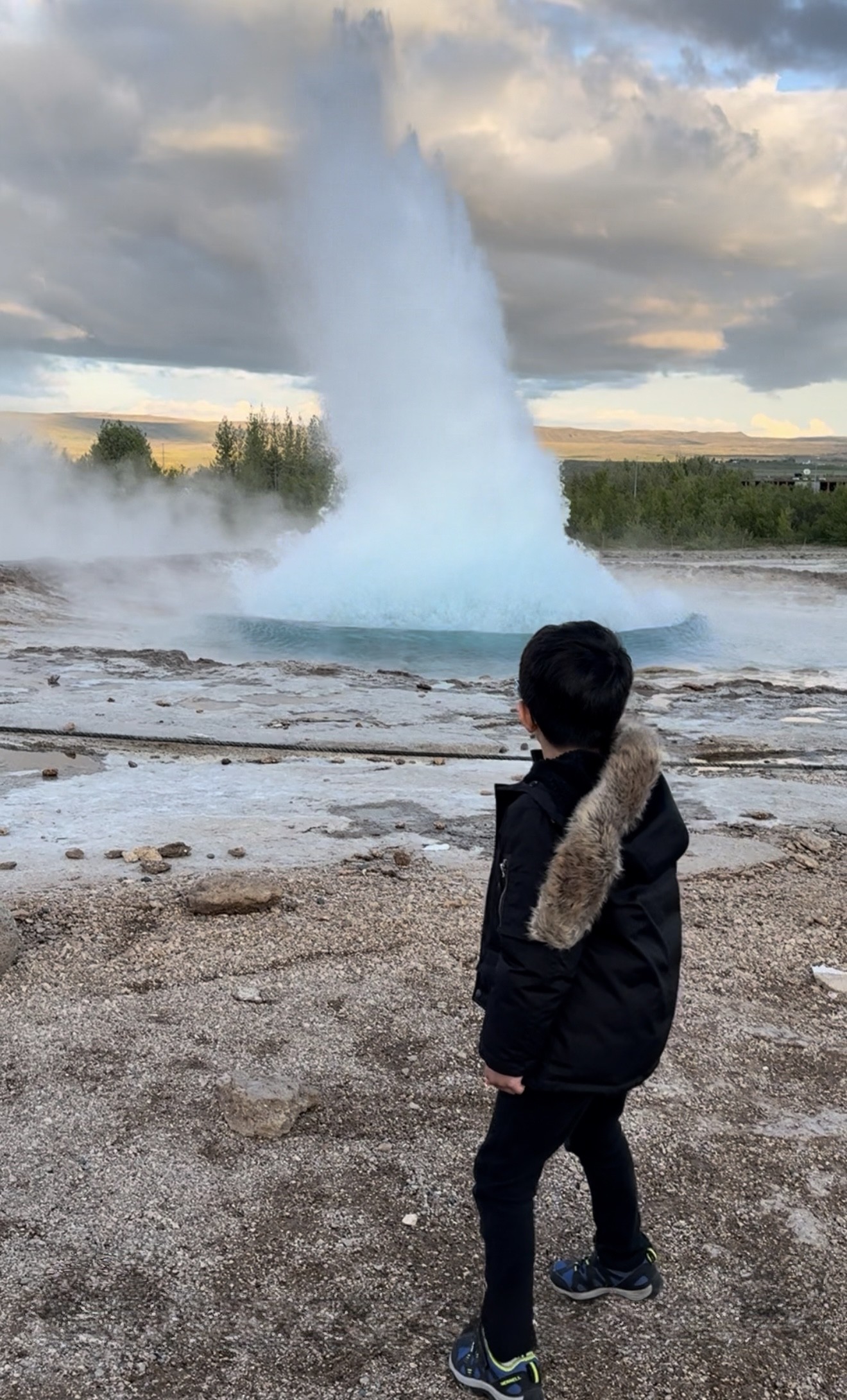
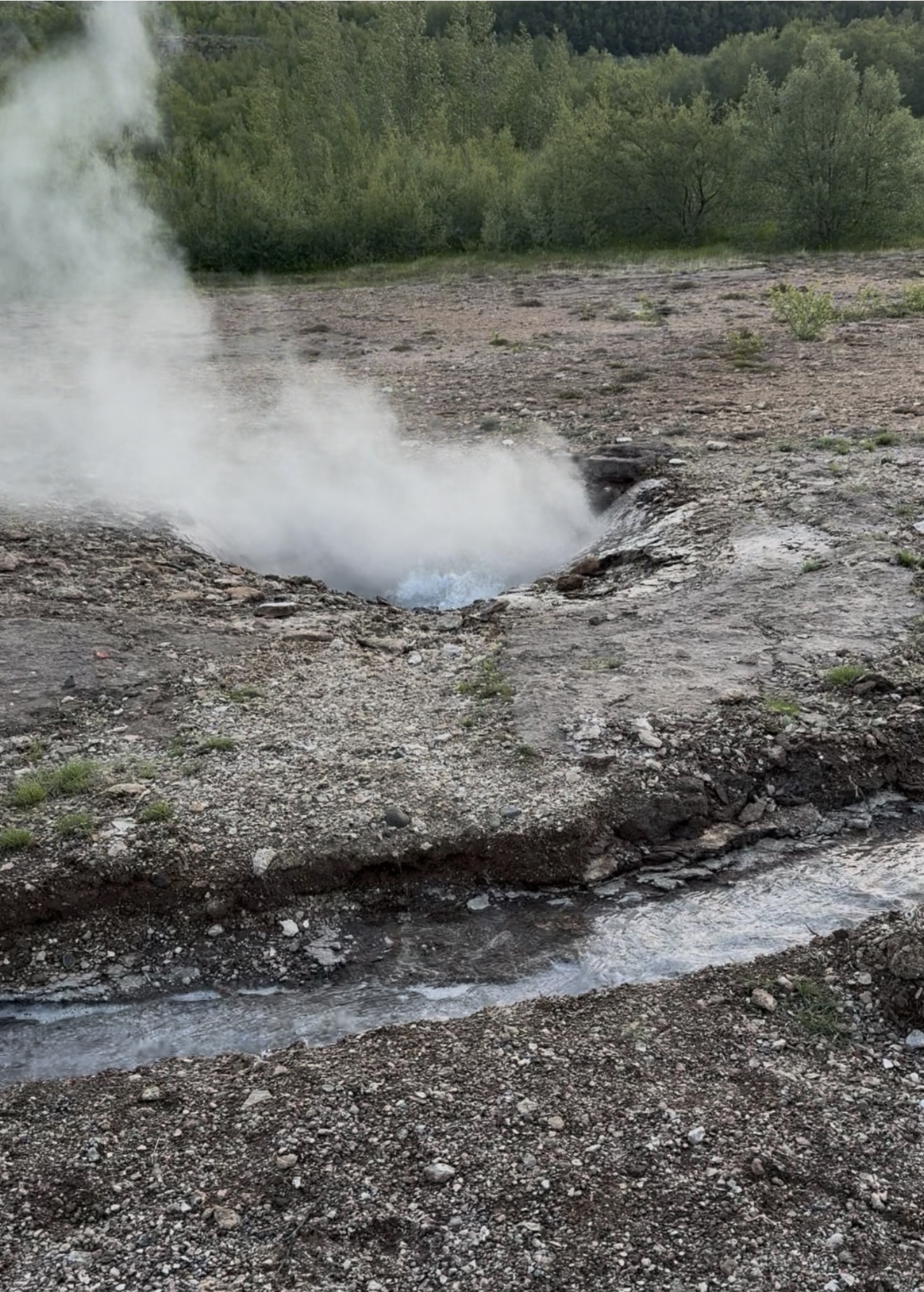
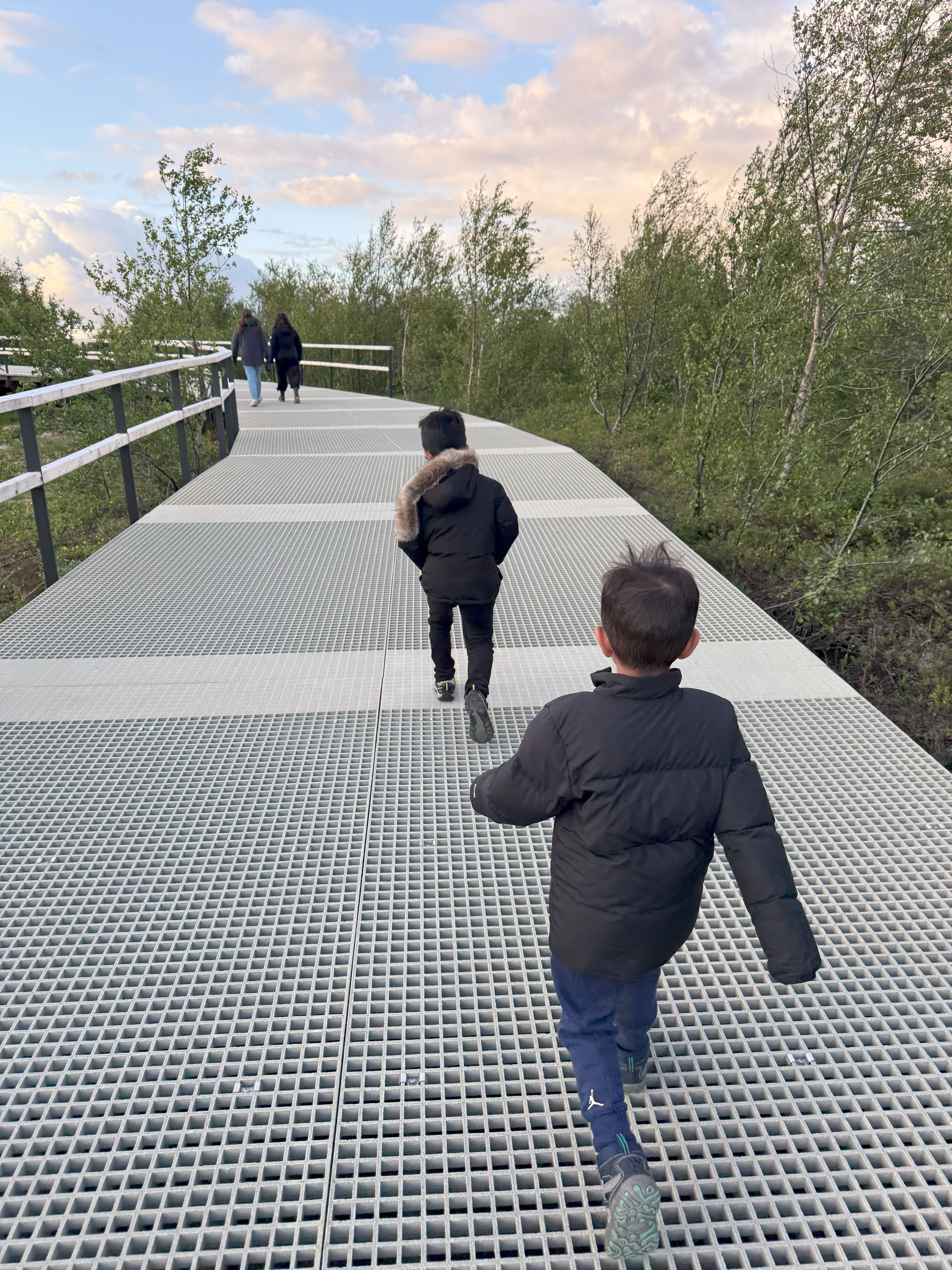
This is another stop on the Golden Circle, and it’s probably the one I would prioritize if you’re traveling with kids. Haukadalur is home to the Geysir Hot Spring area, which has multiple boiling mudpots and the star attraction, Strokkur Geyser. This geyser reliably erupts every five to seven minutes, and my kids were fascinated and entertained. The geysers and mudpots are well marked, and the area has a distinct “rotten egg” smell from the hydrogen sulfide emitted by these vents. Since hydrogen sulfide is an irritant, people with asthma or respiratory conditions should use caution when visiting this part of Iceland. It is important to stay behind the ropes and on the trail, as the boiling hot water can inflict severe burns. Since my last visit, there have been significant improvements to the area, with the construction of an elevated walking path. The trail is now stroller- and wheelchair-friendly, and the final phase of construction is expected to be completed by the end of 2025. The parking lot for Geysir is located across the street, and you can use the Parka app or scan the QR code to pay 1,000 Kr (approximately $7.50).

Pingvillir National Park
Our final stop on the Golden Circle was Pingvillir National Park. This National Park is known for its beautiful scenery and is the only place in North America where you can see the North American and Eurasian tectonic plates on land. These two plates are drifting apart at a rate of 2 centimeters per year. You can also scuba dive between the two tectonic plates in the crystal clear waters of Silfra Fissure. Since this was the final stop of a very long day, we didn’t have as much time as we would have liked, as the kids were asleep by the time we arrived.

Day Four
Lava Show Reykjavik
This is one of the most unique experiences we had in Iceland, and one that I highly recommend for anyone, particularly kids aged four and over. The Lava Show Iceland does a fantastic job combining entertainment with education. Spectators are given a brief introduction to Iceland’s geologic history and how it has manifested in recent years, particularly through volcanic eruptions. This is followed by a lava demo, where lava from the 1918 Katla eruption is reheated to 2,000 degrees Fahrenheit and then allowed to flow down a ramp, allowing spectators to observe its physical properties as it cools. The kids had a lot of fun, and their eyes were glued to the show the entire time. This is followed by a Q&A session at the very end. A gift shop is also available for those who wish to purchase souvenirs on their way out. If you’re staying in Southern Iceland, Lava Show Vik is the original location, and you can book the same experience there.


Snaefellness Peninsula
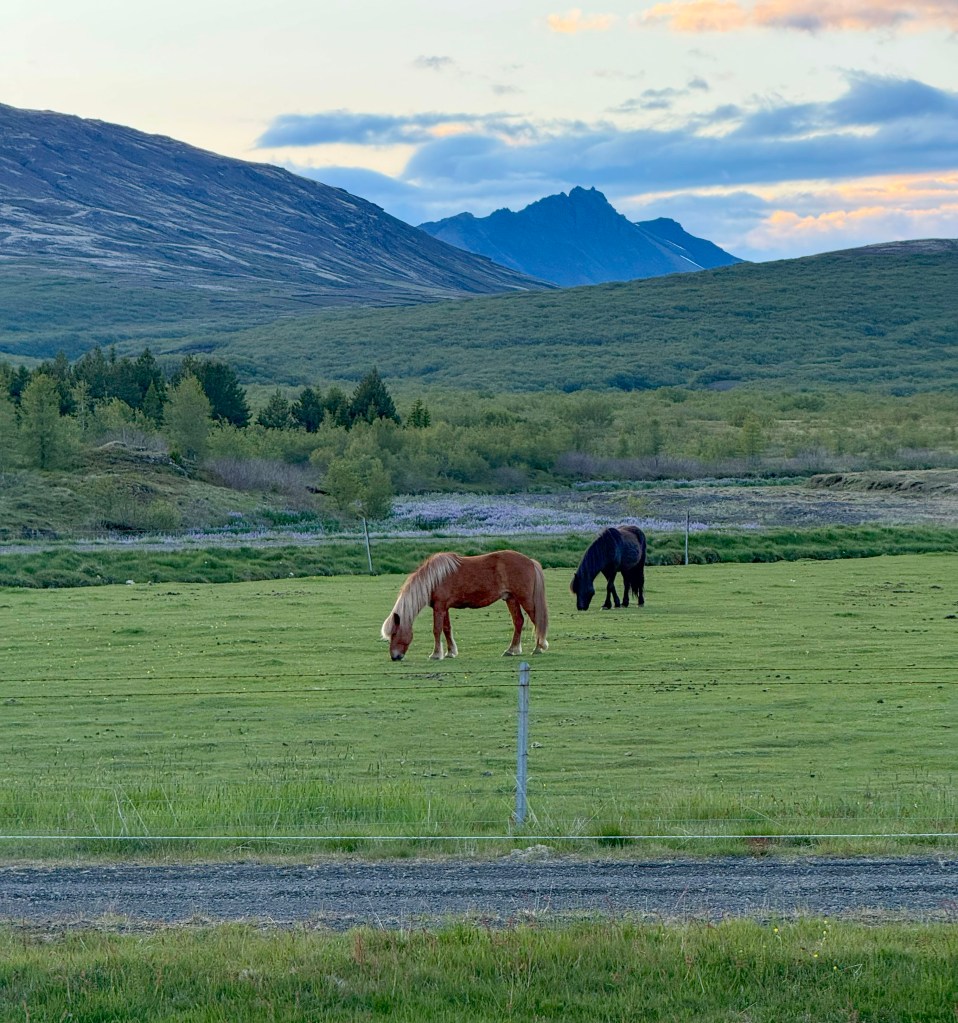
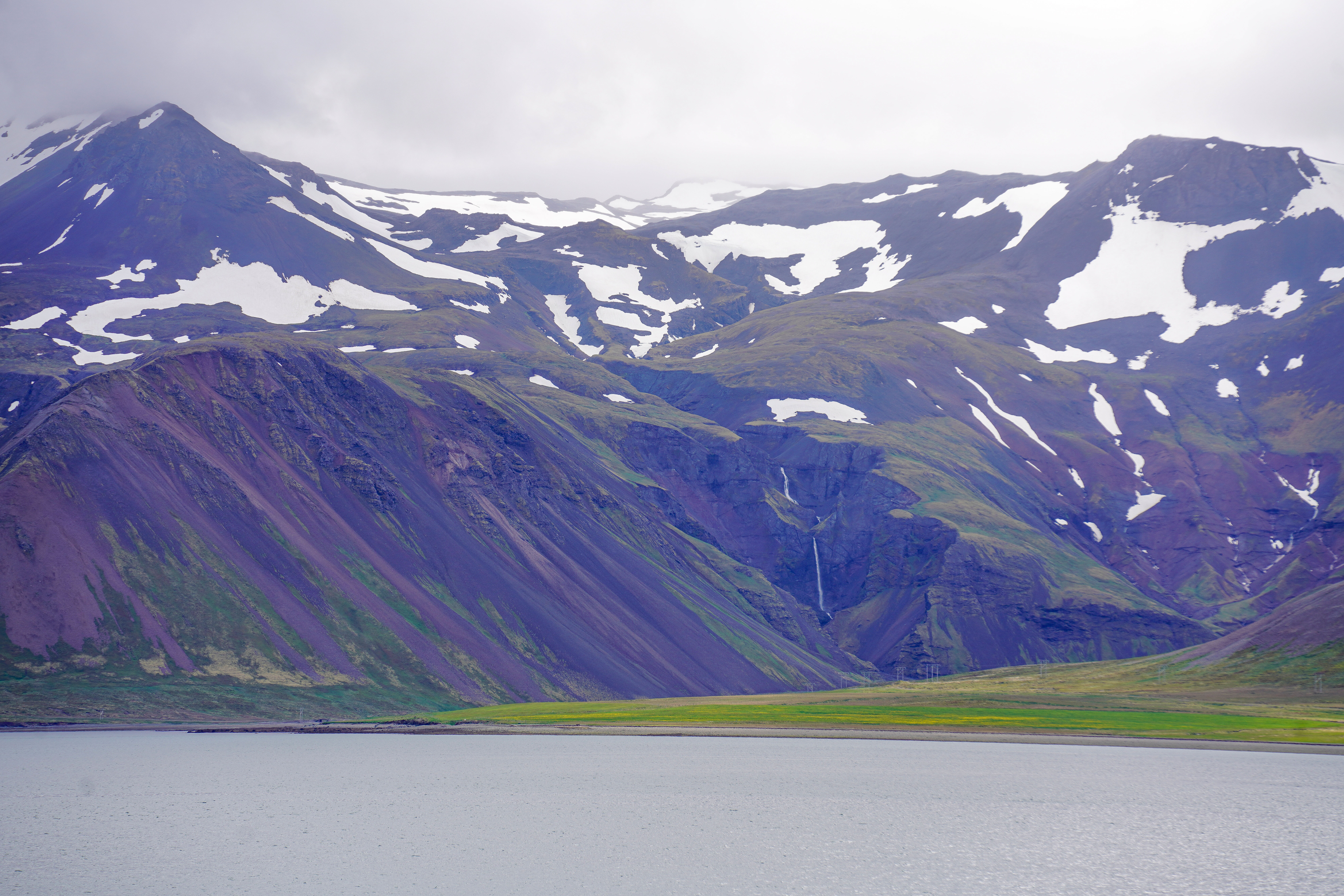
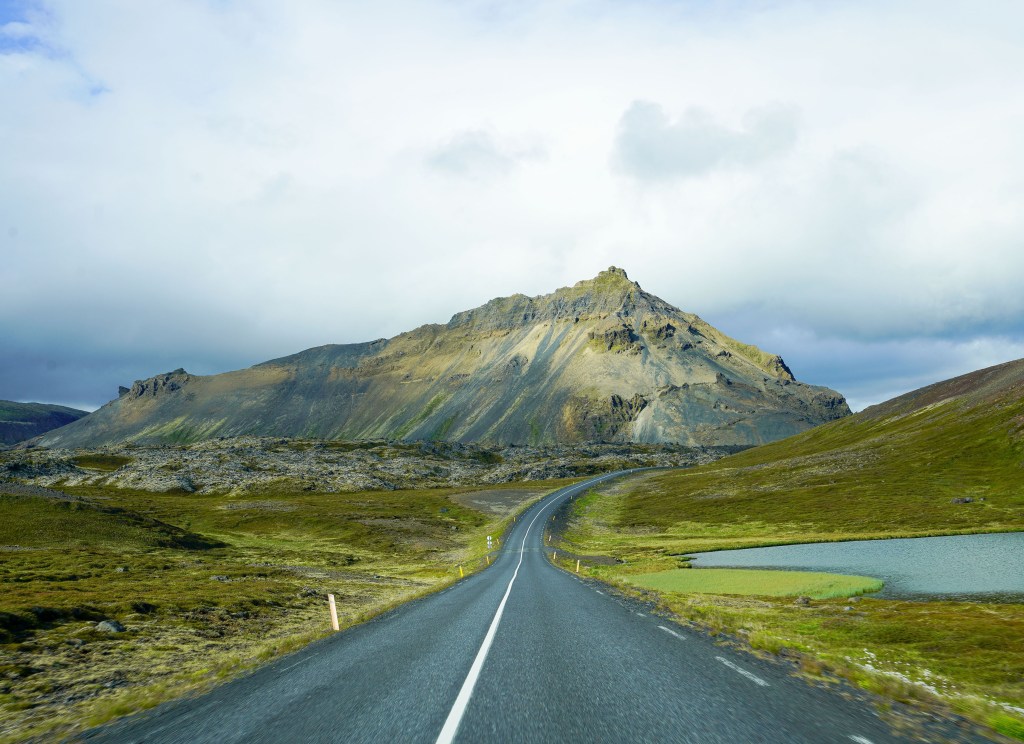
Located approximately two and a half hours northwest of Reykjavik, the Snæfellsnes Peninsula is home to several notable attractions. Our first stop was a small pullout on Route 56 in front of Lake Selvallavatn. I highly recommend stopping at this lookout point. This view was memorable, and the moment my eyes met the beautiful landscape, which looked like a pastel oil painting, I knew I had to get out of the car and take pictures. Several others were parked in the pullout lot, enjoying the same view.


Kirkjufell
Our next stop was the famous Kirkjufell Mountain, which was featured in multiple episodes of Game of Thrones. Kirkjufell overlooks Kirkjufellsfoss, a series of three separate waterfalls that share the same name. This mountain is one of the most photographed locations in Iceland, and you will likely see several photographers with tripods trying to get that perfect picture. There is a paid parking lot at Kirkjufell, and you can use the EasyPark app to pay. The path to the waterfalls is gravel, and you need to climb a few stairs to get a picture that includes Kirkjufell and the three waterfalls. Unfortunately, the gravel path makes the short hike to the waterfalls not friendly for wheelchairs or strollers. However, you can still get a perfect view of Kirkjufell from the parking lot, as you are closer to that vantage point than the waterfall area.


Snaefellsjokul National Park
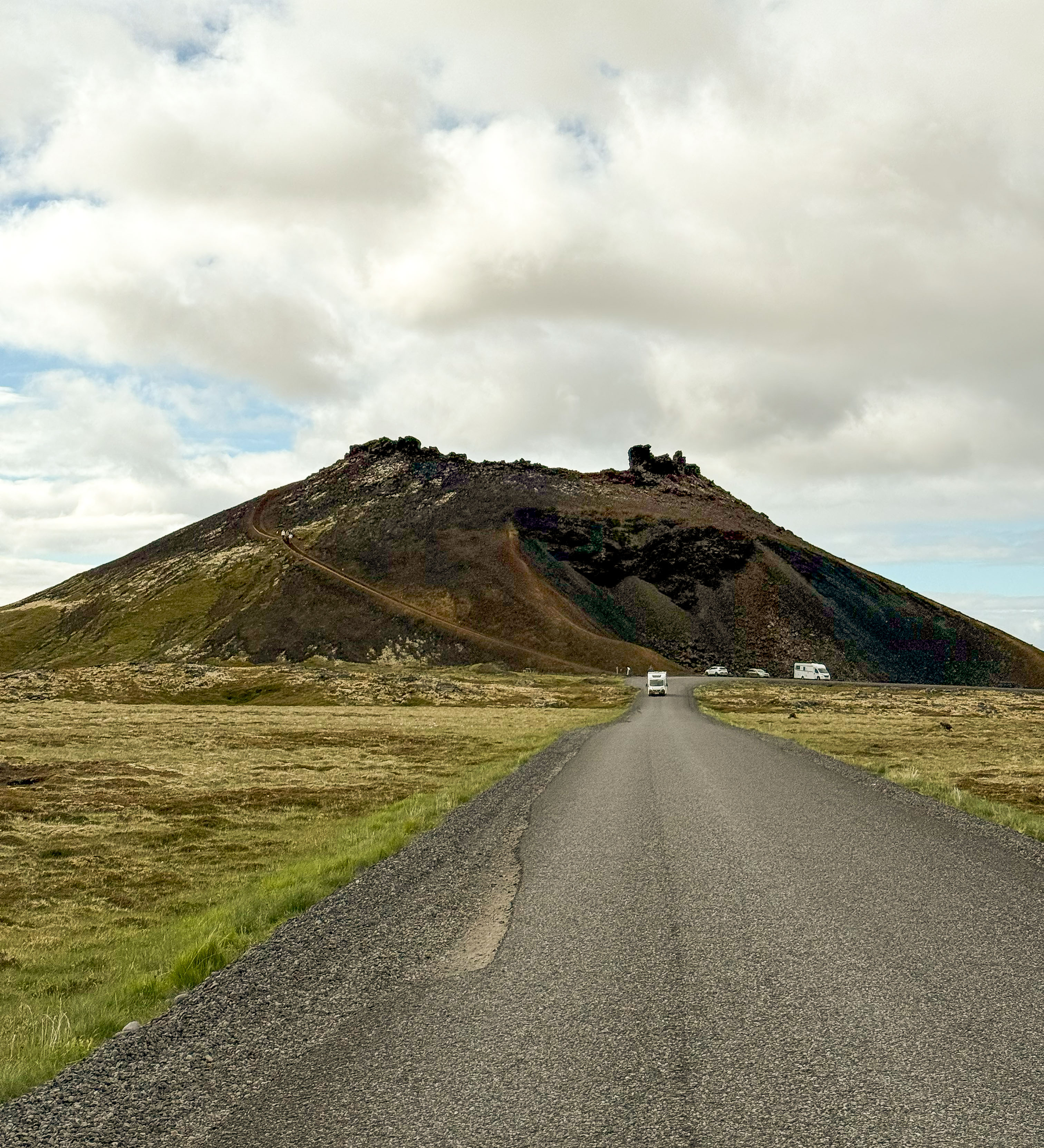
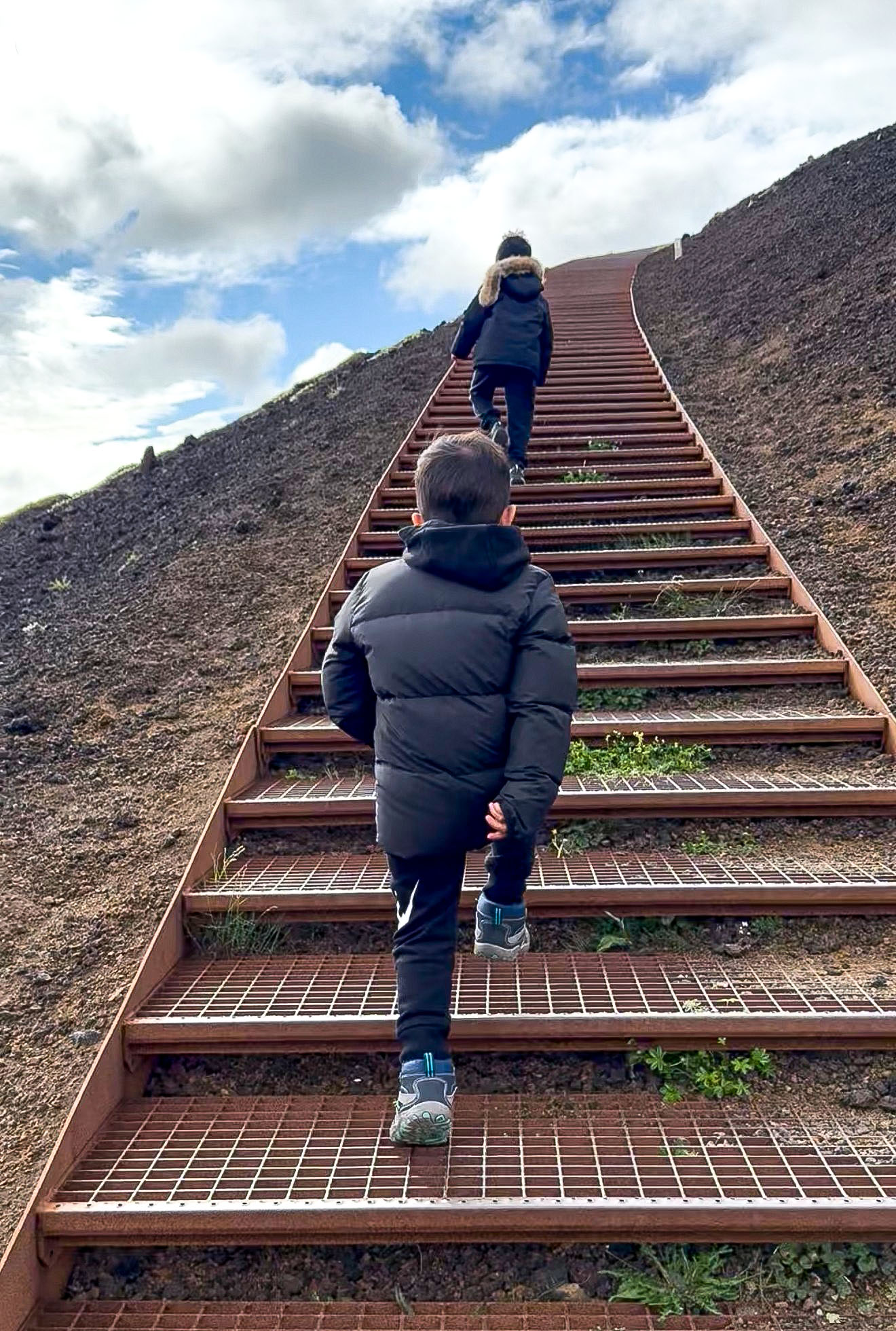
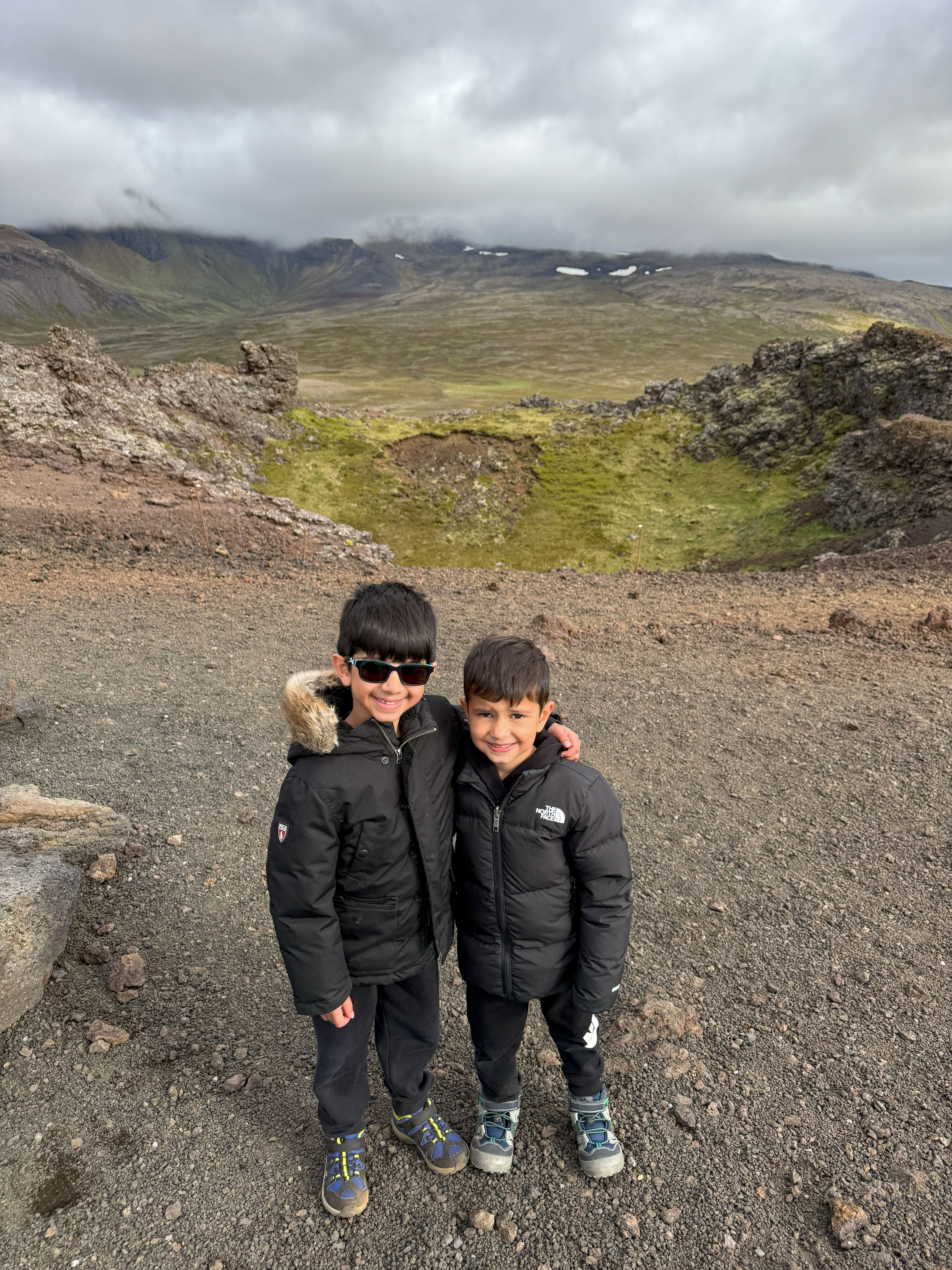
We continued driving west on the Snaefellness Peninsula on Route 54, which then diverges into Route 574. This led us to the Snaefellsjokull National Park, a beautiful park with a diverse landscape that extends from the shoreline to the Snaefellsjokull Stratovolcano, from which the park gets its name. Our first stop was Saxholl Crater, a small extinct volcano visible from the road and offering excellent views from the top. You must climb a metal staircase with 384 steps to reach the top, but the stairs are not spaced far apart, making the climb relatively easy.
Malariff Lighthouse
Upon exiting the park, we took a slight detour to see the Malariff Lighthouse near the town of Hellnar. This is a beautiful lighthouse, and the area is known to be home to arctic foxes. There is a visitor center with bathrooms and a gift shop. If you turn around, you will be treated to a magnificent view of the Snaefellsjökull Volcano, and you will be able to appreciate how vast this stratovolcano is.


Bjarnarfoss
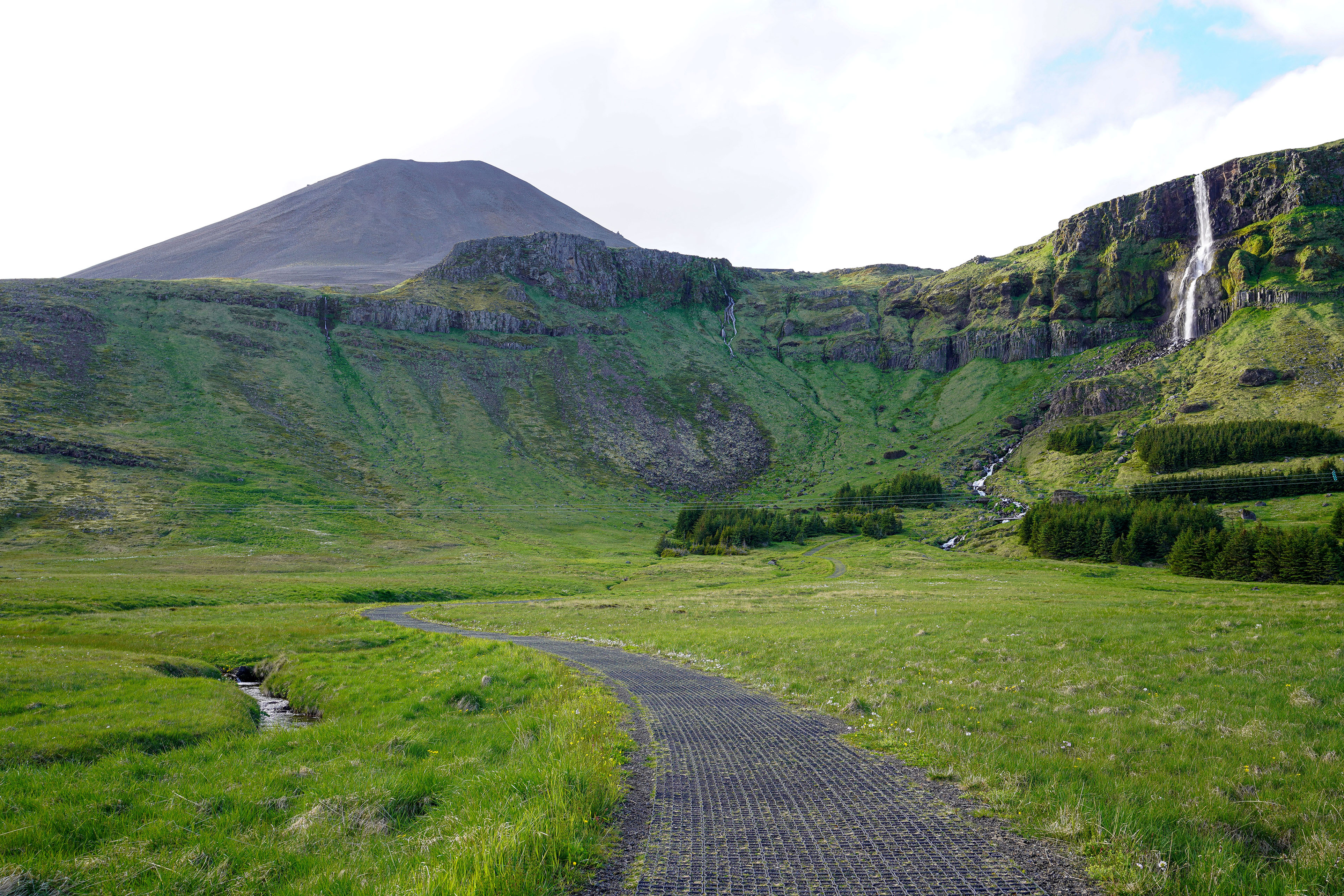
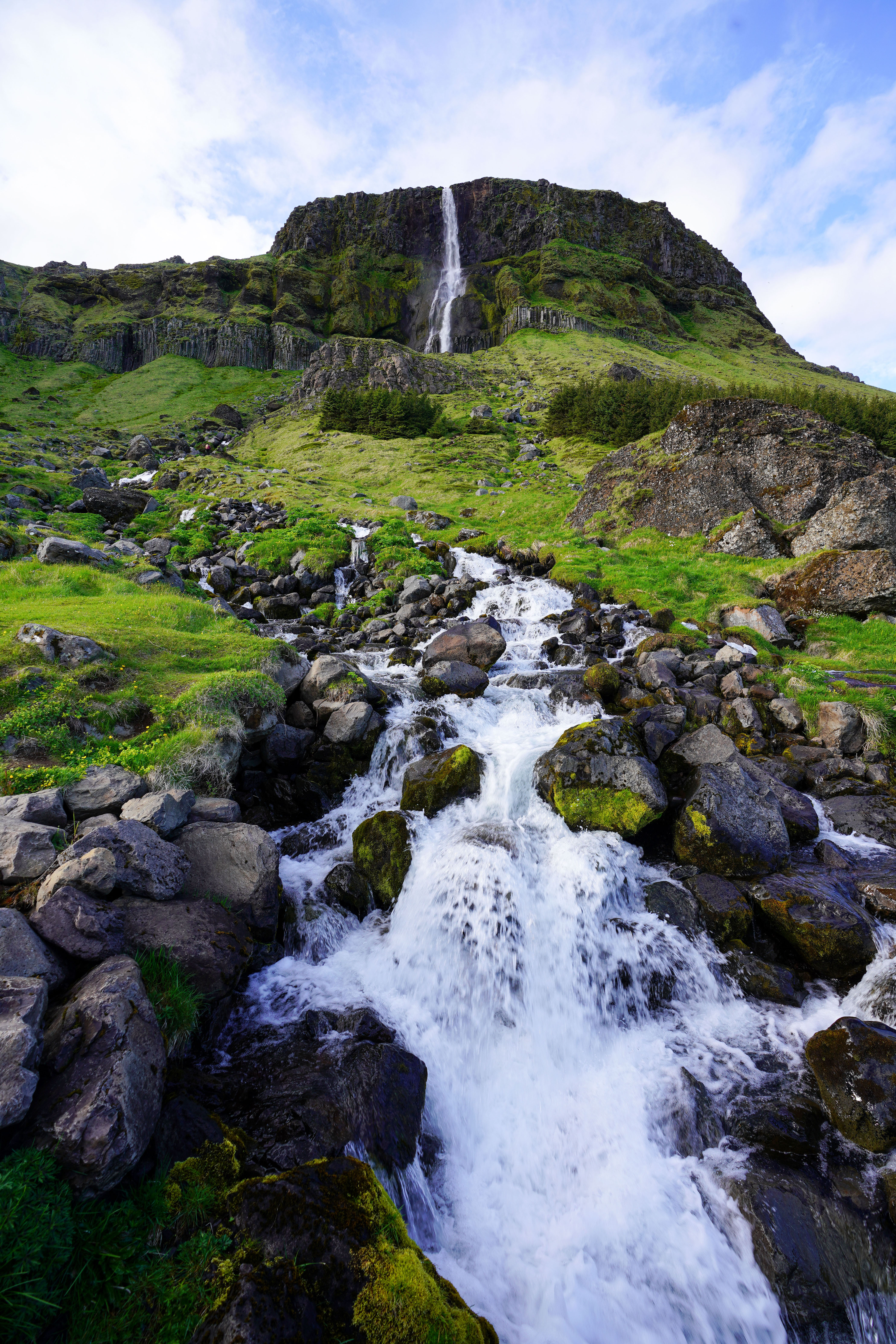
As we completed the loop around the Snaefellness Peninsula, Route 574 ended and converged with Route 54. Just a minute or two after we were on Route 54, we noticed the beautiful Bjarnarfoss Waterfall from the road and decided to pull into the lot. There is a relatively easy walking path to get closer to the falls, and the lush greenery surrounding it only adds to its elegance. I do recommend stopping here if you have the chance. Parking is free as of June 2025, and there were only four other people present during the evening hours. This was our final stop in the Snæfellsnes Peninsula, and the drive back to Hafnarfjörður concluded our fourth day in Iceland. The drive back to Reykjavik was full of picture opportunities.

Day Five
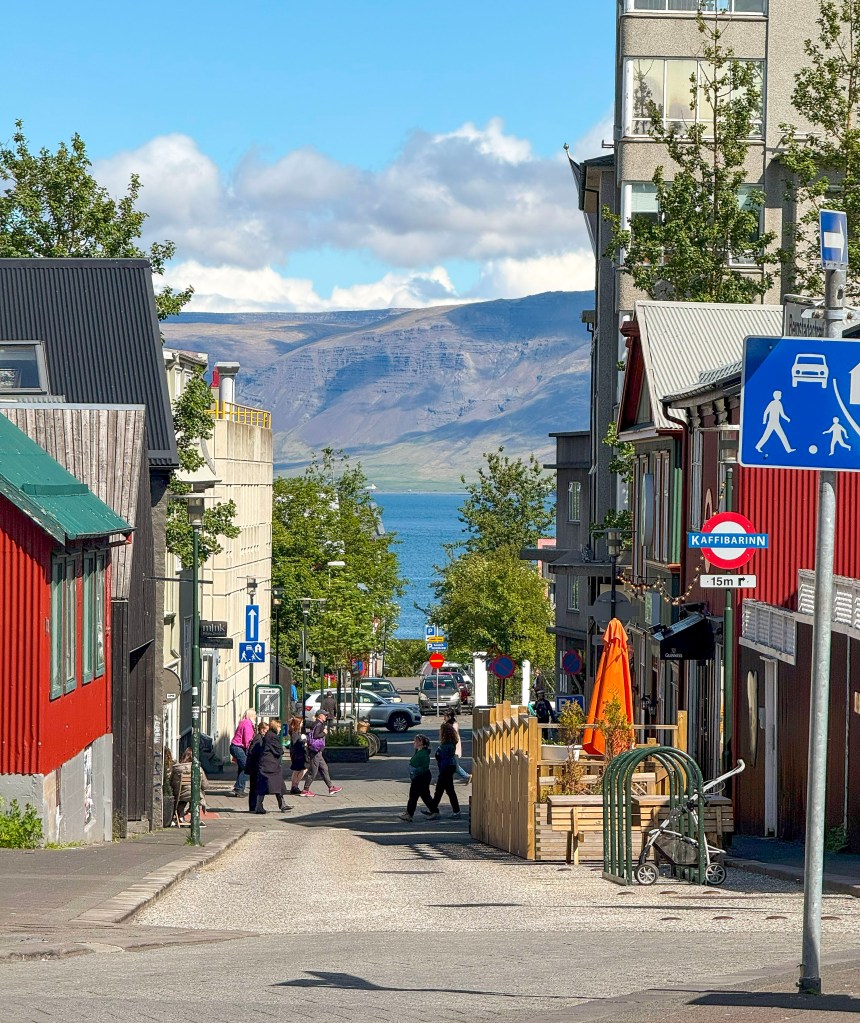
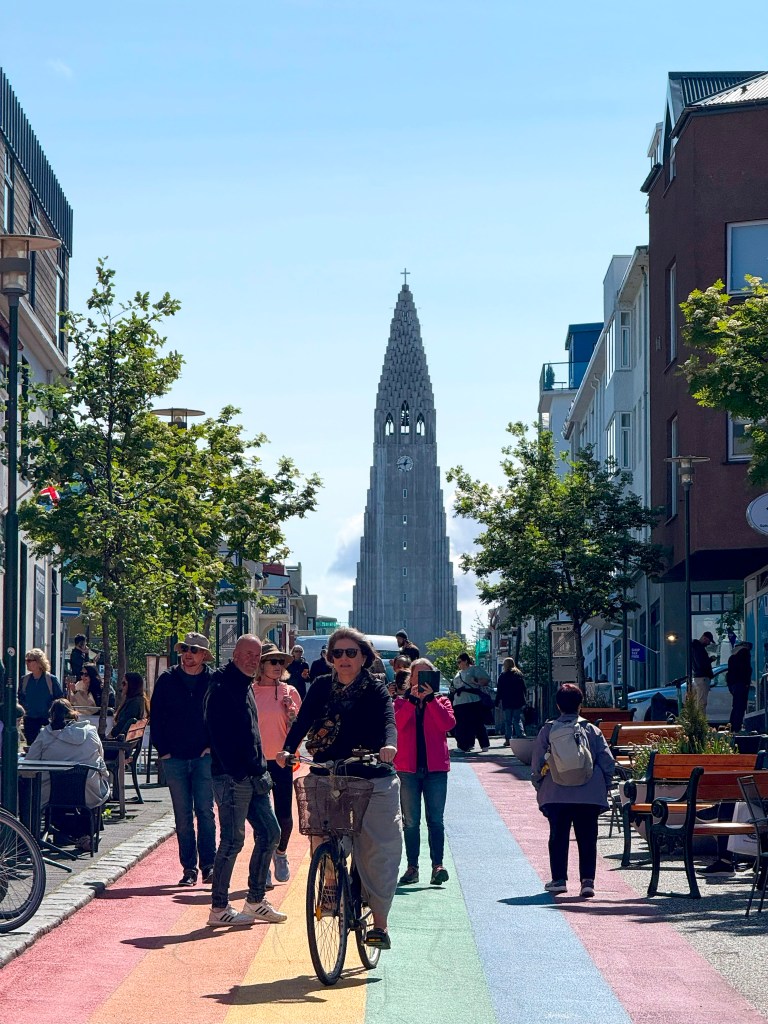
This day was dedicated to walking around Reykjavik and experiencing the splendor of Iceland’s Capital. The Midborg and Pingholt neighborhoods were excellent for walking around. These neighborhoods featured fantastic art galleries showcasing paintings and sculptures by local artists, as well as an abundance of restaurants, cafés, and shops where you could purchase clothing made from Icelandic wool. The brunch spots in Reykjavik were excellent (highly recommend Grai Kotterin).
If you walk over to Hlemmer, you’ll find the Hlemmur Food Hall in this neighborhood. They have multiple restaurants that serve fish and chips, flatbread pizza, SoCal-style fish tacos, and gelato, among other things. We had the fish tacos and fish and chips, and both were excellent.


To cap off the evening, we visited the western end of the Reykjavik Peninsula, known as Seltjarnarnes. This area boasts a coastal charm and is home to the Kvika Footbath, Grotta Island Lighthouse, and the Northern Lights Viewpoint. The path to the Grotta Island Lighthouse was closed to allow the migratory birds to nest peacefully. However, when the lighthouse is open to the public, be very mindful of the tide schedule. The pathway to the lighthouse is a simple walk during low tide, and you have approximately six hours to return. After that window, the high tide will completely submerge the walking path. Don’t get stranded! This was our last stop for the day.

Day Six
This was our final day in Iceland, and we stopped at the Library Bistro in Keflavik before our flight back to Chicago. This eatery is located on the first floor of the Park Inn hotel, about 10 minutes from the airport. The fish and chips were fresh, crispy, and delicious, making it the perfect way to cap off our trip to Iceland.

Tips
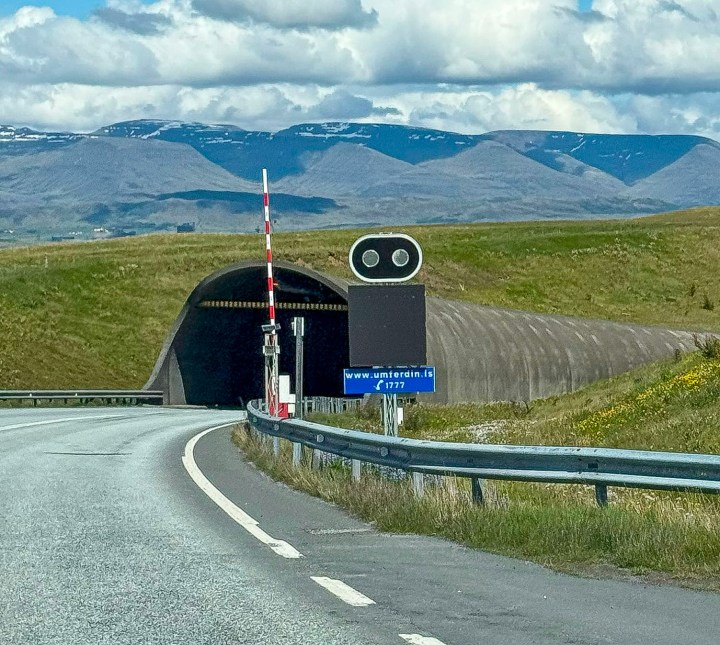
- Iceland has speed cameras scattered throughout the country, including along the Golden Circle and the Ring Road. Generally, there will be a sign warning drivers of the cameras about half a kilometer out. I would recommend having the Waze app open while driving, as it does a great job of warning drivers about speed cameras. The fines for speeding in Iceland can ruin your trip, as they start at $200 (USD) and can reach $700. Drive safely and respect the local laws.
- Since Iceland is an island country in a cold climate, most of its food and groceries are imported. When eating out, you can expect to pay 60%-100% more than what you would in North America and Continental Europe. Several travelers we met would cook their own meals in an Airbnb or their RVs.
- As of June 2025, the price of gas in Iceland is over $8 (USD) per gallon. There is a reason why Teslas are so ubiquitous there. If you plan to drive extensively and won’t be driving on F roads, renting a Tesla can save you hundreds, potentially even thousands, on gas. Iceland has electric charging stations throughout the country, and if you plan accordingly, you can complete the entirety of the Ring Road in an electric car.
- Reykjavik has a Costco with a gas station, and the gas station offers significant savings compared to a stand-alone station. U.S. memberships are honored, and if you’re there for a week or more, stocking up on essentials at Costco is often more cost-effective than shopping at local grocery stores.
- During the summer, blackout curtains are your best friend. Even at midnight, there is enough light outside to significantly disrupt your circadian rhythm.
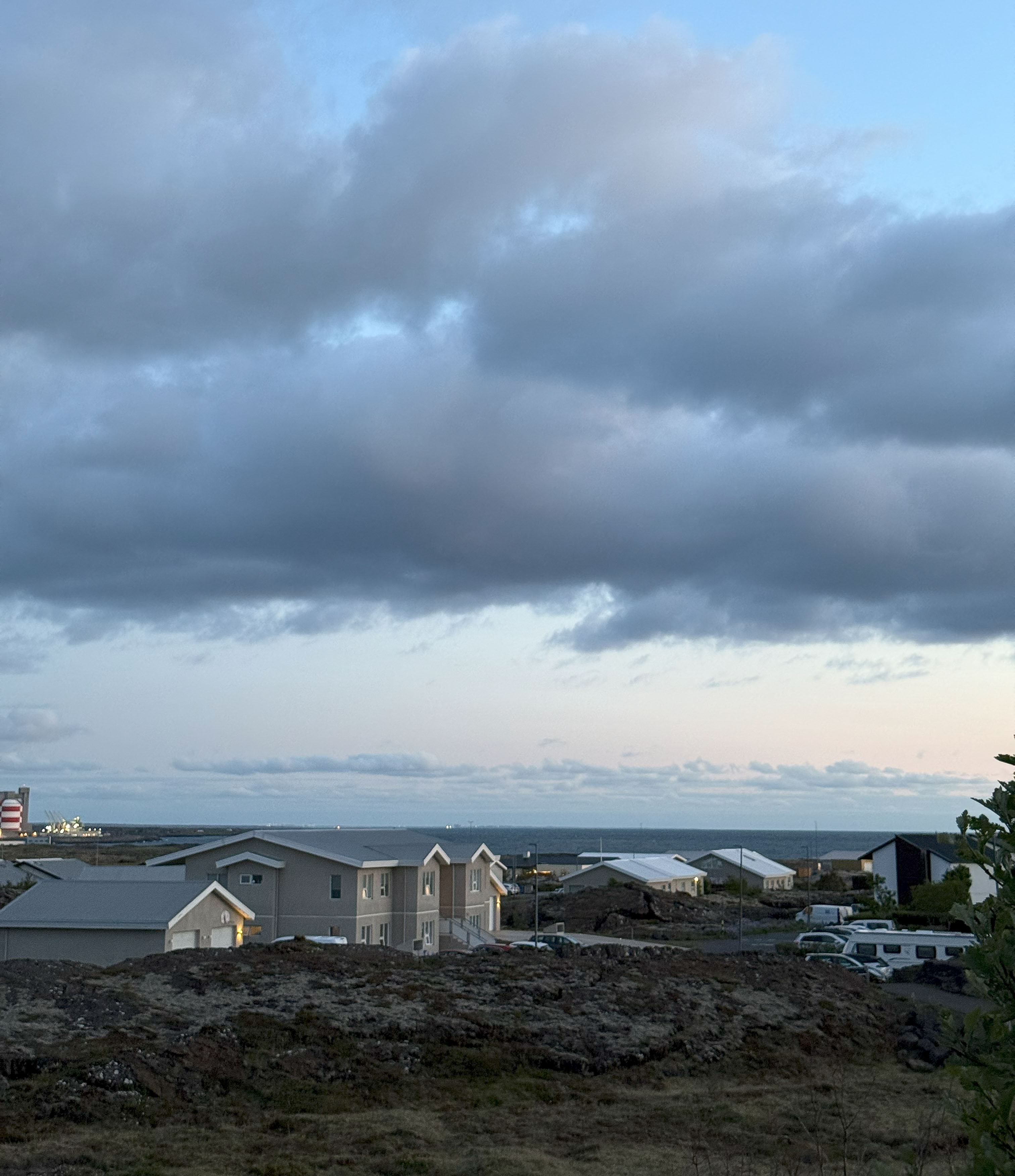
- The green velvety moss that you see in postcards of Iceland is protected by Icelandic law. It is illegal to engage in activities that damage this crucial part of the Icelandic ecosystem. Stay on designated trails when hiking and respect local laws.
- It is mandatory to shower naked before entering public hot springs and geothermal pools in Iceland. Places like Blue Lagoon and Sky Lagoon offer private shower stalls, while other locations feature communal showers. This is also standard practice in Iceland, and visitors are expected to adhere to local customs.
Award Redemptions
To fly to Iceland, I redeemed Alaska Airlines miles for 17.5k points per ticket to fly on their partner airline, Icelandair. To fly back to Chicago, the redemption was 15k Ultimate Rewards points per ticket.
 Miles for places