Our family traveled to Morocco in the early summer of 2024, visiting Chefchaouen, Fes, and Marrakech—a long-awaited bucket list destination. June was the perfect time to explore, allowing us to fully appreciate the country’s rich history, stunning architecture, vibrant medinas, and cultural heritage. Our trip also coincided with the Eid Al-Adha holiday, allowing us to experience one of the most festive and significant days of the Islamic calendar in a country that celebrates the holiday over three days.
While we initially considered renting a car, we opted for a combination of private transfers and domestic flights after learning that driving in certain areas could be chaotic, especially at night. We carefully selected three cities with limited time, knowing that one trip wouldn’t be enough to experience everything Morocco offers. Though our journey was just a glimpse into the country’s beauty, we’re already looking forward to a return visit. Here’s a day-by-day breakdown of our adventure.
Day One
We flew nonstop with Iberia from Chicago (ORD) to Madrid, arriving around 7 AM. With a long 12-hour layover ahead, staying at the airport wasn’t ideal—especially with three kids. We booked the Hilton Madrid Airport for eight hours to rest, nap, and make the wait more comfortable. Once refreshed, we returned to the airport in the evening for our separate one-way flight to Tetouan, Morocco, on Air Arabia.
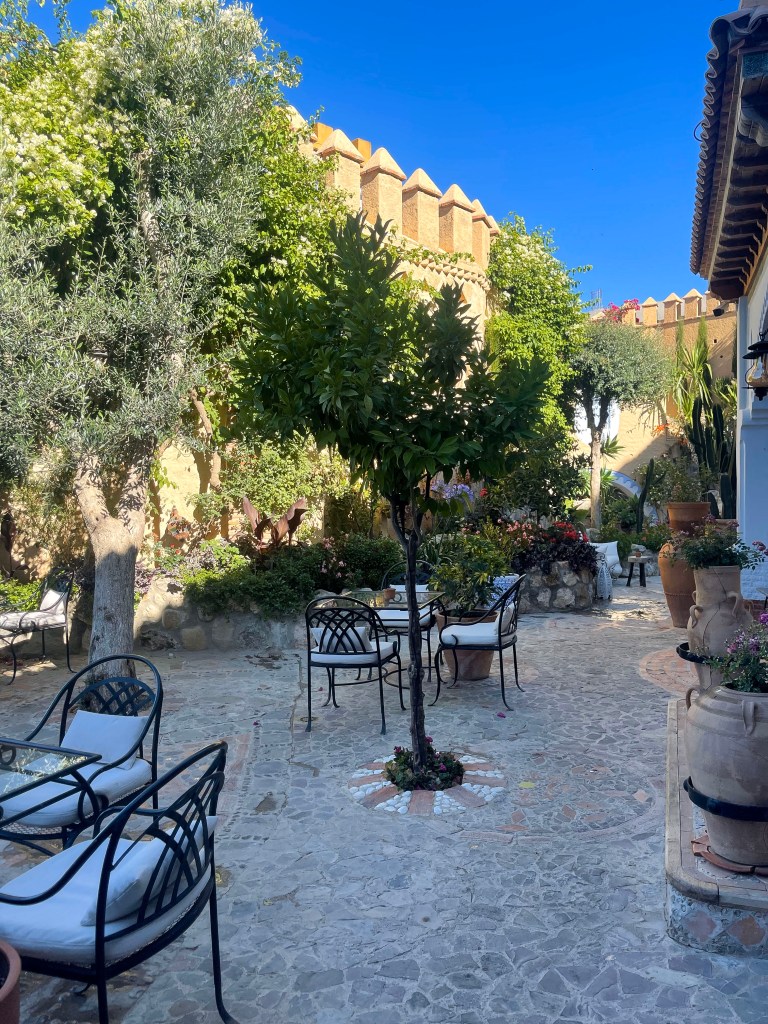
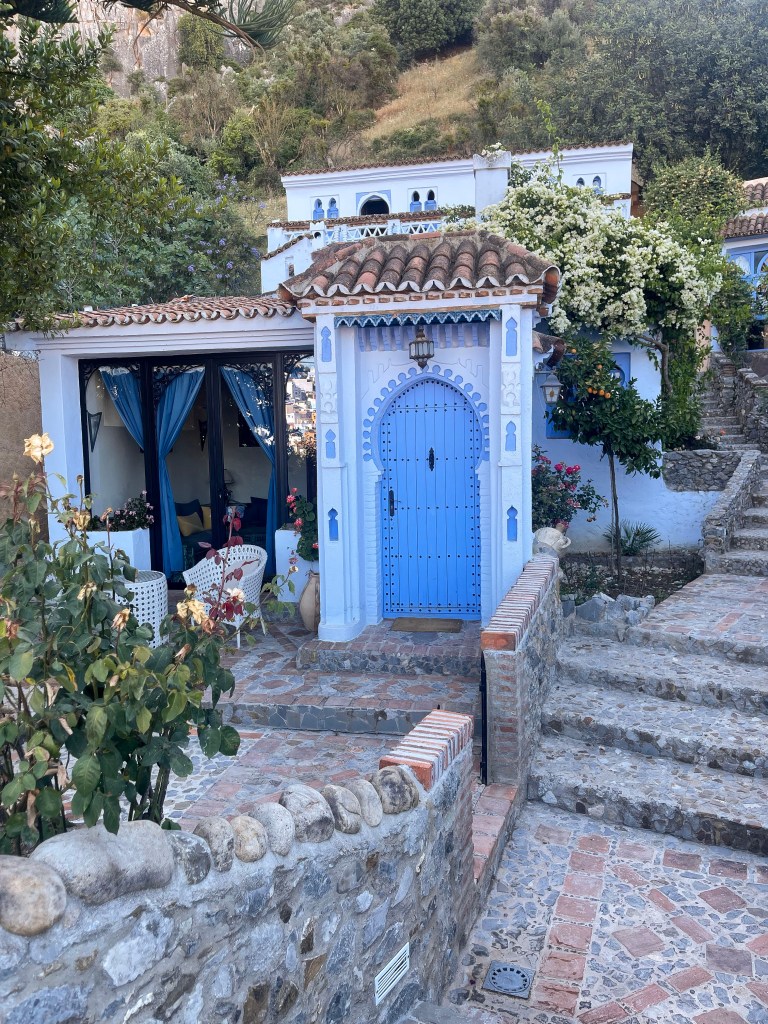
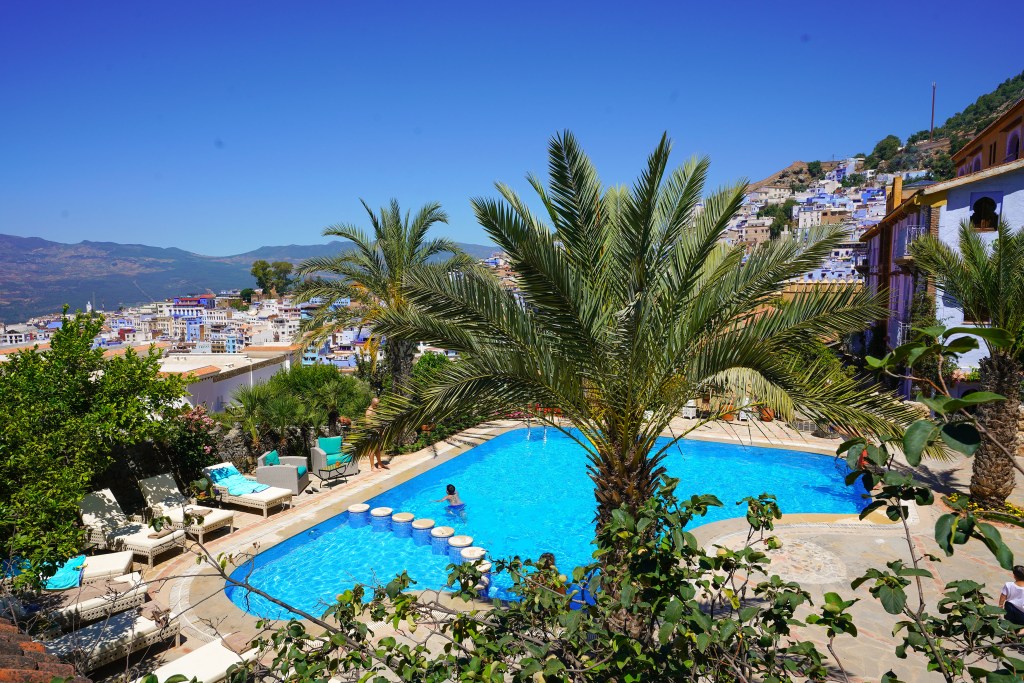
Tetouan, a beautiful coastal city, is the gateway to Chefchaouen, the famous “blue city.” The airport was small, with a modest arrivals area, and the customs and immigration process took about 25–30 minutes. We met our driver at baggage claim, whom we had booked through Viator. He had already reached out via WhatsApp with instructions on where to meet him. From Tetouan, we took a 45-minute private transfer to our riad in Chefchaouen, Dar Echchaouen Maison d’Hôtes & Riad. This stunning property exceeded our expectations, offering exceptional service and hospitality—highly recommended for anyone visiting.
After a long day of travel, we arrived at our riad around 11 PM. The kids were incredibly patient and well-behaved, making the journey relatively easy. The next day was Eid al-Adha, one of the most significant Islamic holidays (the other being Eid al-Fitr, marking the end of Ramadan). With Eid prayer scheduled for 7 AM in the town square, we settled in quickly and went straight to sleep, ready to experience the day ahead.



Day Two
Eid Al-Adha in Morocco is very festive, and our day started with Eid prayers at Mohammed VI Square in Chefchouan. The town square was packed with worshippers, and most shops and businesses in the non-tourist areas were closed on this day. Some restaurants and cafes were open in the town center, close to the touristy areas. The mouth-watering aroma of lamb slow-cooked over an open flame was prominent in every corner of the city. Morocco is known for its lamb, which would be the day’s meal.


Since this was a time when there weren’t many tourists in town, it was an excellent opportunity to walk around and experience the beauty of Chefchouen without the crowds. During the daytime, the beautiful shades of blue that dominated the town were prominent. Chefchouan isn’t stroller-friendly due to its hilly nature and the many steps that must be climbed to get from place to place. Our older two kids (ages 5 and 4 during the trip) were comfortable walking, but we had to use a carrier for our 2-year-old. The Medina was still bustling, and the shops here were mostly open for business on this day. The sellers here are very aggressive, and if you’re looking for an item, I highly recommend shopping around and not purchasing from the first shop you walk into. Every restaurant owner will aggressively try to lure you into their establishment, so I recommend reading the reviews before committing.


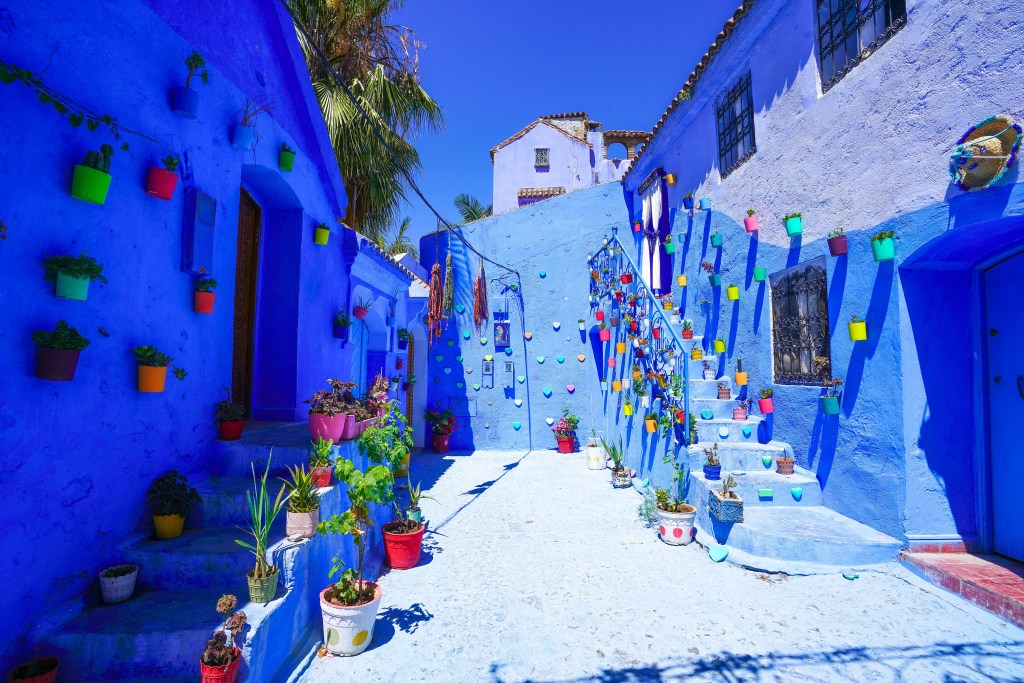
Our Riad had a restaurant on the premises, and they offered an Eid Special for dinner, so we chose to dine there. The food was delicious. After dinner, we walked around the neighborhood and took in the beautiful views of Chefchouen as sunset neared. We slept early that night as we had a four-hour drive to the historical city of Fes early the following day.


Day Three
This morning, we had breakfast on the riad’s terrace. The breakfast was delicious and included many items, including made-to-order omelets. The outdoor area offers beautiful city views, although I recommend getting there early since seating is limited and the wait can be 20+ minutes.

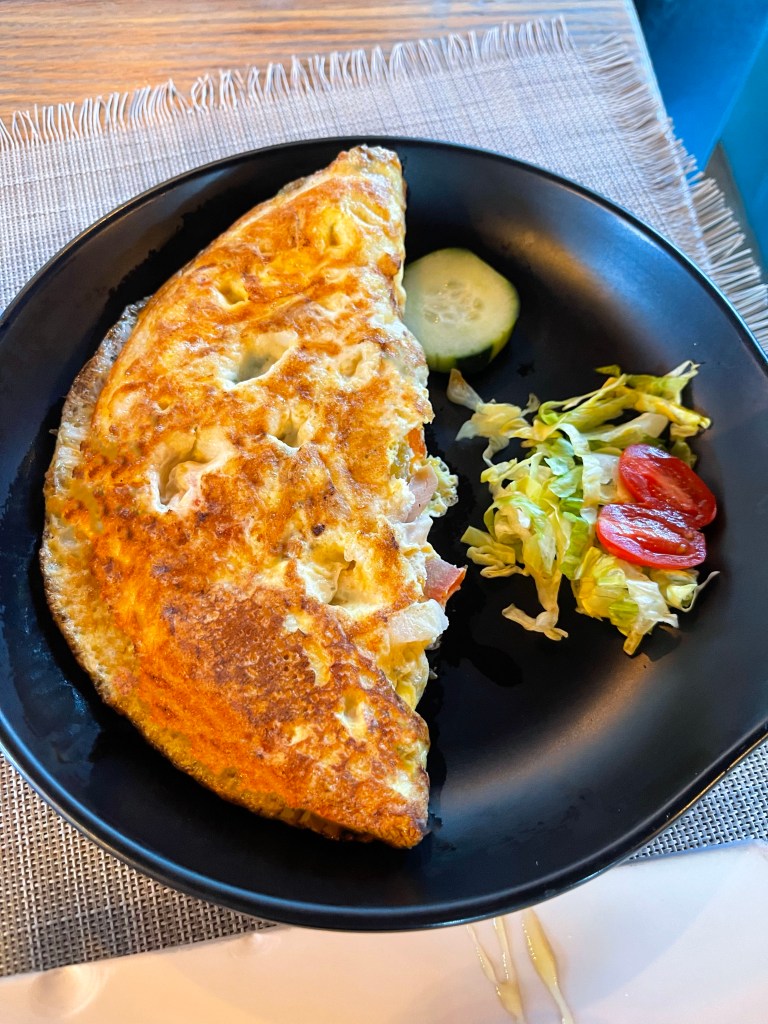

Following breakfast, our driver, Reda, picked us up from our riad and drove us four hours south to Fes. We booked Reda through Viator and were pleased with him as our driver. He had a comfortable, clean Mercedes van with plenty of space. Although he didn’t have to, Reda enlightened us about Fes, the culture, and the historical significance and answered every question we had. We liked him so much that we inquired about his availability to take us around Fes, and he kindly obliged. If you’re looking for a kind and honest driver who can educate you on anything related to Morocco, contact me, and I’ll happily share his contact information.
We arrived at Fes around 1pm and stayed at Dar Amir Fes, a riad in the old city just a few minutes from the historic Medina. One of the property managers, Aziz, came out to receive us and welcomed us into the riad. Checking in was easy, and Aziz gave us a tour of the building, showed us how to get to some areas of interest, and recommended places to eat. This riad was very different from the one in Chefchouen. The rooms were just single rooms with multiple beds all under one roof. Our room had one king-size bed and two bunk beds, perfect for the kids. However, I don’t recommend this riad if you stay with kids younger than four. I’ll get to that later in this post.
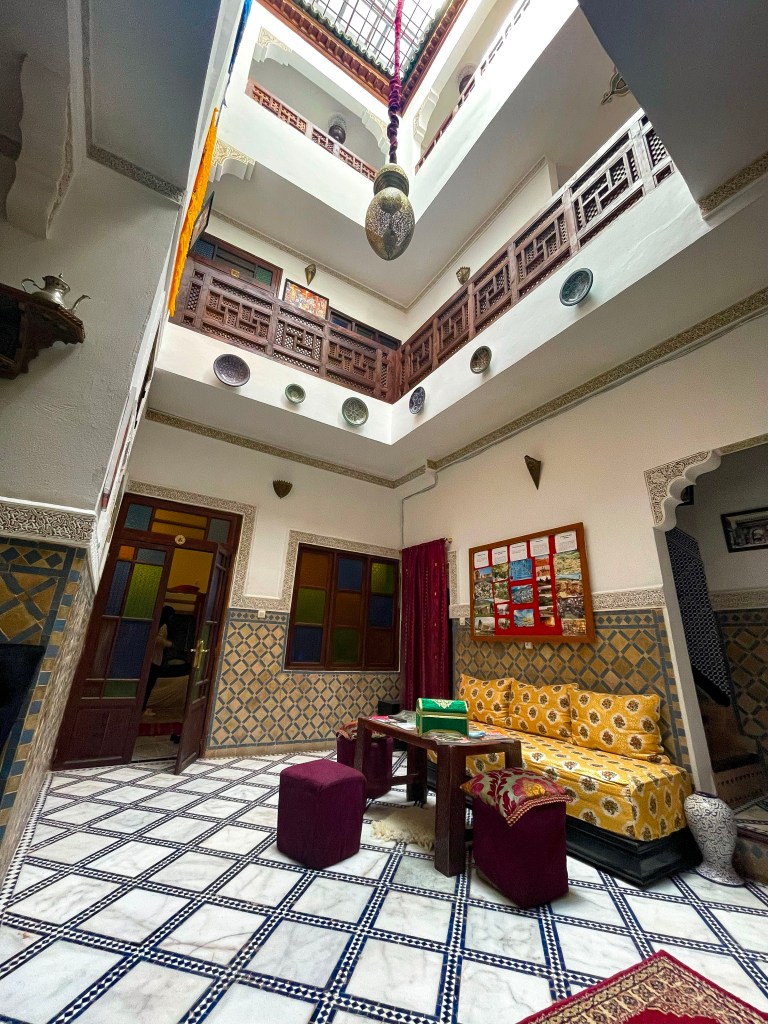


Once settled in, we had lunch and browsed around the shops at Fes Al Bali, the walled medina with hundreds of shops selling everything from leather goods to authentic Moroccan oil, souvenirs, mosaic water fountains, etc. The shop owners can be very aggressive, and if you find something you like, I recommend browsing multiple shops before purchasing.

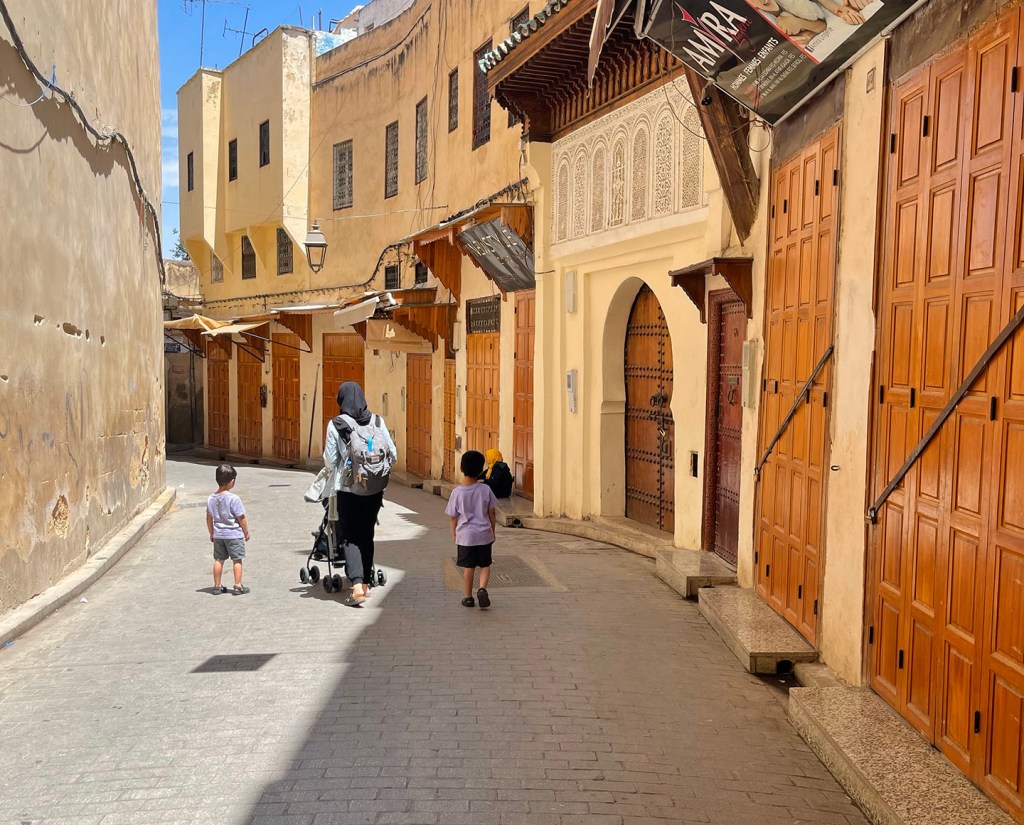
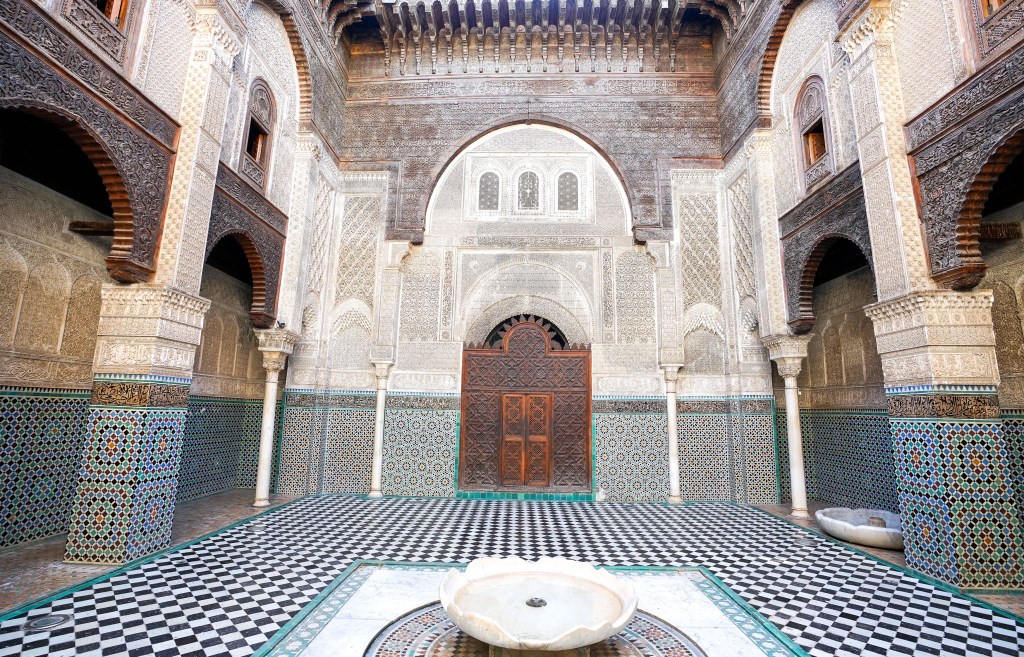
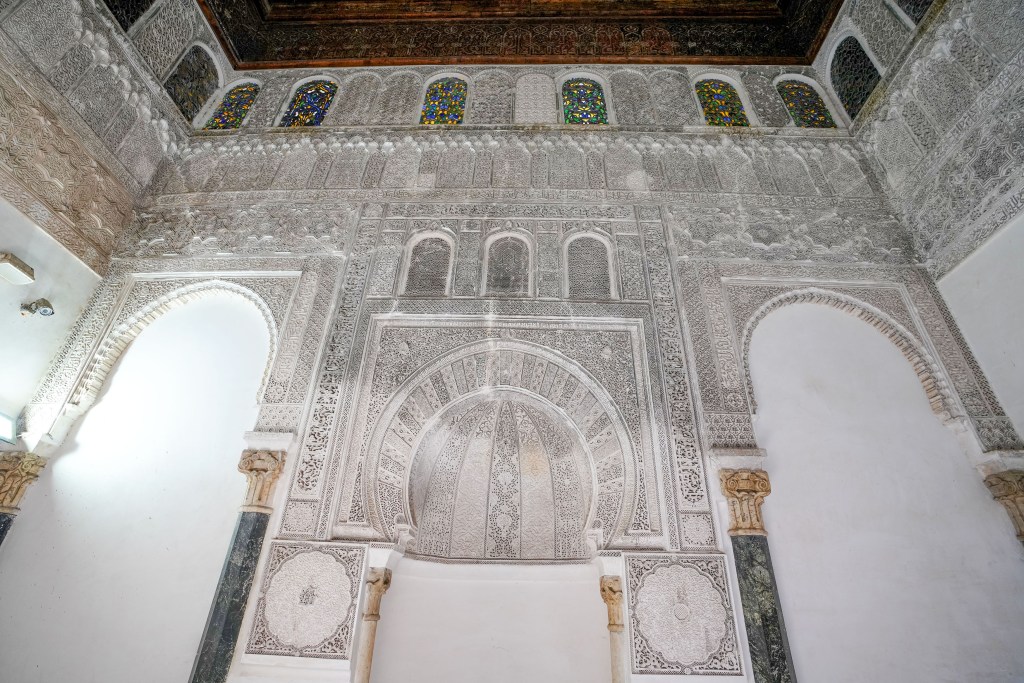
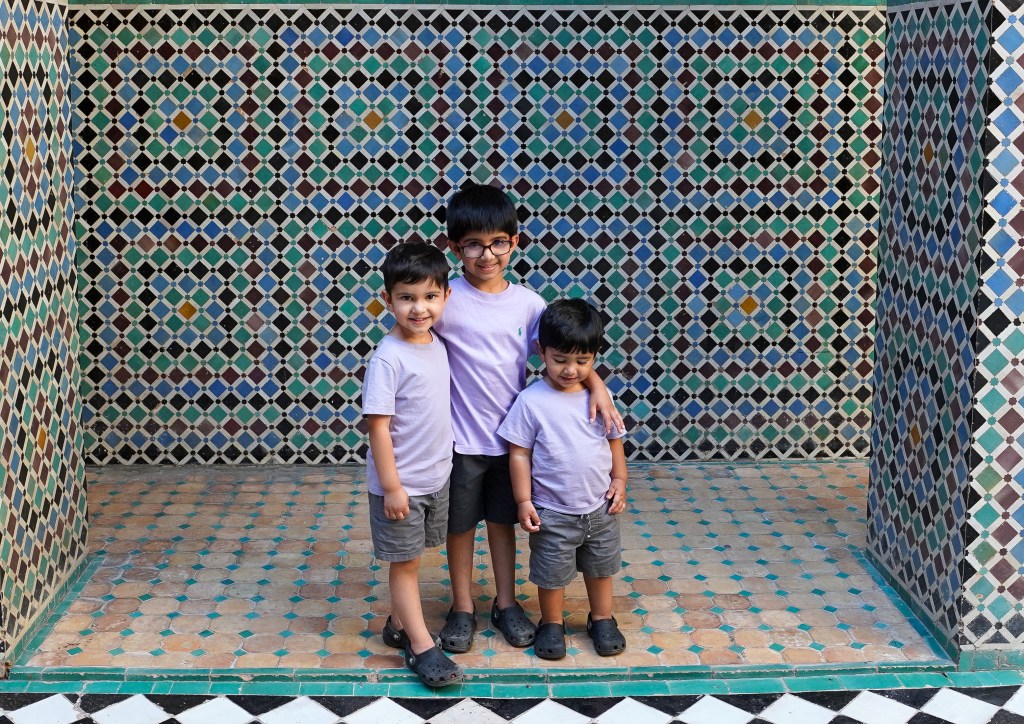
The medina is vast and has several entrances, so it is easy to get lost. Among the notable places we visited in the Medina was Madrasa Al-Attarine, an institution of higher learning where students would learn fiqh or Islamic jurisprudence. This beautiful madrasa traces back to the 1300s and has been restored many times over the last few centuries. A short walk from Al-Attarine is Al-Qarawiyyin University, an institute of higher education founded as a mosque between 857 and 859. The University is still active today and has students from all over the world. Just a few minutes away is the Tomb of Molay Idriss, the grandson of Hasan, who himself was the grandchild of Prophet Muhammad (PBUH).


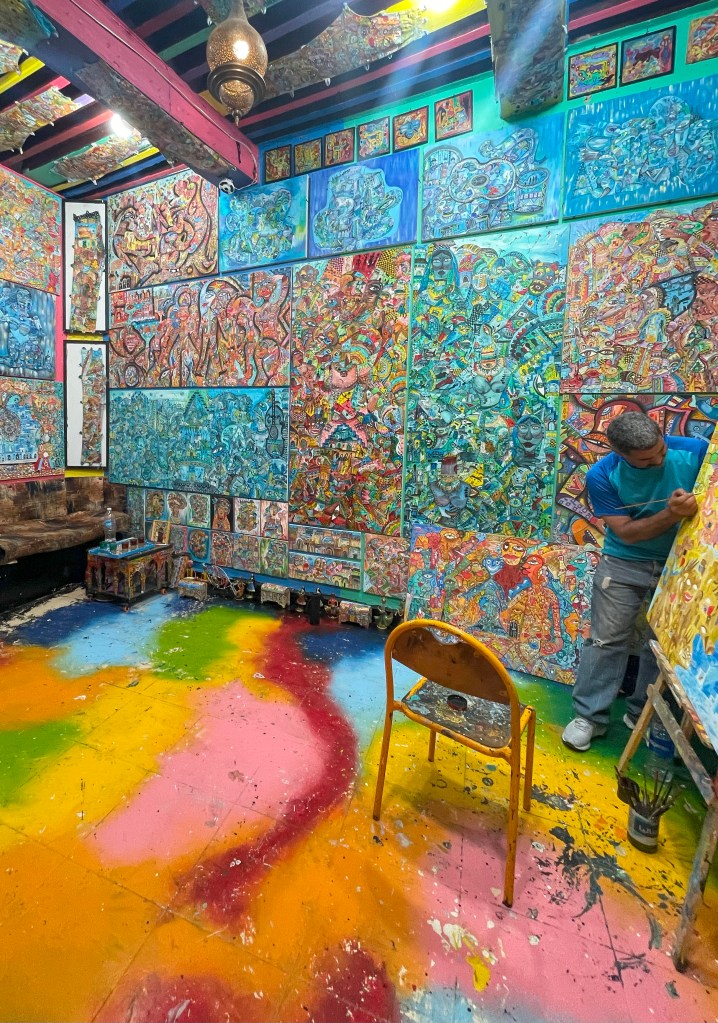
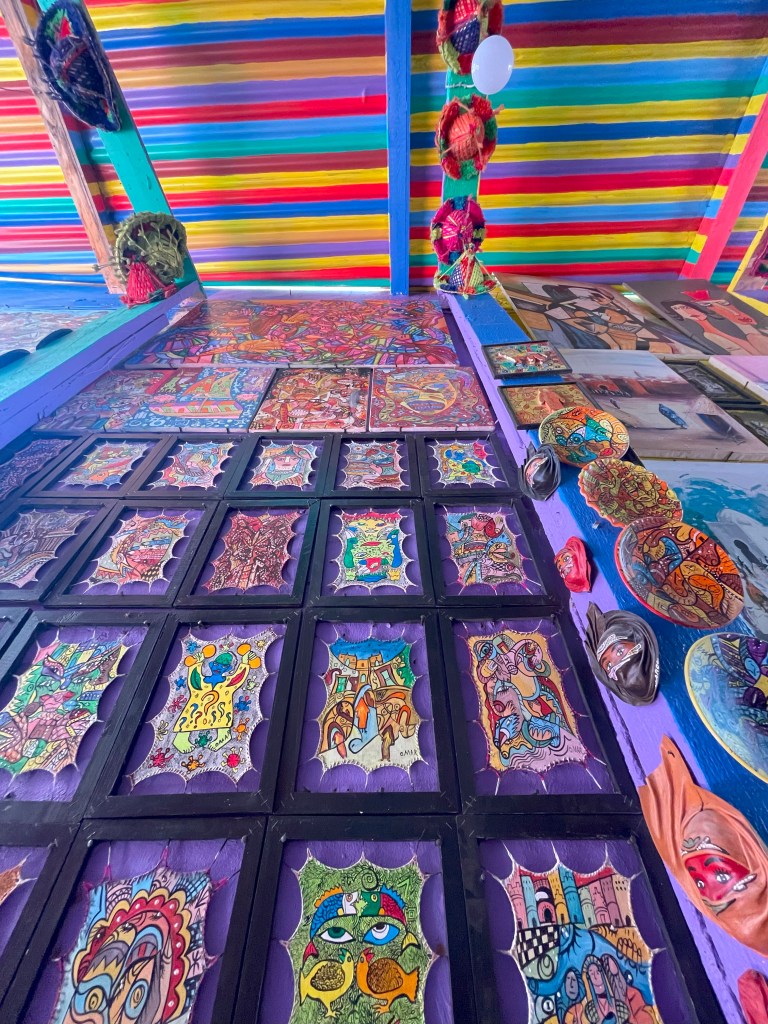
Following our visit to the tomb of Molay Idriss, we continued walking through the different pathways of the medina until we came across a narrow alley called Rainbow Street. This alley is home to hundreds of pieces of art produced by a talented and eclectic artist, Omar Rahali. The kids loved this part of the medina and were privileged to see Omar working on his latest art piece. I highly recommend seeing this area of the medina, especially if you’re visiting with kids. Following dinner, this concluded our first day in Fes.



Regarding our stay at Dar Amir Fes, this riad isn’t ideal for traveling with kids younger than four. Our two-year-old had an upset stomach and woke up crying at around 2am. The overnight manager knocked on our door and told us we needed to calm the baby down quick since other guests were being disturbed. This was entirely off-putting since the goal of every parent is to calm a crying child. However, I understand the perspective of other guests, and had I known in advance how far noise projects from the thin walls of each riad, I obviously would have never booked this riad. If you’re traveling as a couple or with older kids, I would still recommend Dar Amir Fes. I also commend Aziz for handling the situation and apologizing on behalf of the overnight manager.
Day Four
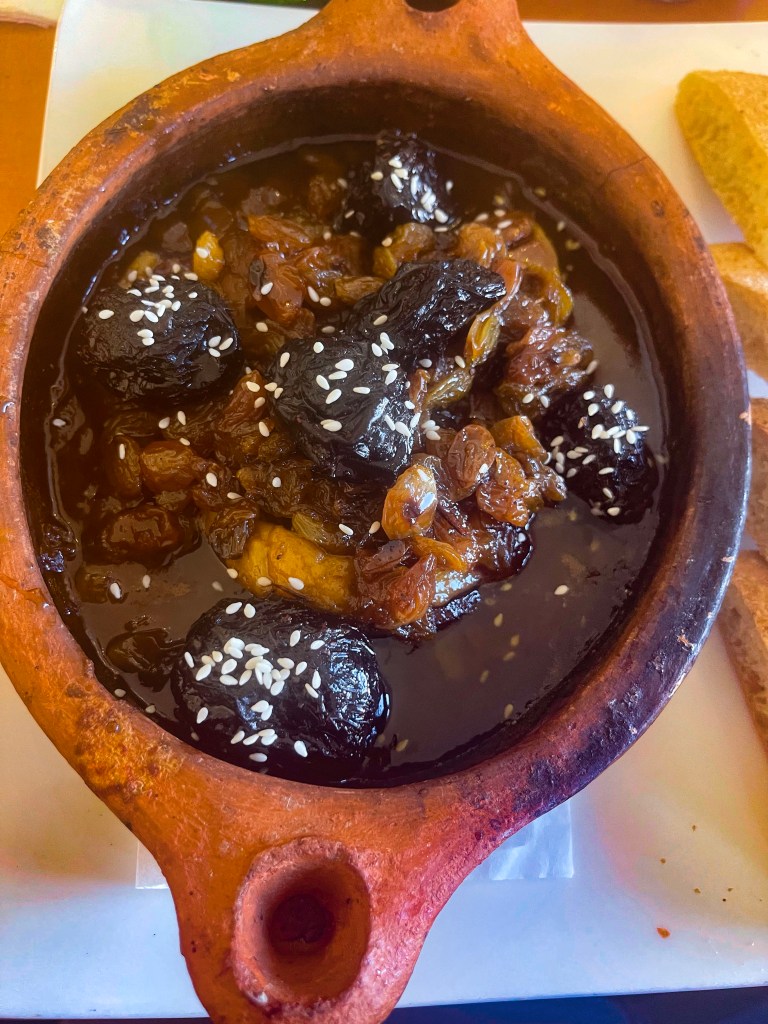
On our second day in Fes, we got an early start to our day, intending to visit multiple points of interest. Our driver, Reda, was kind enough to be our tour guide for the day. Reda first drove us to Burj Al-Janub, a fort constructed in the 1500s as a lookout point for Fes. From Burj Al-Janub, you can get beautiful panoramic views of Fes and the surrounding topography. Following our visit to Burj Al-Janub, we stopped by Nagham Cafe near the Blue Gate for an early lunch. This is where we had lamb tagine, the traditional lamb stew Morocco is known for.


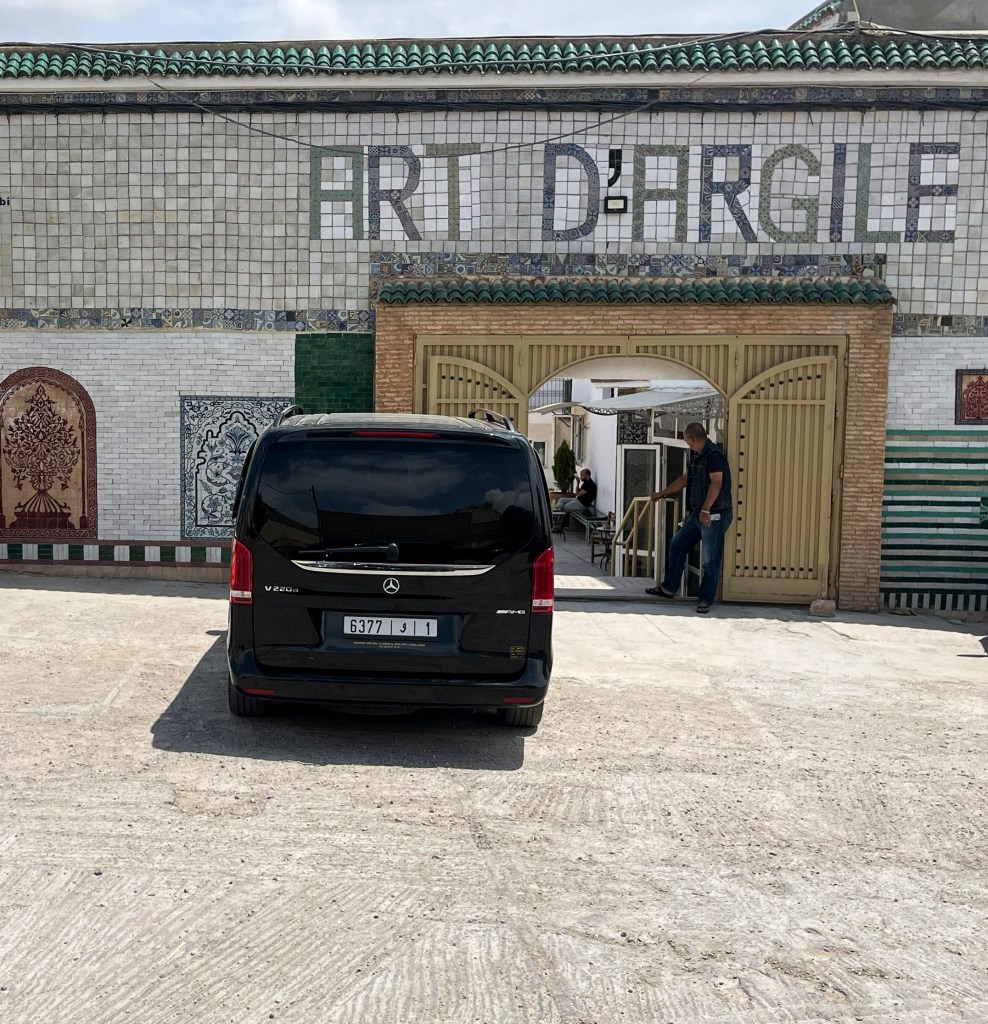
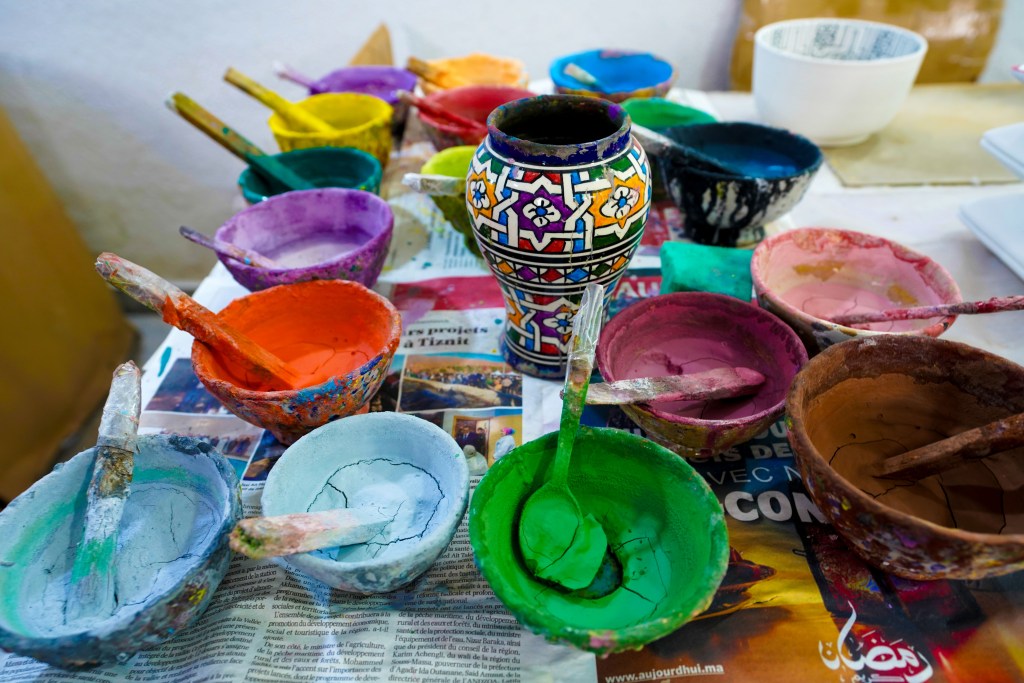
Our next stop was Art D’Argile, a tile and ceramic factory showcasing Moroccan art, mosaic, and glass blowing. The welcoming and knowledgeable staff are eager to share the fascinating history and processes of creating the colorful mosaic art that Morocco is known for. Guests are also welcome to try making their own pottery, and the kids loved this hands-on experience.
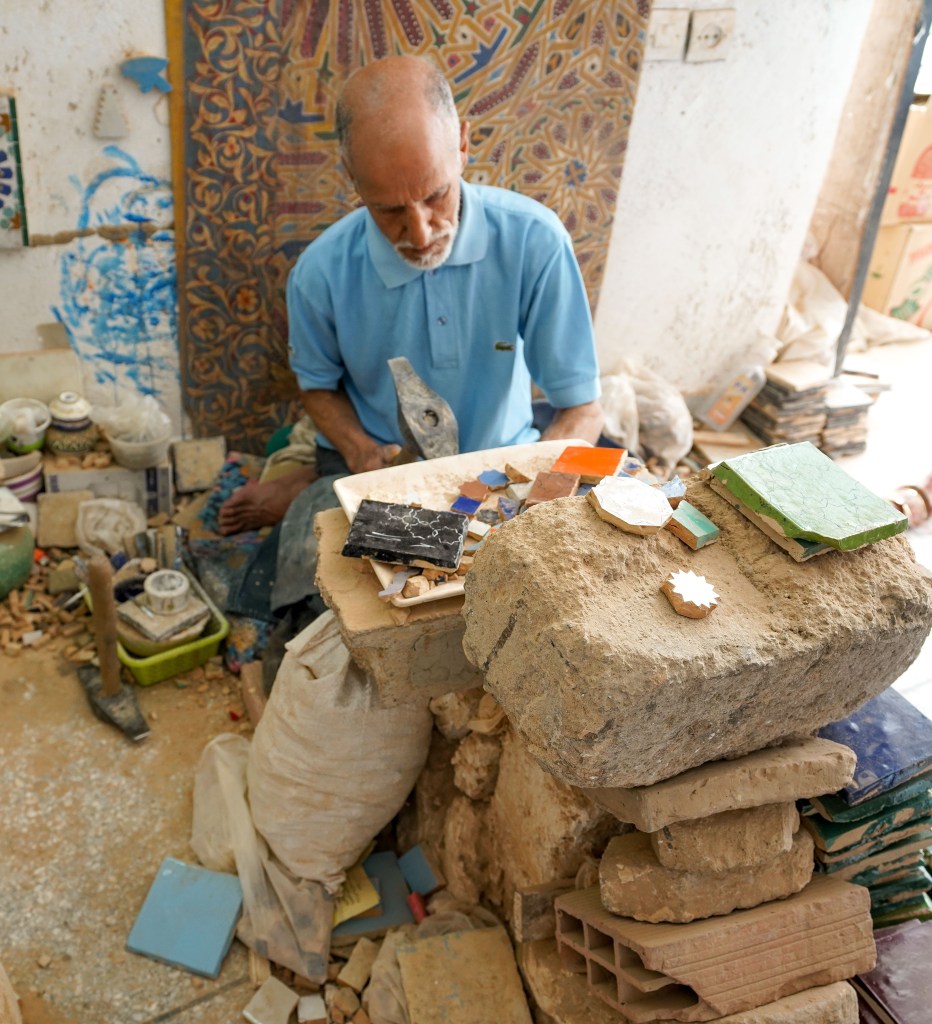


At the end of the tour, guests are encouraged to visit the shop, which has all types of items with classic Moroccan mosaic art designs available for purchase. There is no pressure to purchase anything, making the experience all the more enjoyable. Items in the shop range from tea cups to large tiled water fountains for a backyard. They offer shipping through DHL for a fee and have a global customer base. I would add this to a list of must-visit places in Fes, especially for kids. It was informative and educational, and we all had much fun here. One hour to 90 minutes would be sufficient time here.


Our next stop in Fes was the Chouara Tannery, the oldest tannery in the city, known for producing some of the highest quality leather in the world. The traditional handmade methods used to craft the leather have remained unchanged since the 1500s. The process involves large vats filled with pigeon droppings and cow urine to soften the leather, creating a pungent smell that can be overpowering. The hides of camels, goats, and cows are soaked in this mixture for two to three days, allowing it to soften and preparing it to better absorb dye. Once that process is complete, the leather is left under the sun to dry and sold to merchants worldwide.


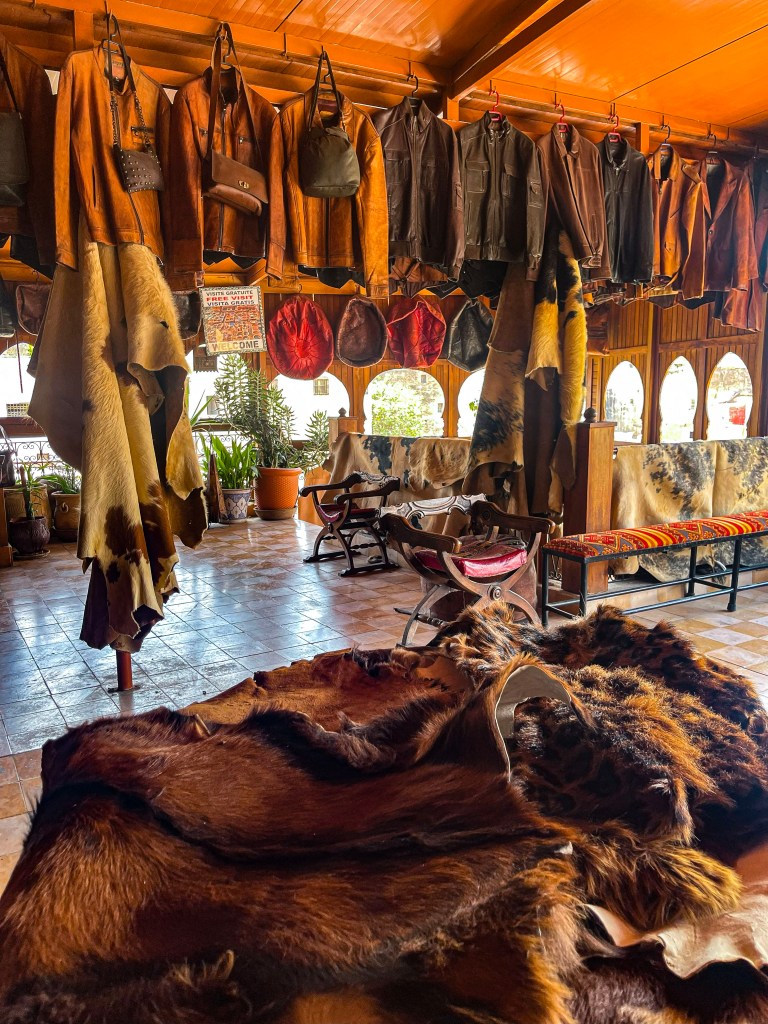
Across the street from the Chouara, there’s a shop where you can browse a wide range of finished leather products produced at the tannery, from jackets and purses to wallets and more. Upon entry, you are given some mint leaves if you need to take a break from the strong leather smell. This was an outstanding educational experience for our boys and something that can’t be replicated back home. Budget about 45 minutes to an hour Chouara Tannery.
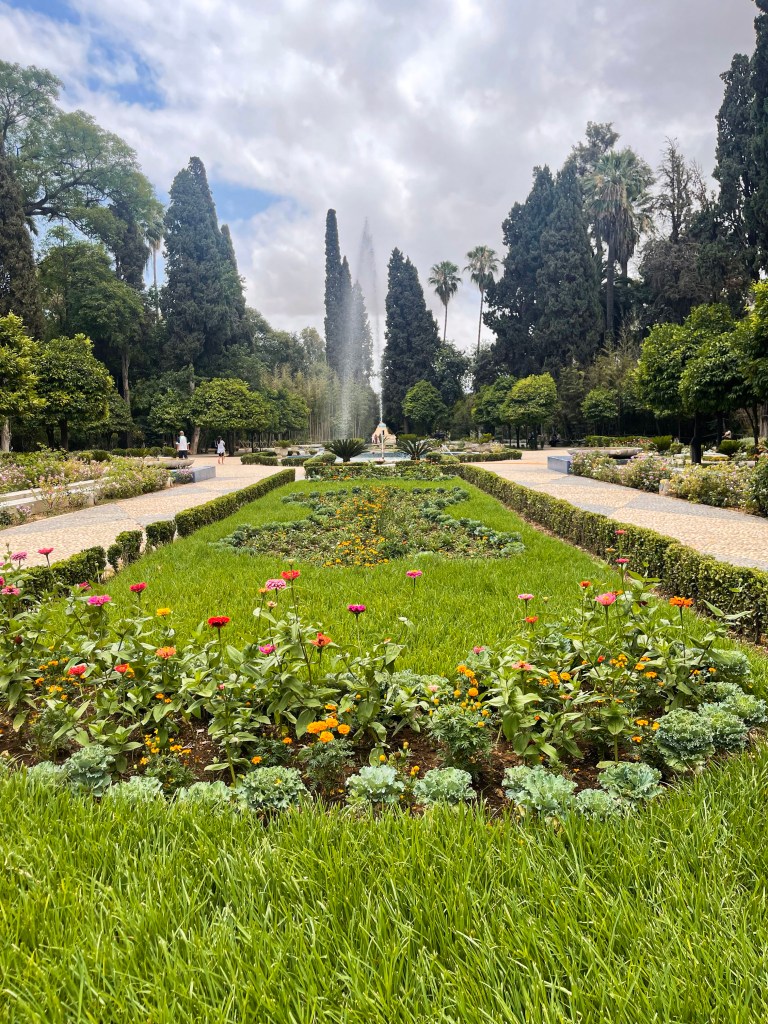
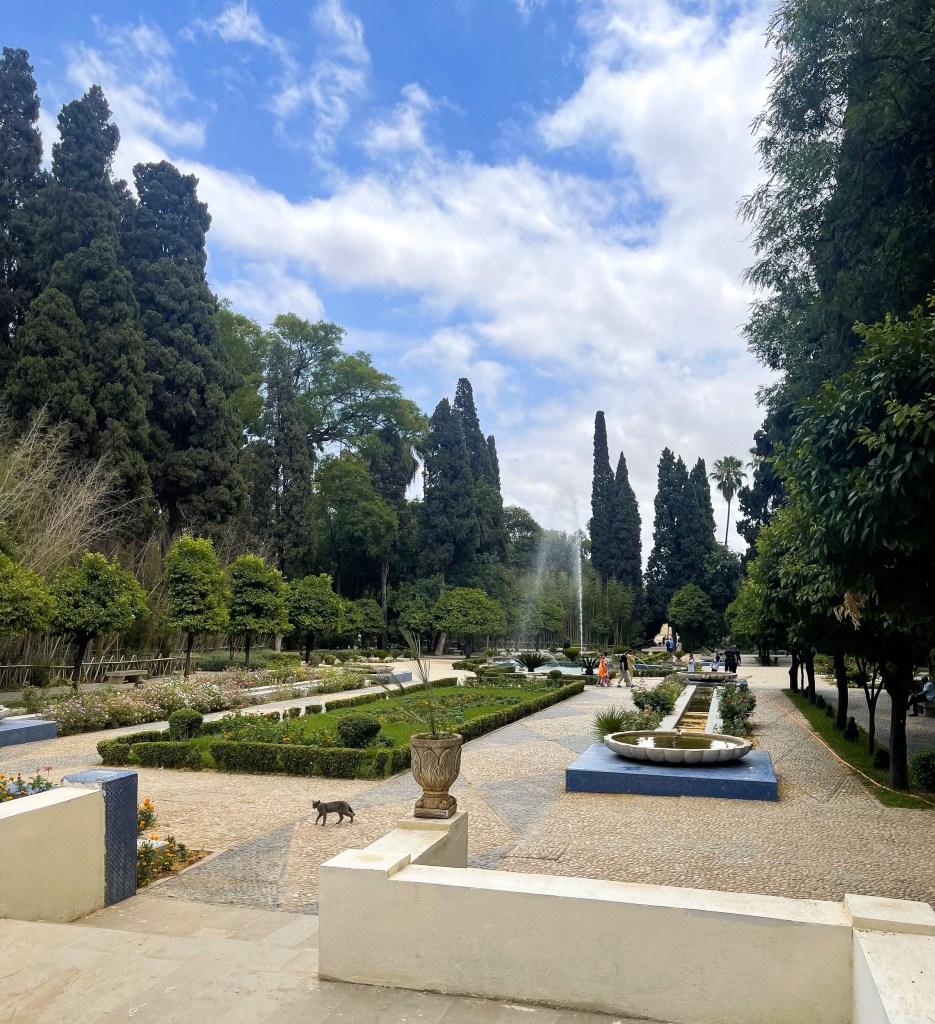
After our visit to the tannery concluded, our next stop was Jnan Sbil, a beautiful garden between Fes el-Jdi and Fes el-Bali, the two sections of the old medina. This garden provides lush greenery, tranquil fountains, and shaded pathways. Established in the 18th century, this historic garden offers a peaceful escape from the bustling medina, with its vibrant plant life consisting of over 3,000 species, picturesque water fountains, and a sense of timeless beauty. I recommend spending 35 to 40 minutes here to appreciate the diverse fauna. Later in the day, we spent the evening walking around the medina and browsing the shops. Due to the hot weather during the day, the evening hours attract larger crowds in the medina.

Day Five
On our last day in Fes, we spent the morning exploring the old city and visiting a few shops in the medina we had previously missed. We flew to Marrakech from Sais International Airport in Fes in the evening with Ryanair. The airport is relatively small, with only two departure halls, and can be pretty crowded. There are only a few outlets to charge electronics in the entire terminal. I highly recommend bringing a portable charger or fully charging your electronics if you travel with kids. You can read about our whole experience with Ryanair here, but in short, while they offer budget-friendly flights across Morocco, their lack of communication during delays, mishandling of checked baggage, and failure to follow their own policies make them a risky choice. Our checked luggage, containing all the clothes for my wife and kids, was mistakenly sent to Germany. Thankfully, since Marrakech was our final destination in Morocco, we only needed to buy clothes for the two days there.
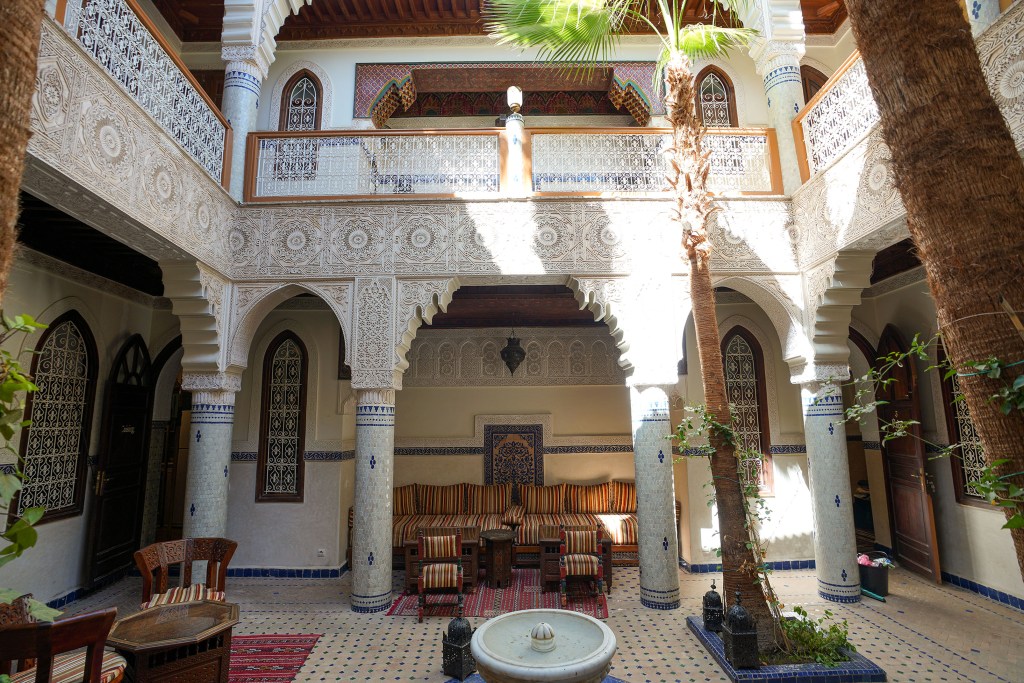
After landing, we took a private transfer to Dar Al Kounouz, our riad in Marrakech. This charming riad, located within a larger building that housed multiple riads, offered more privacy and was better suited for kids than ours in Fes. It sits in the heart of the historic Mouassine district, close to the souks, Jemaa El-Fnaa Square, and Madrasa Ben Youssef. By the time we arrived, it was 11 PM, and exhaustion had set in—sleep was the only thing on our minds.



Day Six
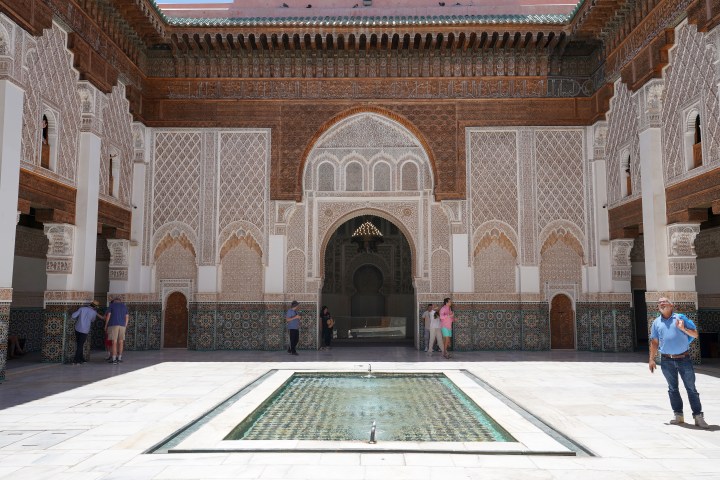
This was our final full day in Morocco and the only full day in Marrakesh, so our goal was to maximize our limited time. We started with breakfast offered by our riad and immediately walked to Madrasa Ben Youssef. This beautiful madrasa was constructed in the mid-1500s and is well known for its classical Moroccan architecture featuring tile mosaics, carved cedarwood, and intricate stucco work. While the madrasa is no longer a functioning religious school, it is open to visitors and offers a glimpse into Morocco’s rich educational and cultural history. It’s a must-see attraction for those visiting Marrakesh.

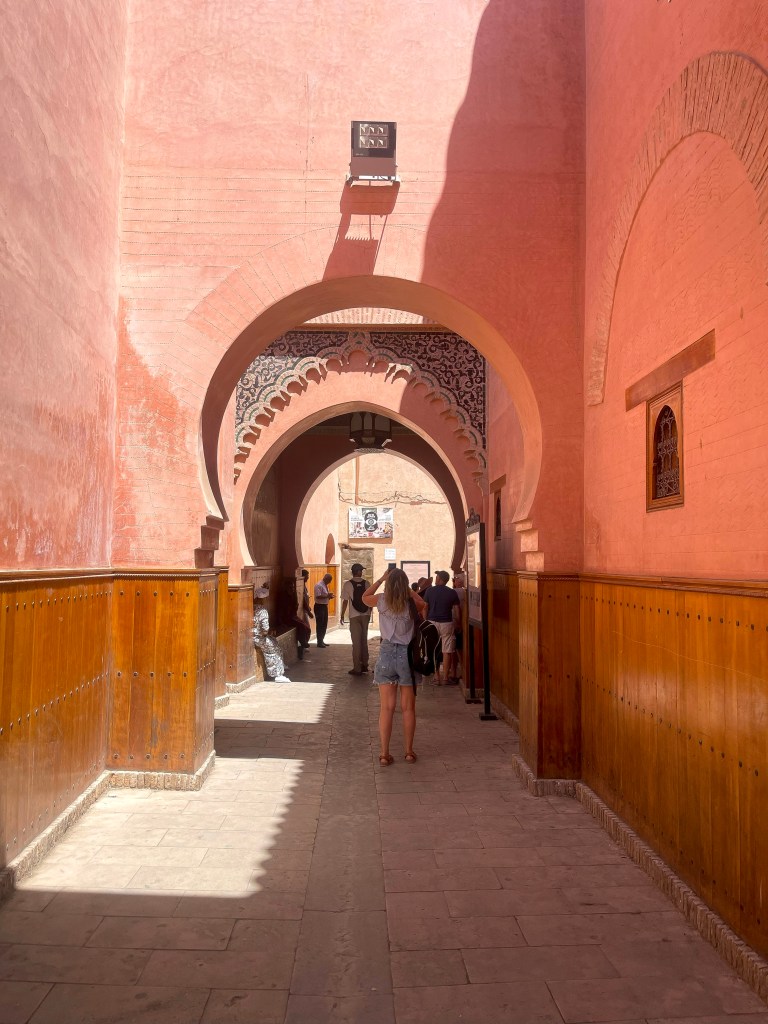


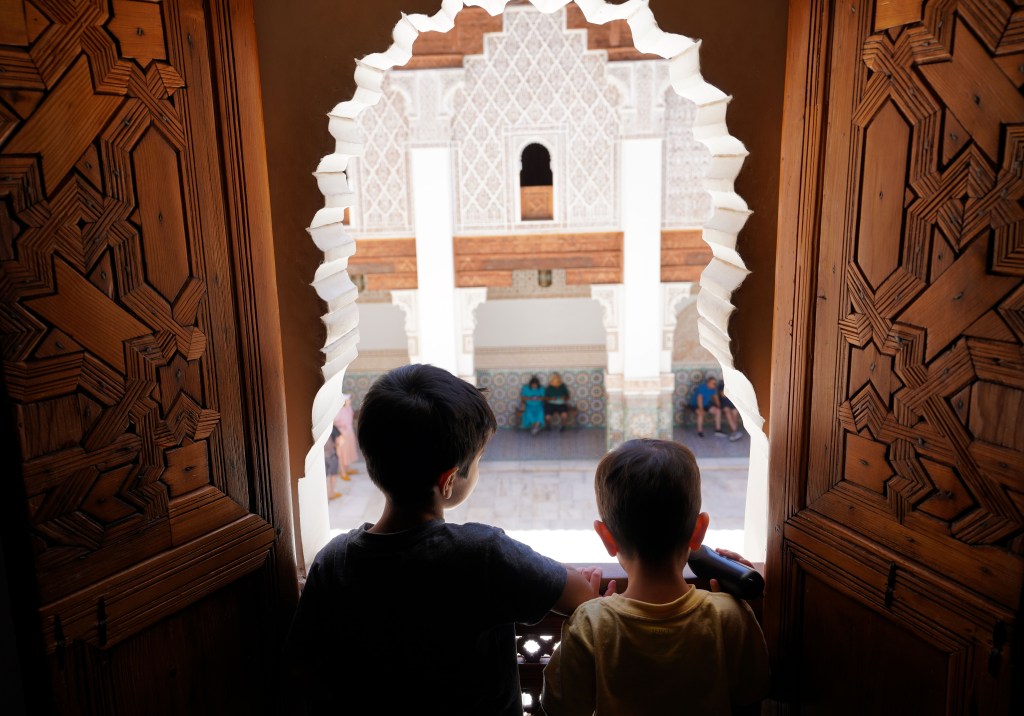

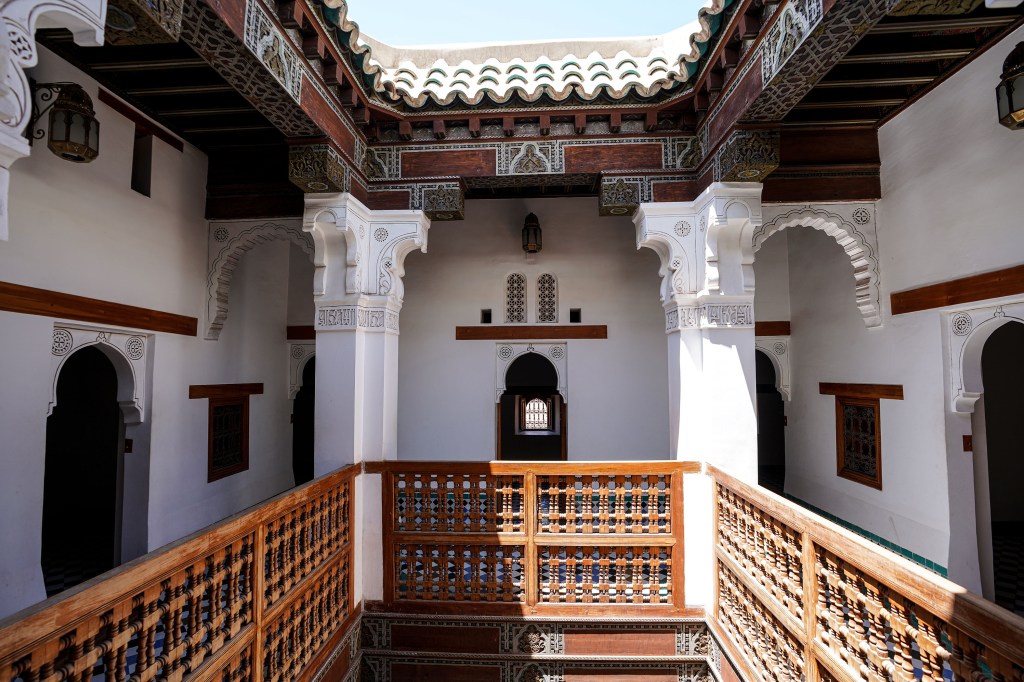

After spending about 45 minutes at Madrasa Ben Youssef, we walked over to Jemaa El-Fnaa, the largest square in the medina and a place where you will find several food vendors, souvenir shops, henna artists, and what proved to be the most fascinating for my kids, snake charmers with their King Cobras. Jemaa El-Fnaa draws many tourists; don’t be taken for a ride by some of the shady characters that do business here. If you order food, make it clear to the vendor how much you will spend since a common trick is a person getting five skewers of kabab when they ordered one skewer and being forced to pay for the extra that wasn’t requested. Another thing to be mindful of is that if you’re seen taking a picture or video of the snake charmers making the snakes dance, you will be hounded to hand over money. Same with the monkeys that are walked around on a leash. We spent about 45 minutes walking around the square before the scorching hot afternoon sun forced us to seek respite from the heat.


Since we were dealing with lost luggage and had to purchase clothes for the next two days, we took a taxi to M Avenue Marrakesh, an upscale open-air mall about 15 minutes west of the medina. This mall has over 10 restaurants and 60 shops, including familiar global brands such as Lacoste, Mango, and Adidas. The contrast between the medina in the old city and M Avenue is stark. The crowds are relatively small, and even if you don’t want to purchase anything, it’s a relaxing place to walk.


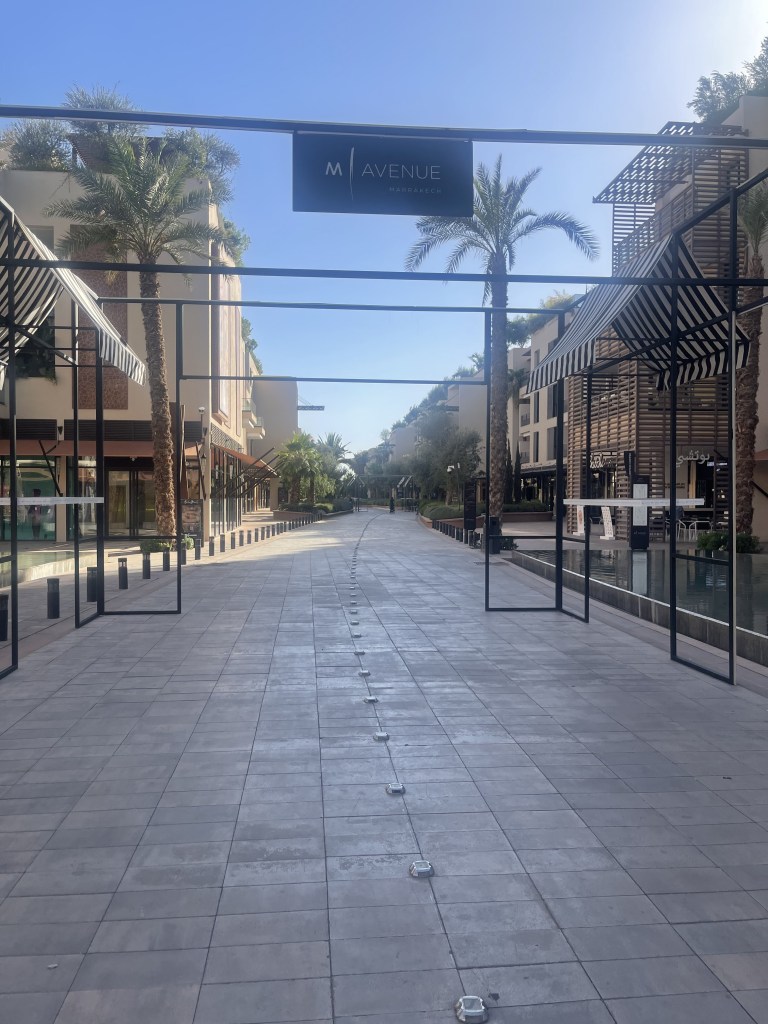
After spending about two hours, we took a taxi back to the old city to window browse the shops at the Medina one last time. We had an early flight the following day and slept after dinner. This concluded our memorable trip to Morocco, and we hope to come back in the future. While we felt we had sufficient time in Chefchouen and Fes, one full day was not enough for Marrakesh. If we are fortunate enough to make a return trip, Tangier, Marrakesh, and the Sahara Desert will be the places we will focus on.
Is it Worth Visiting Morocco with Kids?
Yes, absolutely. Morocco has something for everyone, and my kids loved experiencing the medinas, cuisine, the colorful and vibrant streets of Chefchouen, learning how to make tiled mosaics and pottery, and learning about the beautiful madrasas we visited. If you plan on staying at a riad and you have a child under three, I would contact the property manager and inquire about the layout of the riad. Some are built differently than others, and the last thing you want is a property manager knocking on your door at 2am because a child is crying.
Award Redemption Breakdown:
We redeemed Iberia Avios at a rate of 22k points per passenger plus $170 tax per person from Chicago to Madrid. Avios is the award currency for six airlines in the One World Alliance: Iberia, British Airways, Aer Lingus, Qatar Airways, Finnair, and Vueling. You can transfer credit card points to Avios from Chase, AMEX, Citi, Capital One, Bilt, Marriott, and Wells Fargo. This makes Avios one of the easiest frequent flier currencies to accumulate.
We purchased separate one-way tickets on Air Arabia for our flight to Tetouan, Morocco, from Madrid. Flights from Spain to Morocco are cheap, and one-way tickets can be found for as low as $25.We redeemed Flying Blue miles at 17.5k points for our return flight plus $108 tax per person to fly on Air France. Flying Blue is the frequent flier program for Air France/KLM, and its frequent flier miles can also be used to fly any airline that’s part of the Sky Team Alliance. Like Avios, Flying Blue has several transfer partners such as Chase, AMEX, Capital One, Citi, Wells Fargo, and Bilt. This is also a frequent flier currency that is pretty easy to obtain. Avios and Flying Blue occasionally have transfer bonuses as high as 40% from Chase, AMEX, and Citi (1,000 credit card points = 1,400 Avios or Flying Blue points). Feel free to drop a comment if you have any questions.
 Miles for places