
During the summer of 2023, my family and I took a trip to Zambia and South Africa to reconnect with relatives, have new experiences, and see the sights for which Africa is renowned. We wanted to experience a safari and stay in a lodge that would bring us close to the wildlife, both during game drives and on the lodge premises. We also needed a lodge that was amenable to having a 10-month-old, a three-year-old, and a four-year-old on the game drives. We researched several of Africa’s larger and more renowned game parks, such as Serengeti, Masai Mara, and Kruger. Almost all had an age requirement that would have excluded us from experiencing game drives in an open jeep as a family. My cousins informed me about Mopani, a safari lodge that didn’t have age restrictions and had game drives that toddlers and infants could also enjoy in an open jeep. Upon the strong recommendation of my cousins, who have visited multiple times, we booked our stay at the Mopani Lodge, located outside South Luangwa National Park in Zambia. This was the experience of a lifetime, and our stay was exceptional in every aspect, from the accommodations and service to the knowledgeable tour guides to the delicious food served daily. Here is a detailed recap of both our drive to the location and our stay.
Getting there
For most people, the most direct way to get to Mopani Safari Lodge and South Luangwa National Park is via Lusaka, Zambia. We flew Qatar Airways to Doha, where we stayed for three days to tour the city, and then continued to Lusaka. You can fly on Emirates, Qatar Airways, or Ethiopian Airlines to their respective hubs in Dubai, Doha, or Addis Ababa, and then connect onward to Lusaka. Travelers near New York City, Amsterdam, Mumbai, Bangkok, and Paris can also fly Kenya Airways non-stop to Nairobi, Kenya, and connect to Lusaka. Pro Flight Zambia operates non-stop flights from Lusaka to Mfuwe International Airport, about a 45-minute drive to Mopani Safari Lodge. However, the round-trip fare during the summer was almost $600 per passenger.

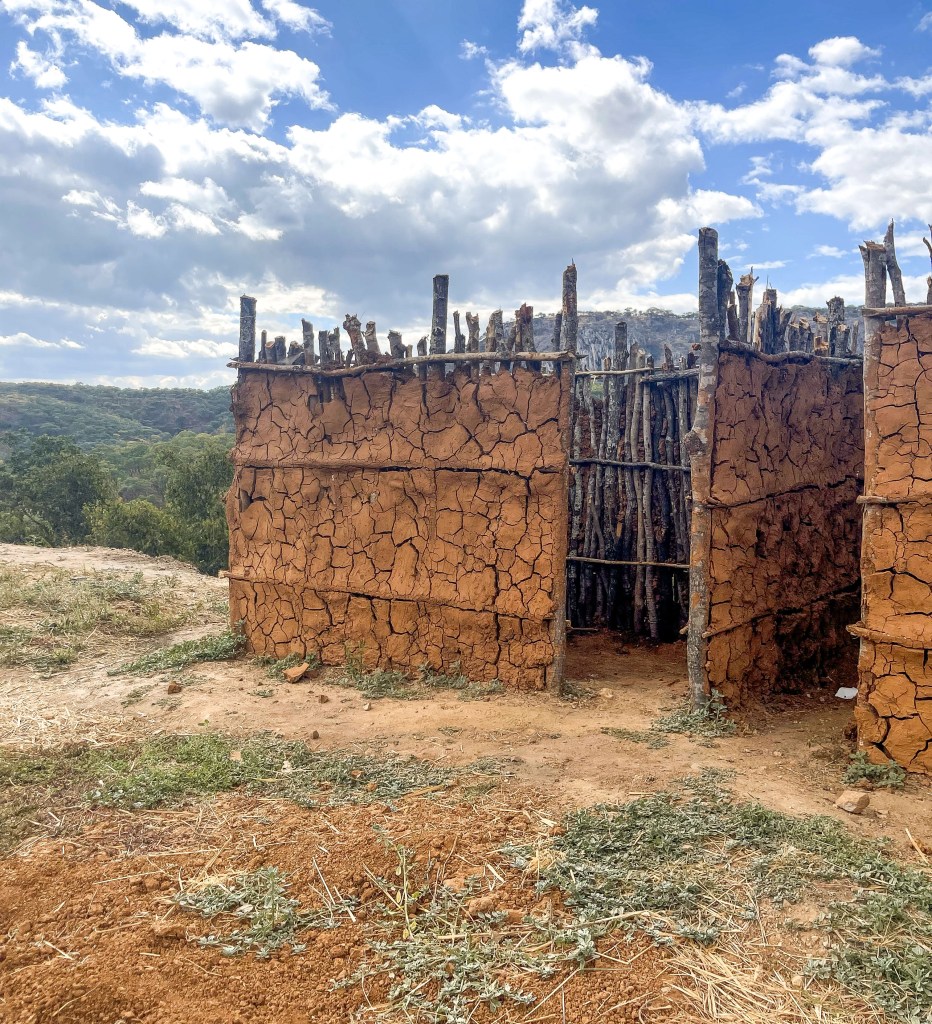

Since we were staying with my aunt and cousins in Lusaka, we hired a private transfer from Lusaka to South Luangwa with an overnight stay in Chipata. During our one night in Chipata, we stayed at the Protea Hotel, an elegant, comfortable, and modern Marriott-branded hotel. You can read my review of the hotel by clicking here. The drive from Lusaka to Chipata, which included bathroom breaks, took about nine hours. The ensuing drive to South Luangwa took about two hours and 30 minutes. If you don’t want to break up your trip, the most direct route will take about 10 hours from Lusaka to Mopani Lodge.

Since we were traveling as a party of seven, this was a longer but cost-effective option than flying. The total cost of hiring a private driver to take us there and back was approximately $750, factoring in gas and tolls. Pro Flight Zambia offers flash deals on Instagram, where one-way tickets to Mfuwe are available for as low as $30 on certain weekdays. Unfortunately, there were no flash deals during our timeline, and as it was our first time in Zambia, driving allowed us to see the beautiful countryside on the way to South Luangwa. If this is the option you choose, just be aware that the road from Lusaka to South Luangwa is littered with potholes that can rattle your insides. Our driver, Bonico, had a resilient Toyota van that survived every crater we drove over. There were a few instances where I thought the tires wouldn’t survive the pothole, but we came out unscathed.

About Mopani Safari Lodge
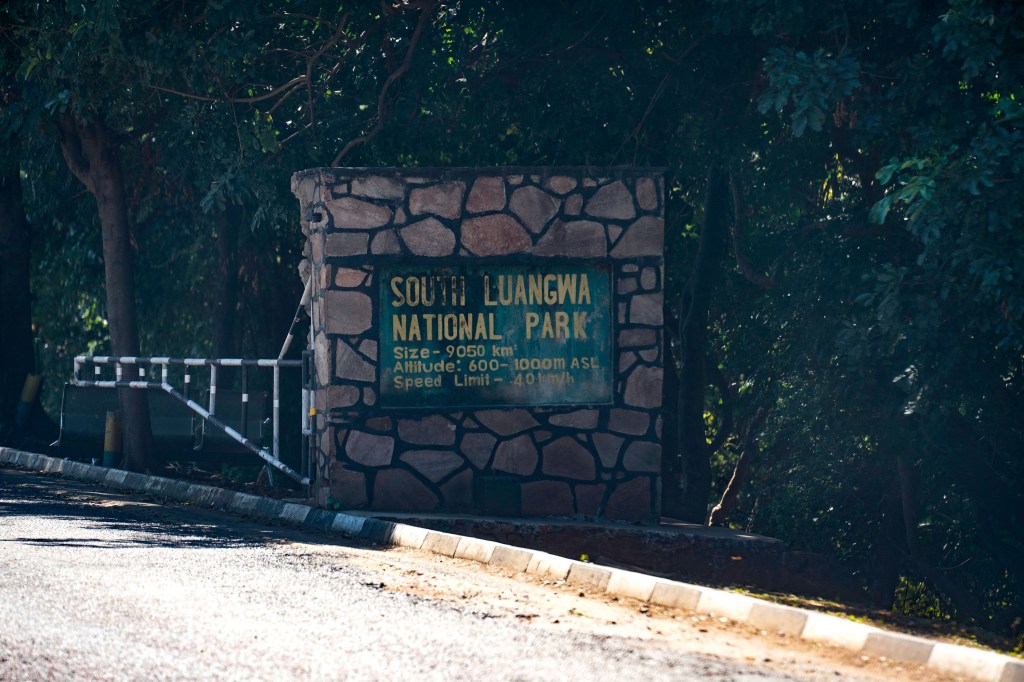
Mopani Safari Lodge is about 15 minutes from the entrance to South Luangwa National Park, right along the Luangwa River. It is about a 40-minute drive from Mfuwe International Airport. Daily breakfast, lunch, dinner, and afternoon tea are included in your package while staying at Mopani Safari Lodge. In addition, your package will also include two game drives daily, beverages and snacks during the game drive, laundry, and airport transfer if you are flying into Mfuwe International Airport. The national park fee of $50 per person per day is not included in the package and must be paid directly at the entrance of South Luangwa National Park. Mopani Safari Lodge also offers walking safaris for groups of three to six people at an additional cost. Wi-Fi can also be purchased at an extra cost. There are three types of chalets on the premises:
Lagoon View Chalet
- Accommodates a maximum of three adults. Kids are not included in the headcount.
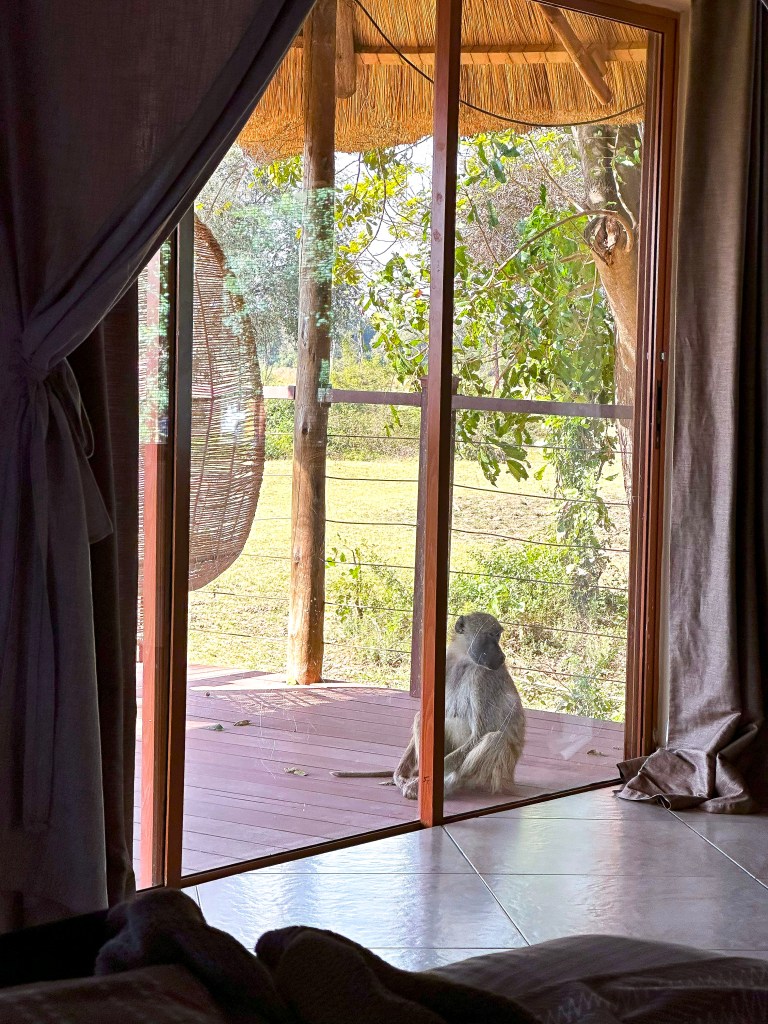
- Views of the lagoon area with the most wildlife activity on the premises. This is the best option if you want to see the most wildlife. It is also the best option if you arrive with kids, since they can view wildlife gathered around the lagoon from the patio or behind glass doors. We chose this option with wildlife viewing in mind.

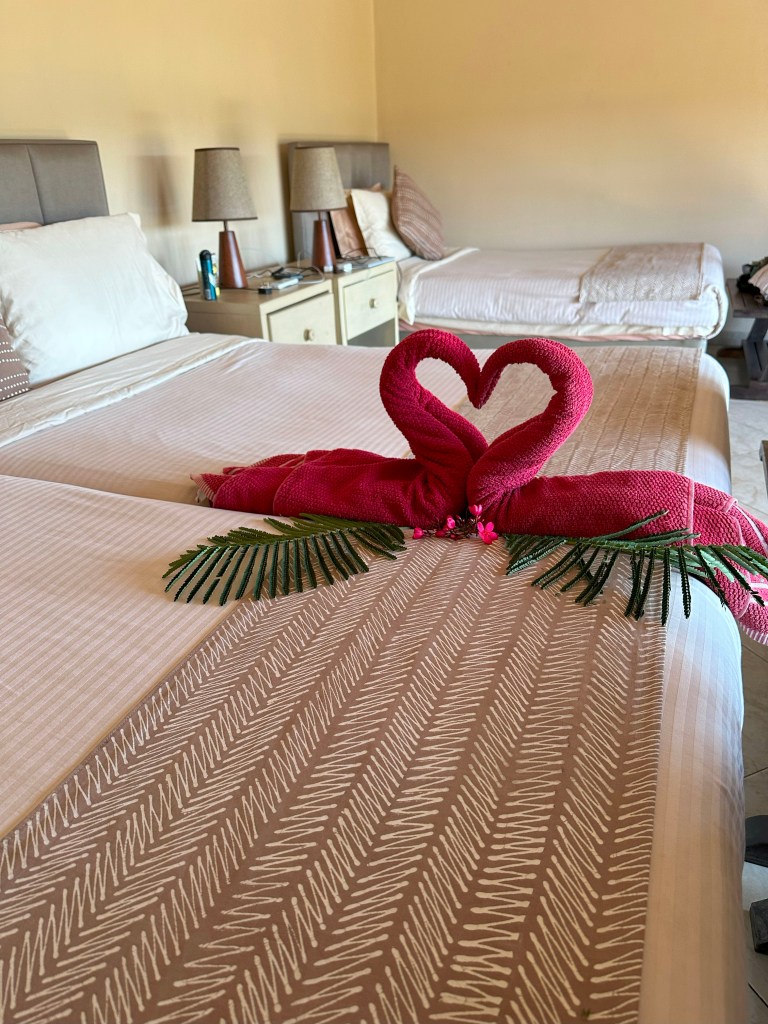



Luxury Tented Family Chalets
- Accommodates up to 6 adults.
- Views of the Luangwa River
- More space to spread out.
- Newly renovated


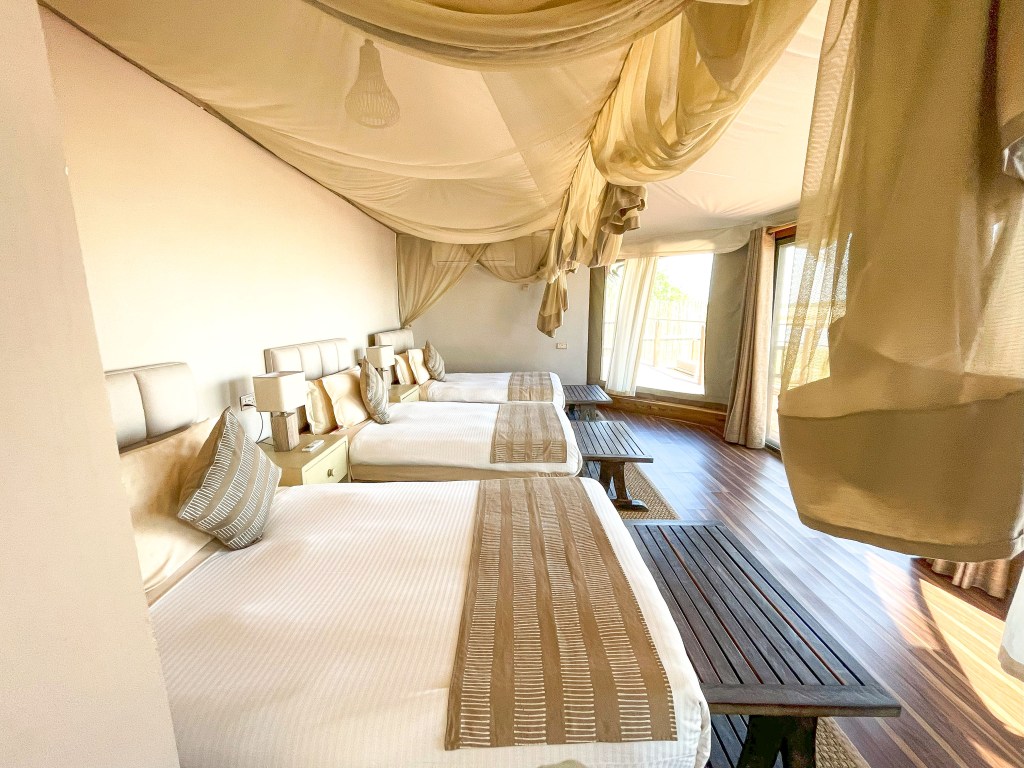

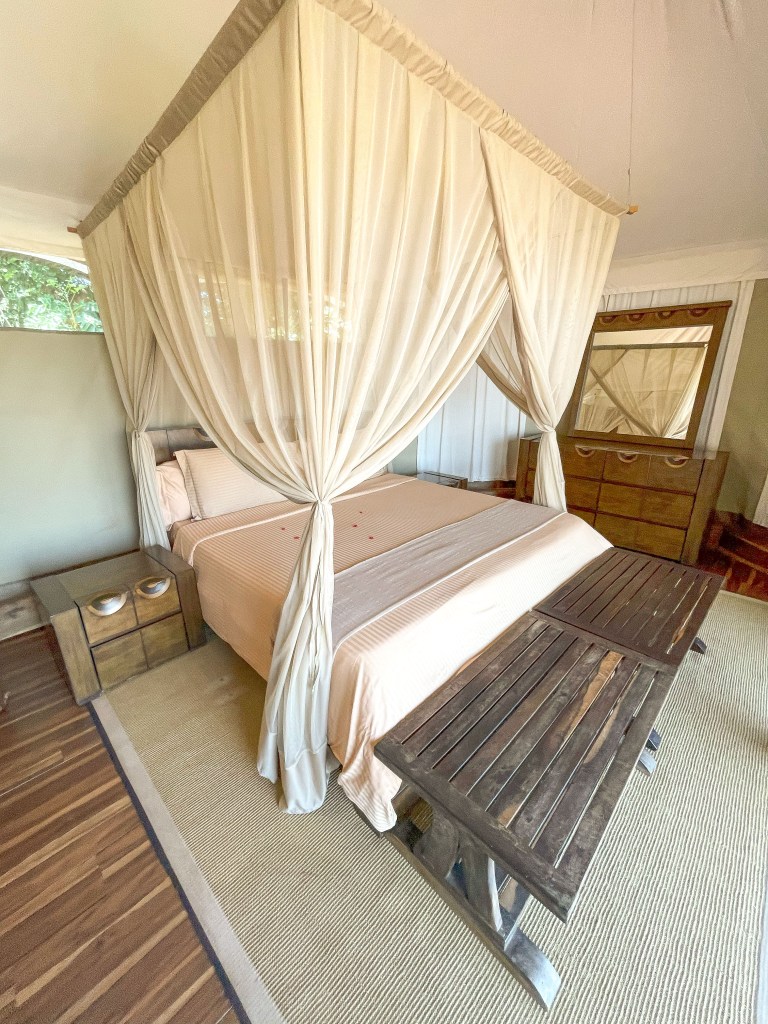
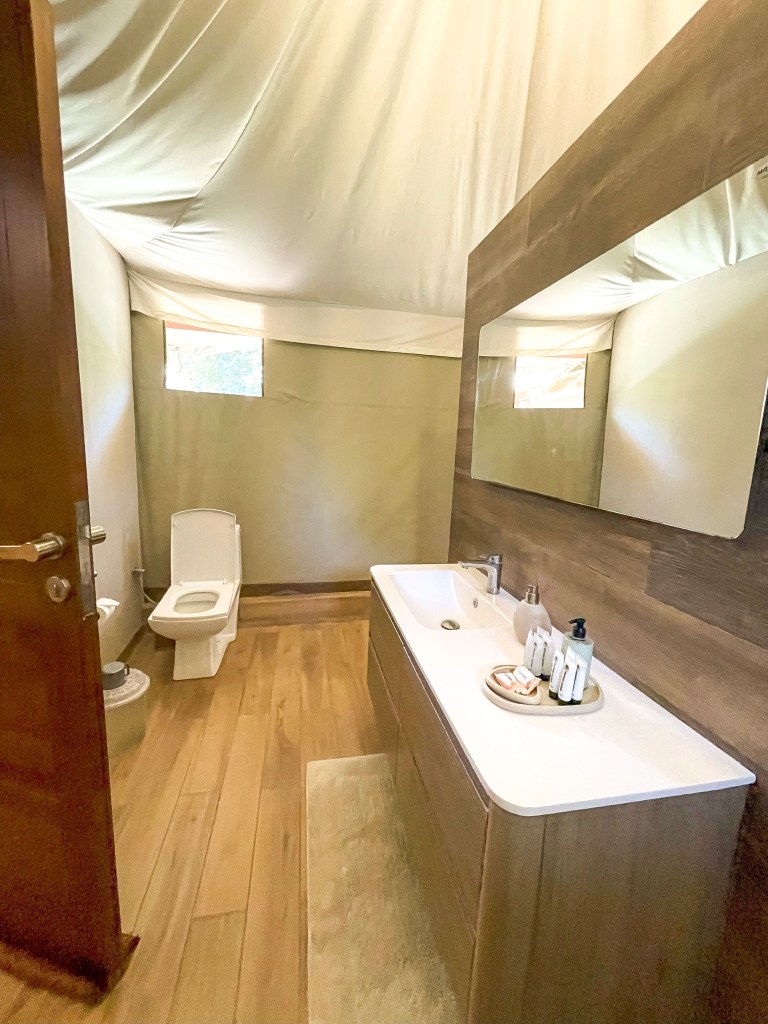
Luxury Tented Family Chalets with Jacuzzi
- All of the above, plus a jacuzzi
Since Mopani does not publicly publish its rates on its website (you can contact them via email, and they will send you the pricing), I won’t display the rates in this post. You can click on the following link and make an inquiry: https://mopanilodge.com/. When I compared their rates to those of safari lodges in other African game parks, I found them to be very reasonable. This is with the added bonus of enjoying a fully halal menu. If you have any dietary restrictions, notify the staff in advance so they can accommodate your needs.

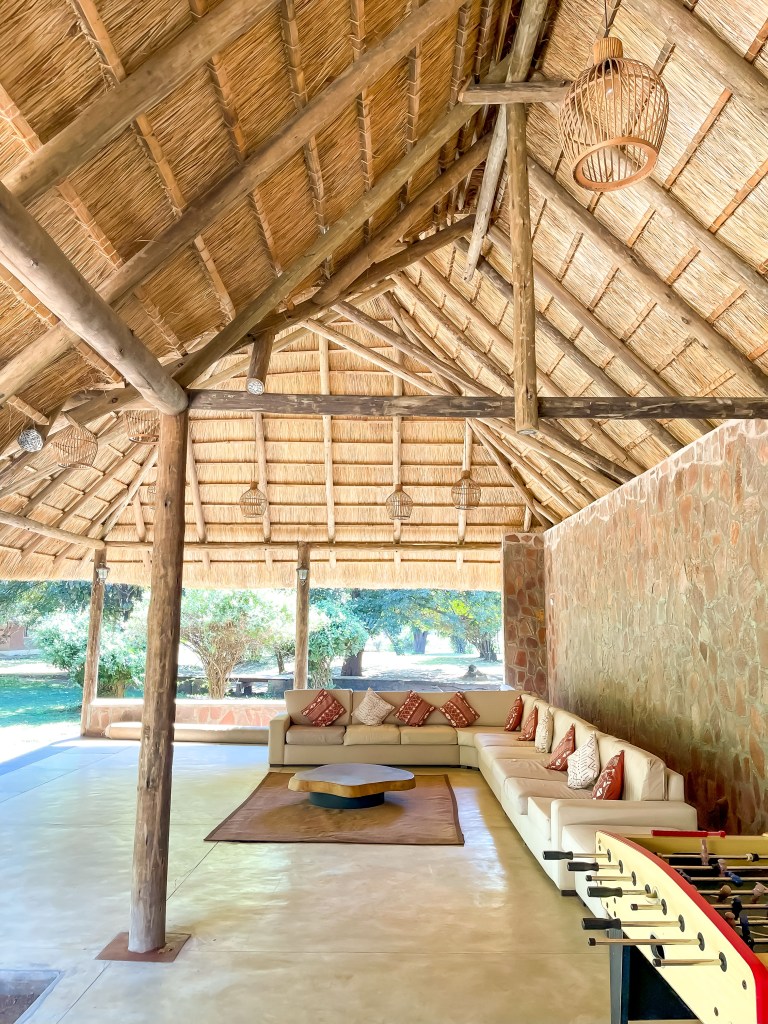


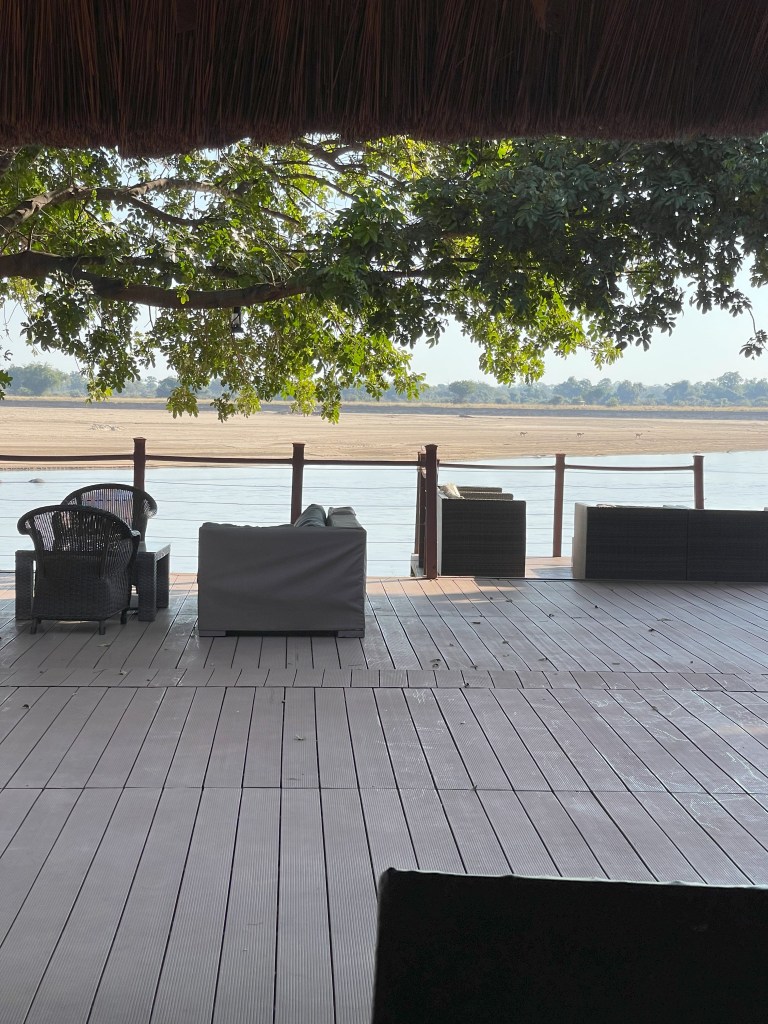
South Luangwa National Park and the surrounding area have one of the highest concentrations of hippos in the world. You will hear them throughout the day as they jostle for better positioning in the Luangwa River. Lions, leopards, wild dogs, hippos, elephants, and wildlife in the national park will also be found denning and marking territory outside the park’s boundaries, including the grounds of Mopani Lodge. As mentioned above, it is one of the few lodges in Africa and the only one near South Luangwa National Park that offers a fully halal menu. It is also one of the few lodges in Africa that is infant- and toddler-friendly, allowing infants and toddlers to go on game drives in an open jeep.
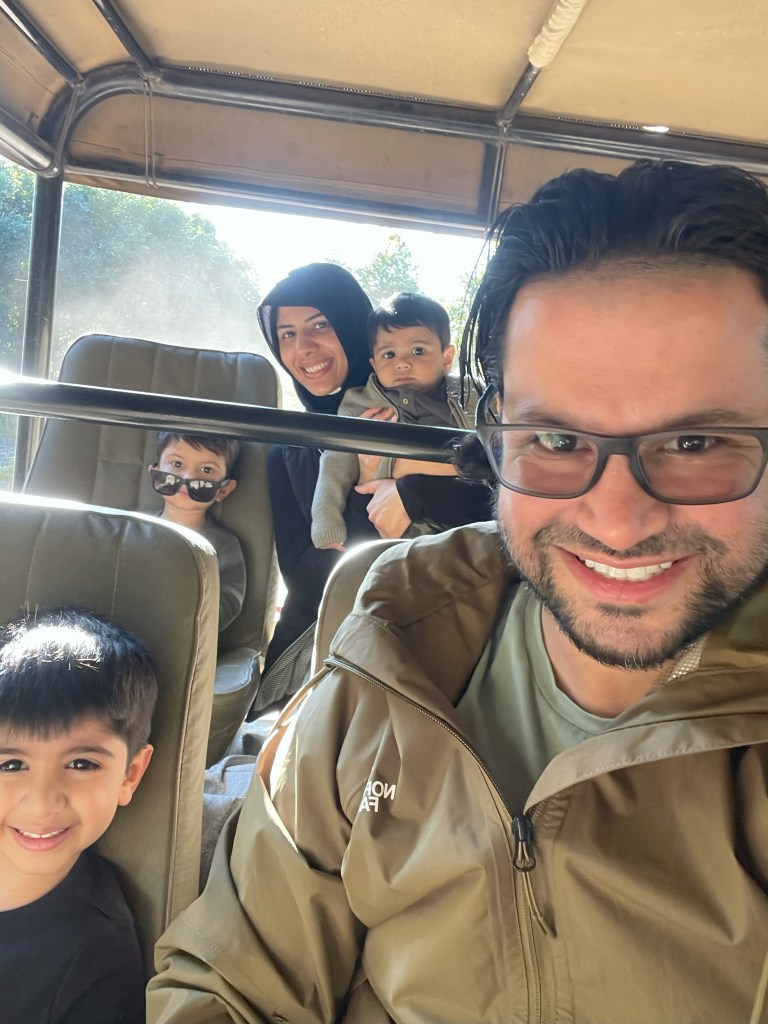

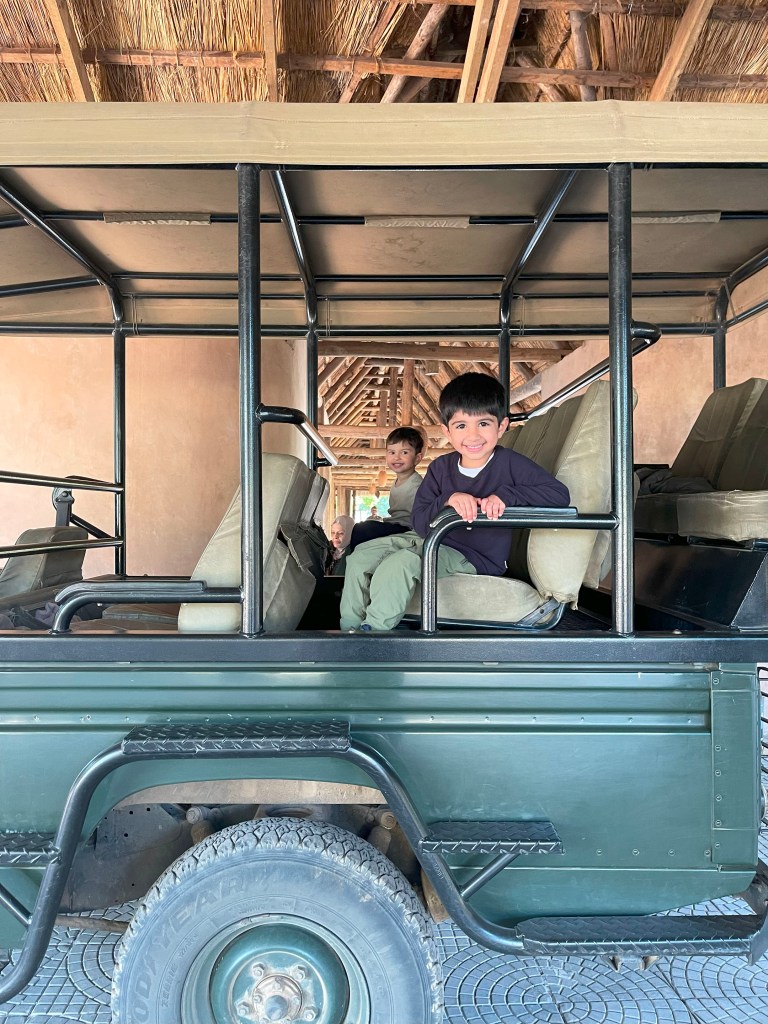
Just beware that certain wildlife encounters require minimal noise for up-close viewing, and a crying infant will likely scare off the animal in question. This was a risk we had to take, and we were fortunate that our 10-month-old slept through most of the game drives and remained asleep during our encounters with lions and leopards. One of the most underrated aspects of South Luangwa National Park is that it doesn’t have the sprawl of some of the more popular game parks in Africa. It has a modest area of about 9,000 square kilometers. This is a benefit when traveling with kids, as they are a bit more impatient by nature, and you don’t have to endure a long drive before you start seeing wildlife. For comparison, here is a list of other game parks in Africa and the areas they cover:
- Serengeti National Park – Tanzania (including Masai Mara Game Reserve in Kenya)- 30,000 square kilometers
- Kafue National Park – Zambia – 22,400 square kilometers
- Kruger National Park – South Africa- 19,485 square kilometers
- Chobe National Park – Botswana – 11,700 square kilometers
Daily Schedule at Mopani Lodge:
Mopani follows a daily schedule designed to maximize your time and ensure you get the most out of your experience at the lodge. A usual day looks like this:
- 5:15 a.m. – Courtesy wake-up knock from Benson, the overnight guard of the lodge. We were usually awake by 4:30 am to shower, dress, and prepare the boys. You will be escorted to the dining area since it is still dark outside.
- 5:30 a.m. – Breakfast is served in the main dining area. This includes made-to-order eggs, toast, cereal, tea, biscuits, and other items.
- 6:00 a.m. – Morning game drive. This game drive in South Luangwa National Park lasts approximately 4.5 hours in an open jeep. It offers a prime opportunity for wildlife viewing, as the entire drive is conducted during daylight hours. There is a break at approximately the halfway point of each game drive, during which the tour guide will serve snacks, such as a light sandwich or potato chips, and chilled beverages. Blankets are provided in the Jeep, but I strongly recommend dressing warmly as the morning temperatures can be chilly.
- 11a.m. – Lunch. Prepared on-site and features a variety of dishes for adults and kids.
- 11:45 a.m-3 p.m. – Rest and personal time. You can use this time to swim in the pool, take a nap, browse the internet, or do whatever you like.
- 3:00 p.m. – Tea and snacks
- 3:45-8:00 p.m. – Evening game drive. This is when lions and leopards are most active and will pursue a hunt. The evening game drive also offers prime photo opportunities for breathtaking African sunsets, often featured on postcards.
- 8:15 p.m. – Dinner. Whatever is on the menu for that day, you can bet it will be delicious. The chef does a fantastic job every day. If you or a family member has a specific dietary requirement, please let him know, and he will accommodate you.
- 9:00 p.m. – Personal time or bedtime. If you have a lagoon-view chalet and ask nicely, Benson will provide you with a high-intensity flashlight from your patio to shine on the lagoon. Animals congregate at the lagoon overnight, so you may be in for a surprise.
Important to note:
Once the sun goes down and you have been escorted to your chalet after dinner by the overnight guard, you should NEVER leave your chalet unaccompanied for any reason. Lions, leopards, Elephants, and hippos are known to roam around the property grounds overnight. We had a hippo run right past us after dinner, just 75-80 feet from our chalet, while being accompanied by Benson. This is the African Bush; ignorance can lead to a fatal mistake.
Day One Highlights
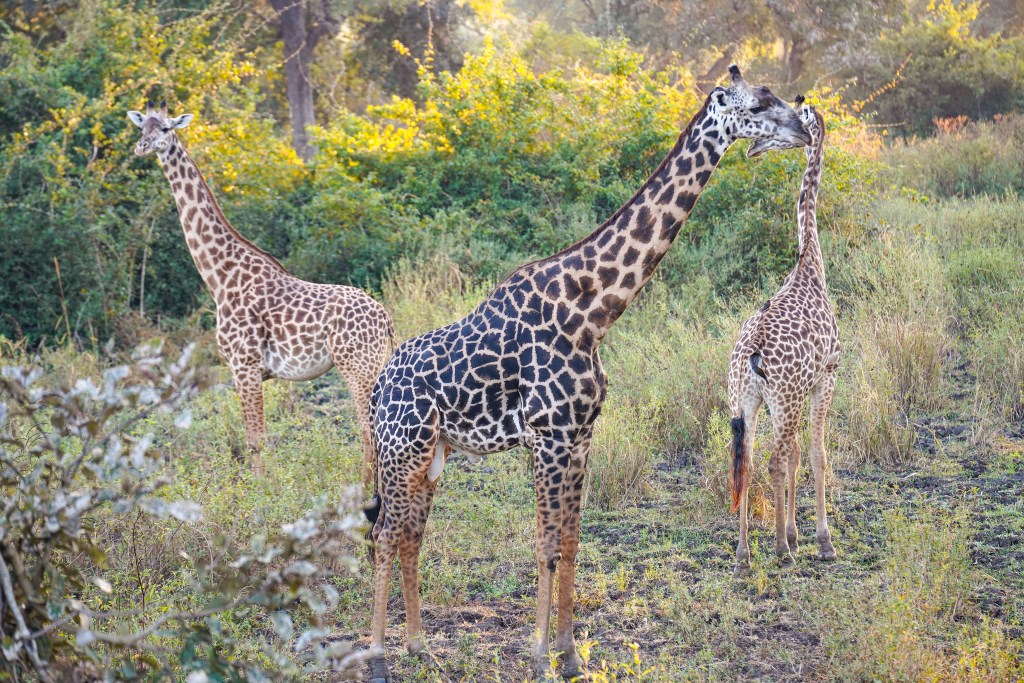
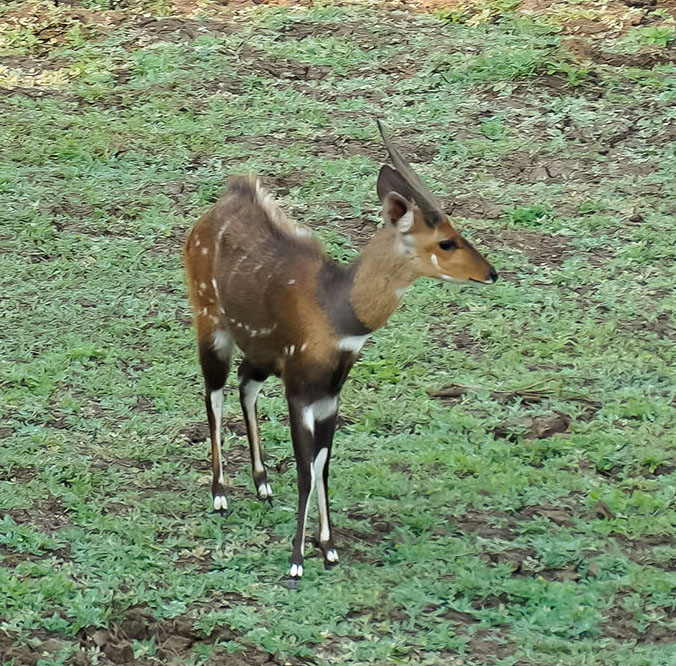
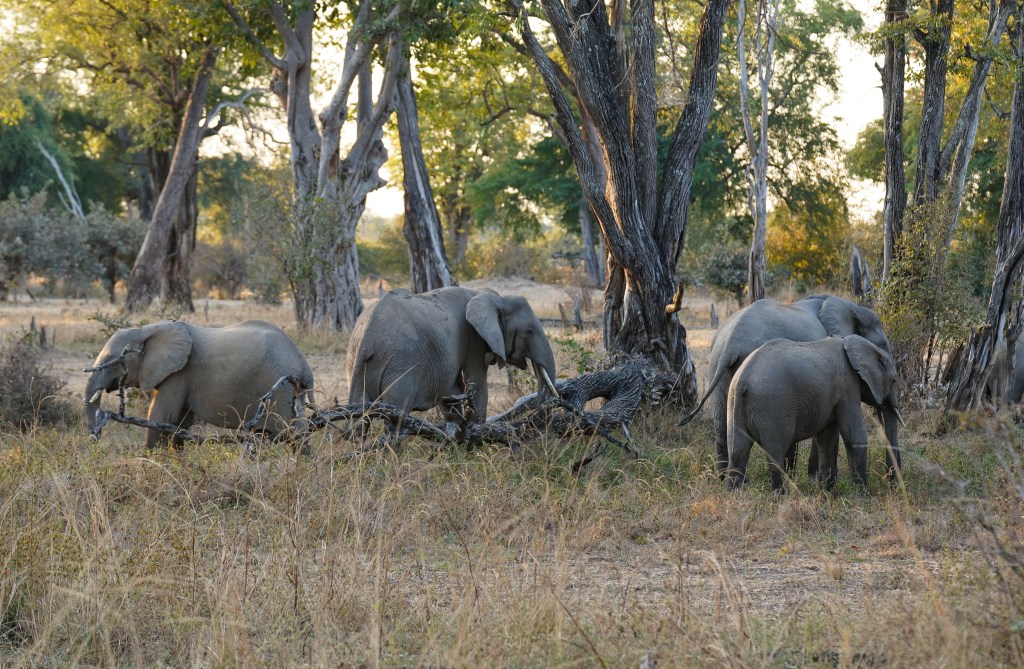
Upon arriving at Mopani Safari Lodge, we were warmly greeted with welcome drinks by Bornface Anderson, the manager at Mopani Safari Lodge, and several members of the staff, who assisted us in unloading our luggage and giving us a tour of our Lagoon View Chalet. We booked the Lagoon View Chalet because the lagoon attracts a diverse range of wildlife throughout the day, including various antelopes, baboons, warthogs, elephants, giraffes, and even large cats such as lions and leopards. The pride of lions that occasionally wander into Mopani Lodge territory made a kill near the lagoon six days before our arrival. While we didn’t see big cats at the lagoon during our stay, we frequently saw baboons, antelopes, and giraffes. After receiving a tour of the lodge grounds and settling into our chalets, we had tea and snacks around 3 p.m. and set off for our first game drive. Before we even entered the National Park, we had sightings of elephants and giraffes. No lions or leopards were observed that day, but our luck would turn significantly the following morning.




Day Two Highlights
During our morning game drive, our guide, Brian, spotted a few vultures circling the sky from a distance. This is usually a sign that a predator has made a kill, and they are just waiting for their turn to scavenge. As we drew closer to the vultures, a lone hyena was on the side of the road, also patiently waiting for his turn. When we drove a few hundred meters beyond the hyena, a male lion was devouring a juvenile warthog that he had likely killed 30 to 45 minutes prior.


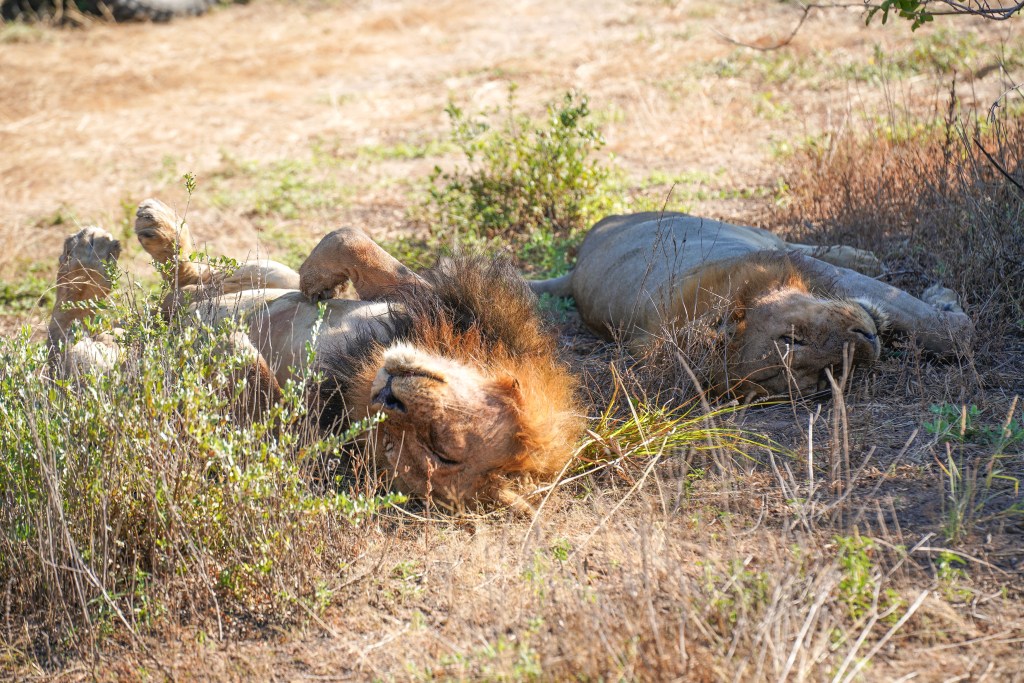
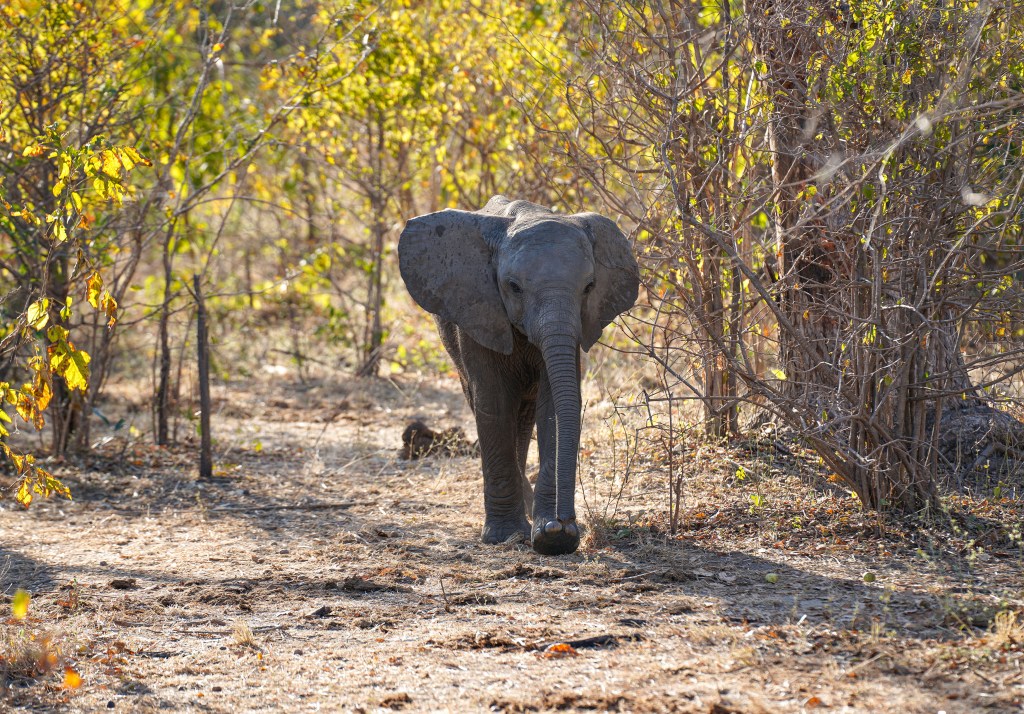
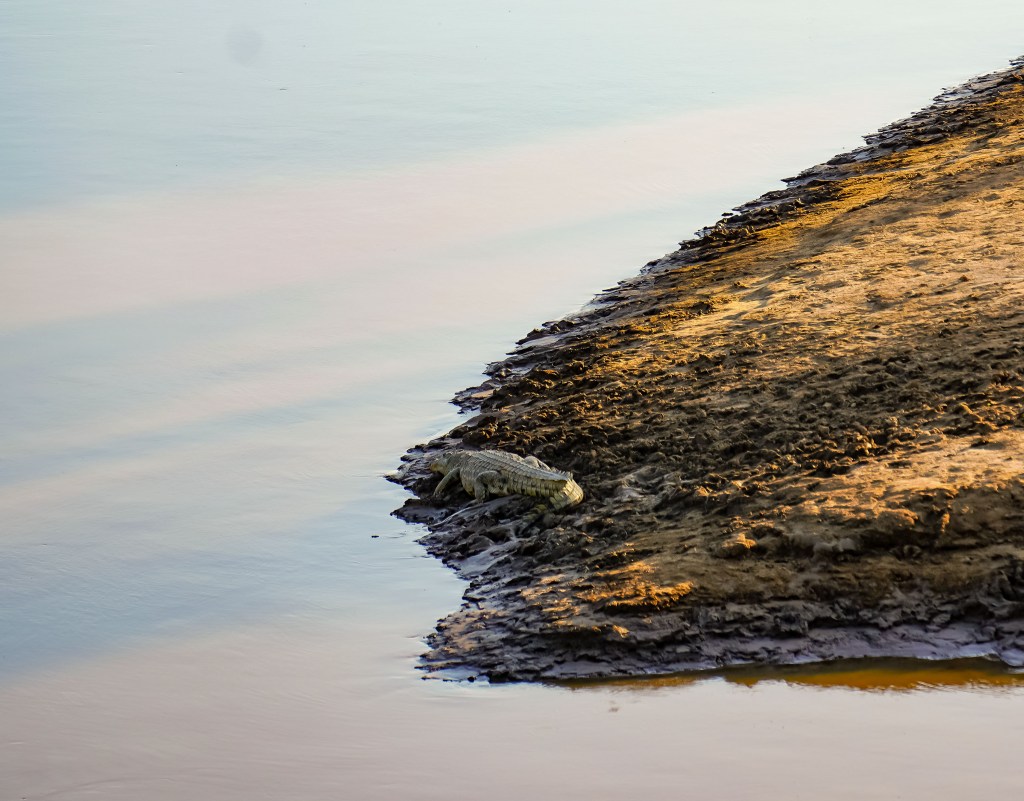
Usually, at the site of a lion kill, word gets around quickly, and several other jeeps arrive with visitors from surrounding lodges, as lions are the star attraction. Fortunately, we were the first group to arrive and had the moment to ourselves for 15-20 minutes. After about an hour and a half, we came across two sleeping male lions that appeared to have eaten recently. Their stomachs were so full they had difficulty finding a comfortable position. Later in the day, we encountered zebras, elephants, warthogs, giant crocodiles, and antelopes.



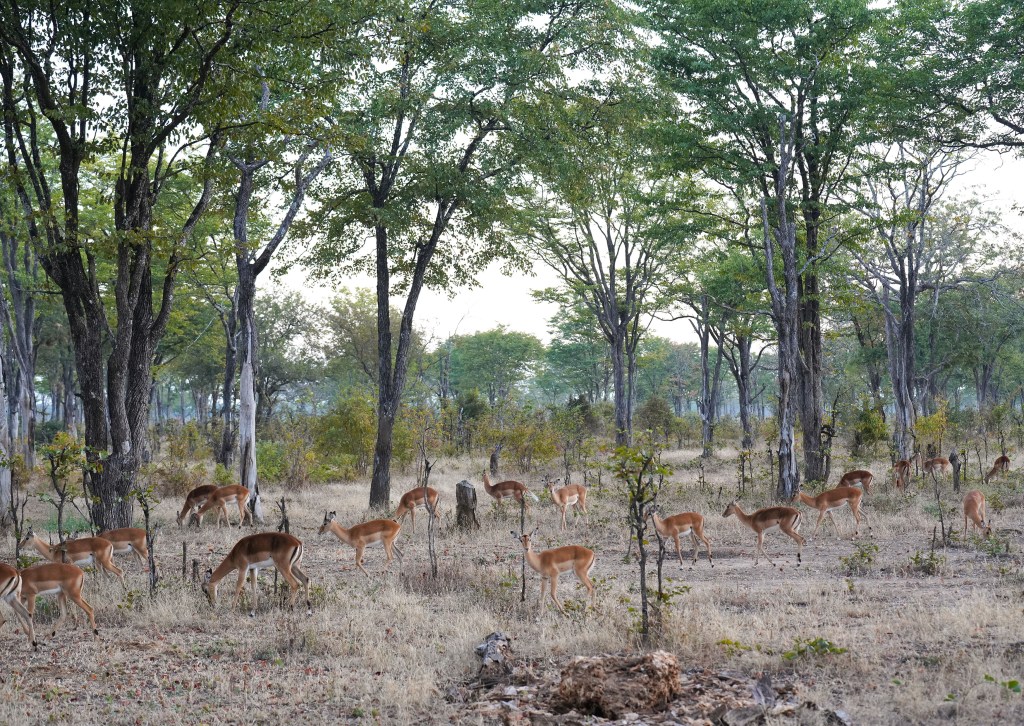
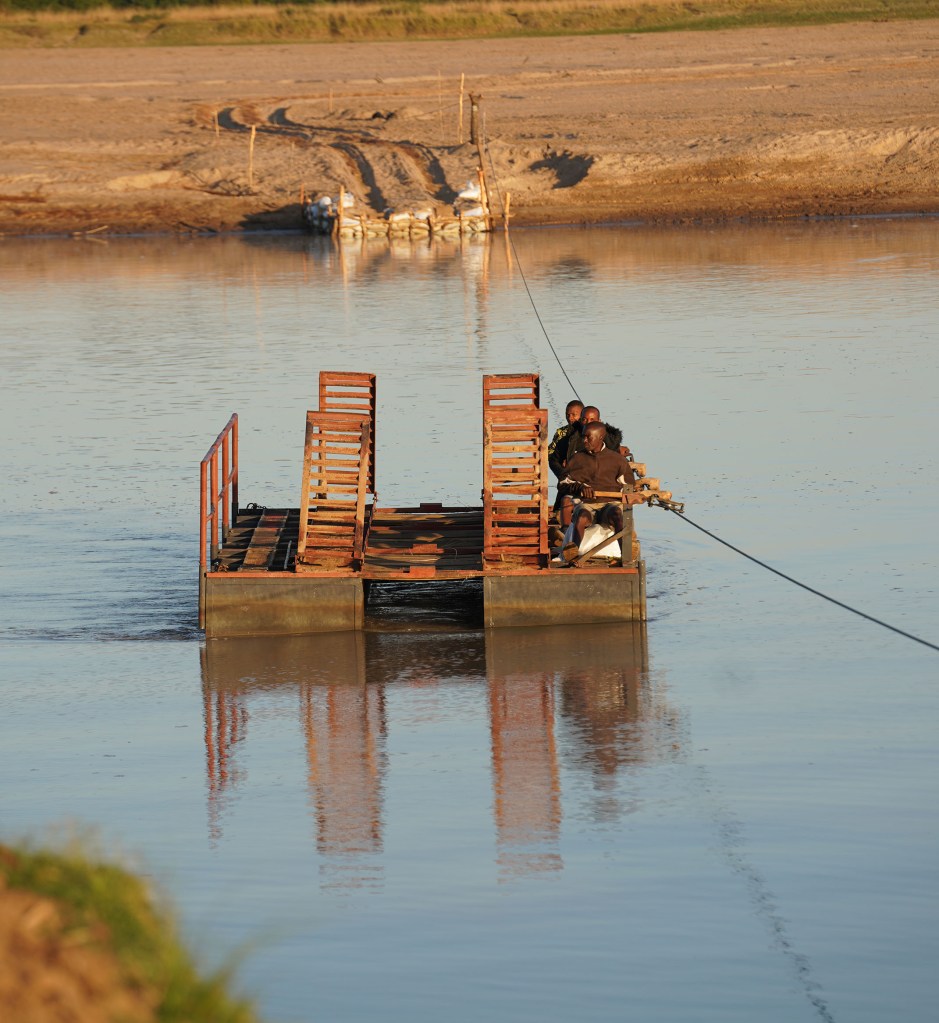
During our evening game drive, we crossed the Luangwa River on a manual ferry to save time and go to the other side of the game park. Not long into our drive, spotters alerted Brian about a nearby leopard. When we arrived, a beautiful leopard was perched in the middle branches of a tree, tracking impala near the tall grass where they would be most vulnerable if a predator were to stalk them. As soon as the leopard came down to stalk behind the tall grass, a troop of baboons on the upper branches of another tree spotted the leopard and started calling out warning sounds. These warning calls alerted every animal that a predator was lurking nearby, and we saw the impalas shift away from the area near the tall grass to the open grass area, where escape became more probable. It was fascinating to watch all this unfold for 25 to 30 minutes.


Day Three Highlights
This was our final full day at Mopani Safari Lodge and undoubtedly our most memorable one. During our morning game drive, we encountered a pack of wild dogs emerging from their den near Mopani Safari Lodge. Later in the morning, we discovered a male lion eating a zebra kill from earlier in the day. Not too far from the kill site was a lioness who looked like she had eaten her fill and was lying down for a nap. Brian was pretty confident that the lioness was the one who killed the zebra and ate her fill before the dominant male lion took over.

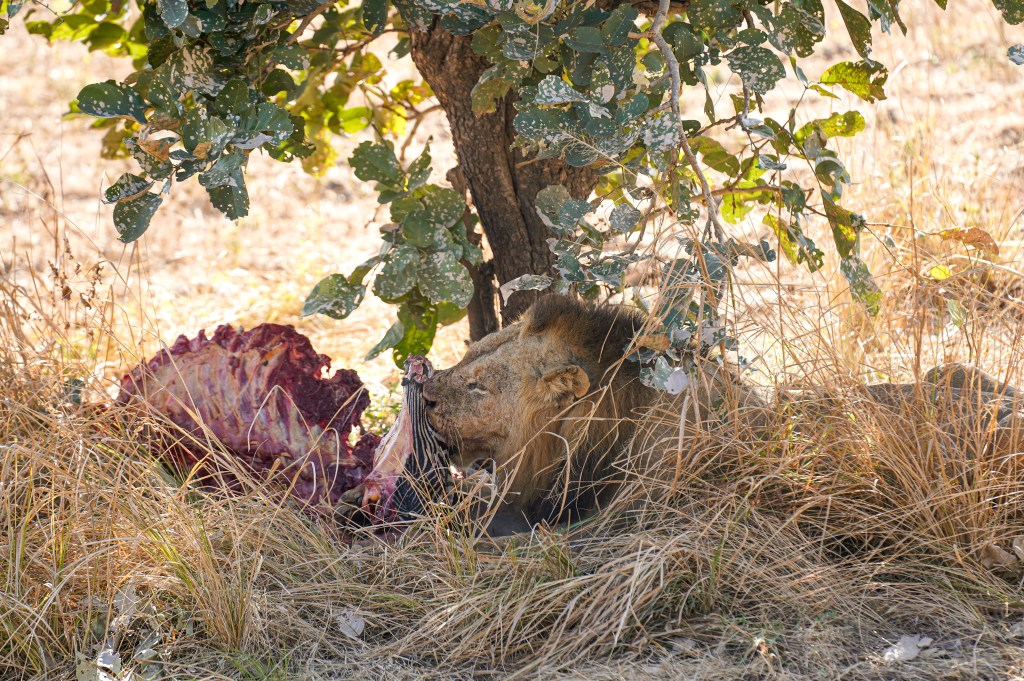

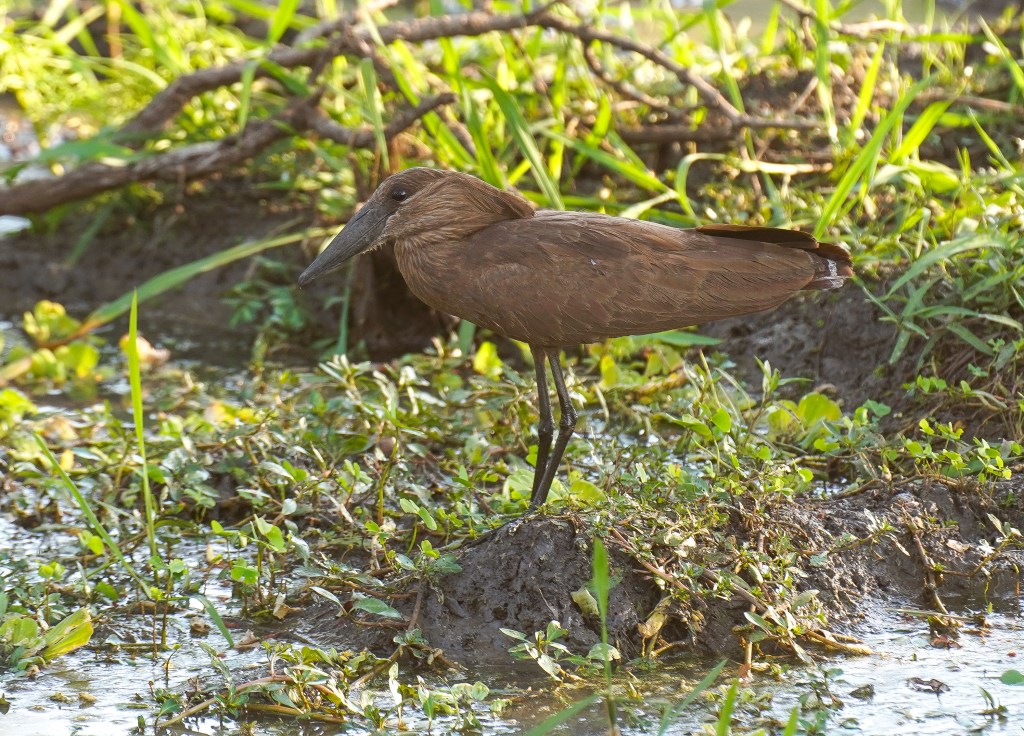
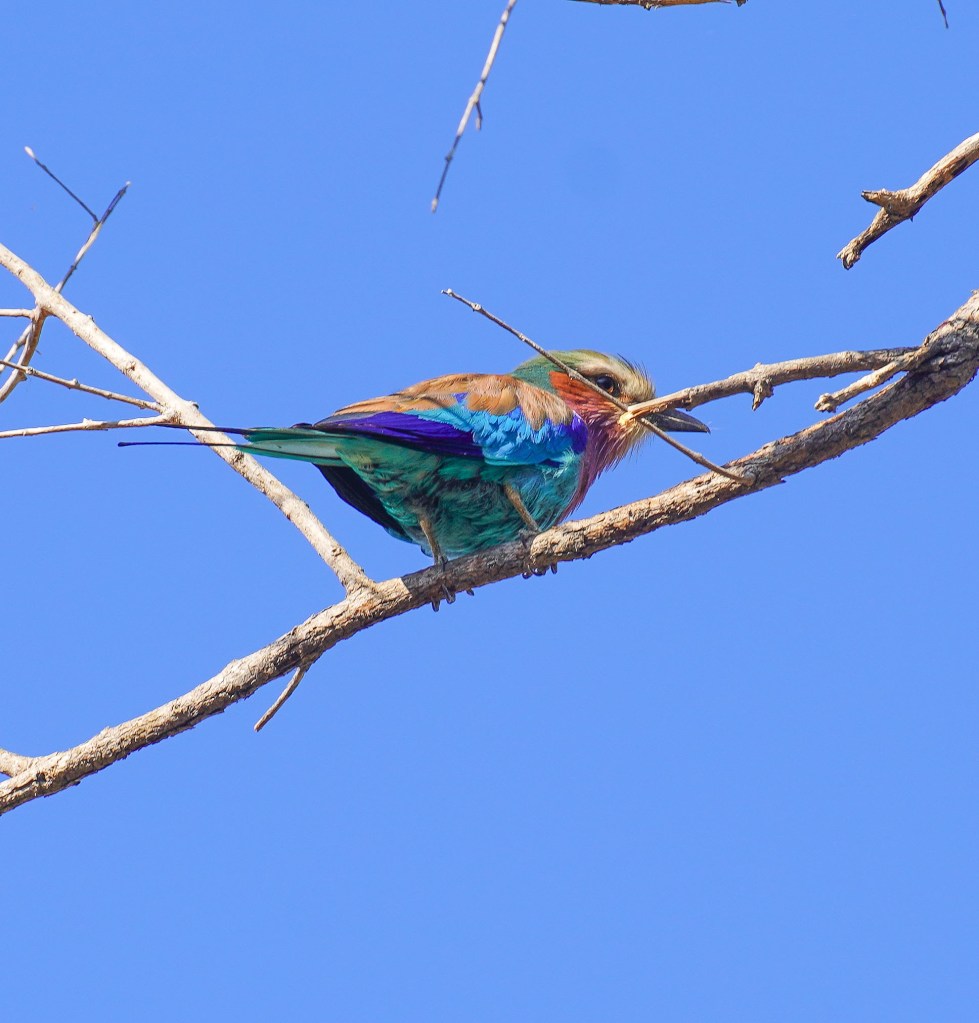
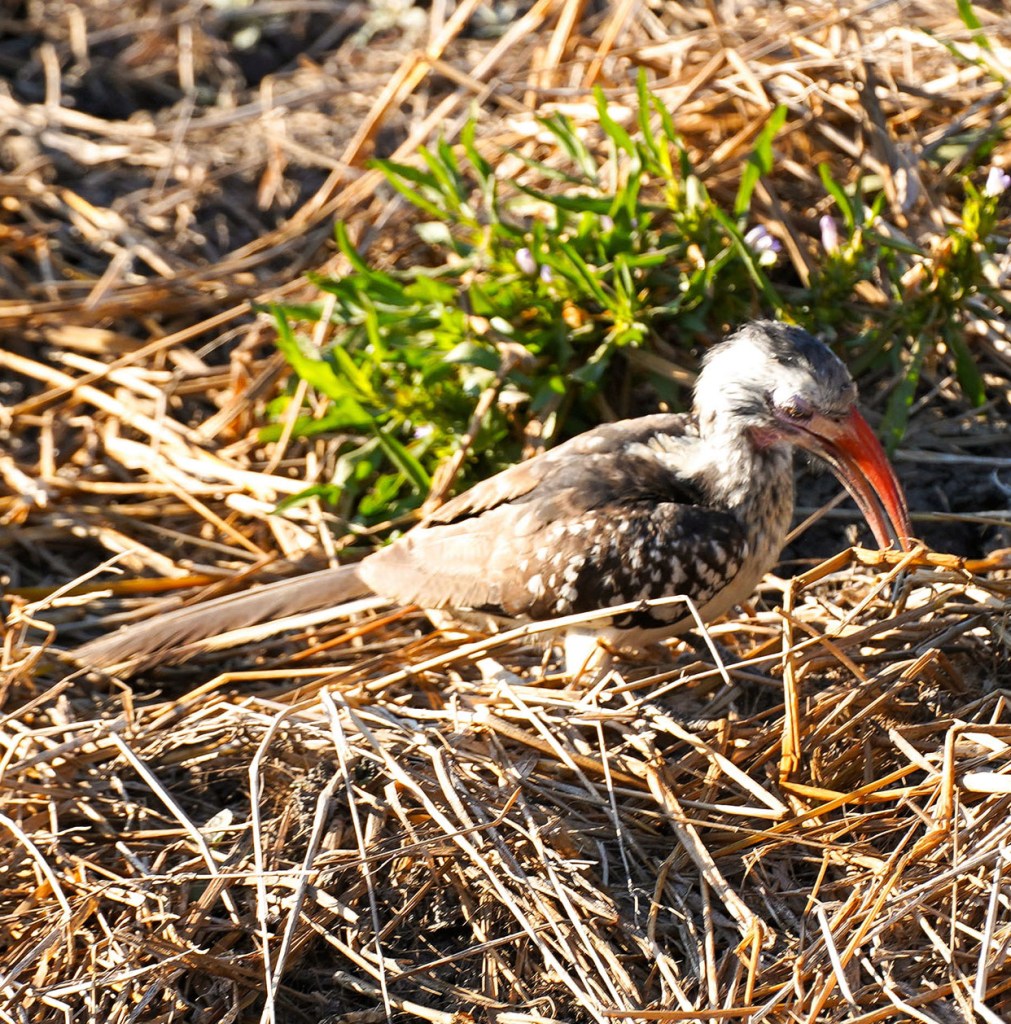
After observing the male lion eat for 20 minutes, we drove to another part of the park, planning to stop by this area later. One of the more underrated aspects of the game drive that often gets overlooked is the abundance of bird species that call South Luangwa National Park home. Brian was great at spotting and identifying the birds we saw on our game drives.




Later, during our drive, a spotter alerted Brian to a leopard sighting at a different park area. Brian drove straight to the area, but we could not initially spot the leopard. Then, another troop of baboons started sounding alarm calls in the area, indicating they had spotted the leopard. About a minute later, we saw the leopard coming down a tree, stretching and getting ready to hunt. We followed him as long as our jeep would allow, but he eventually disappeared in the thick brush.


During our evening game drive, we drove to the zebra kill from earlier in the morning and saw a different scenario. The dominant male was awake after napping during our second encounter. This time, he continued eating the zebra carcass, even though he looked visibly engorged. From a distance, we saw a beautiful male lion with a golden mane, the younger brother of the dominant male, patiently waiting his turn to eat. After we observed him for 20 minutes, he got up and walked toward his brother and the zebra kill. We weren’t sure if he would challenge his brother, but we stuck around longer in case he did.

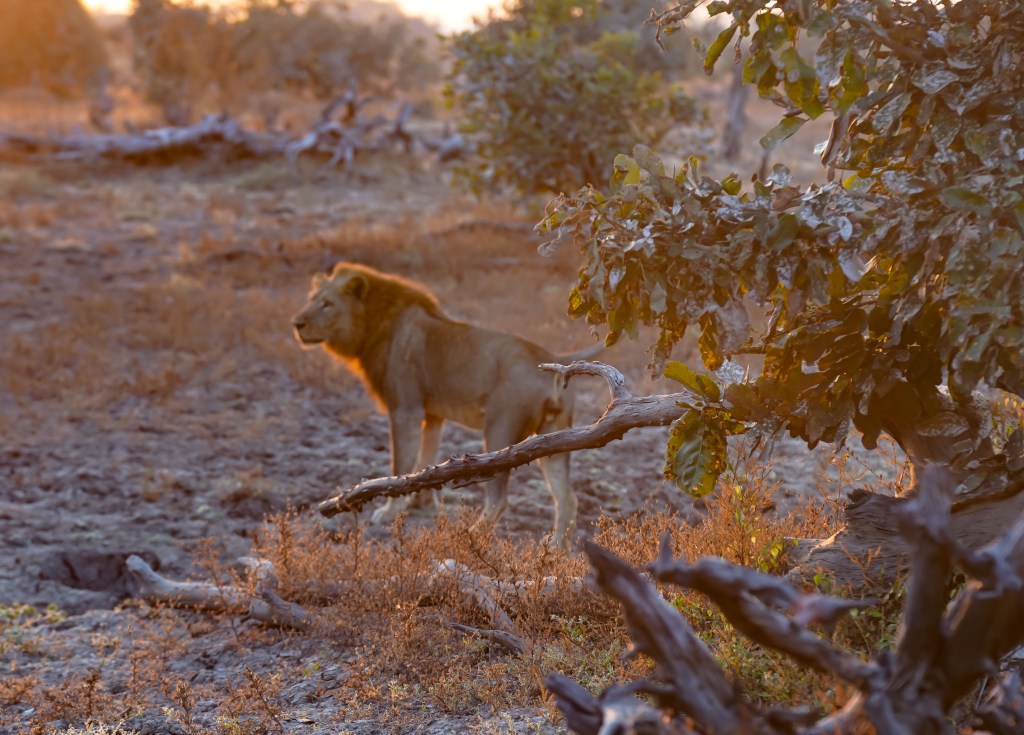
He stopped about 300 meters from his brother in the open grass where his brother could see him. The dominant male was completely unbothered by his presence and continued to feed on whatever was left of the zebra carcass. Nightfall came, and it was time to head back toward the lodge.


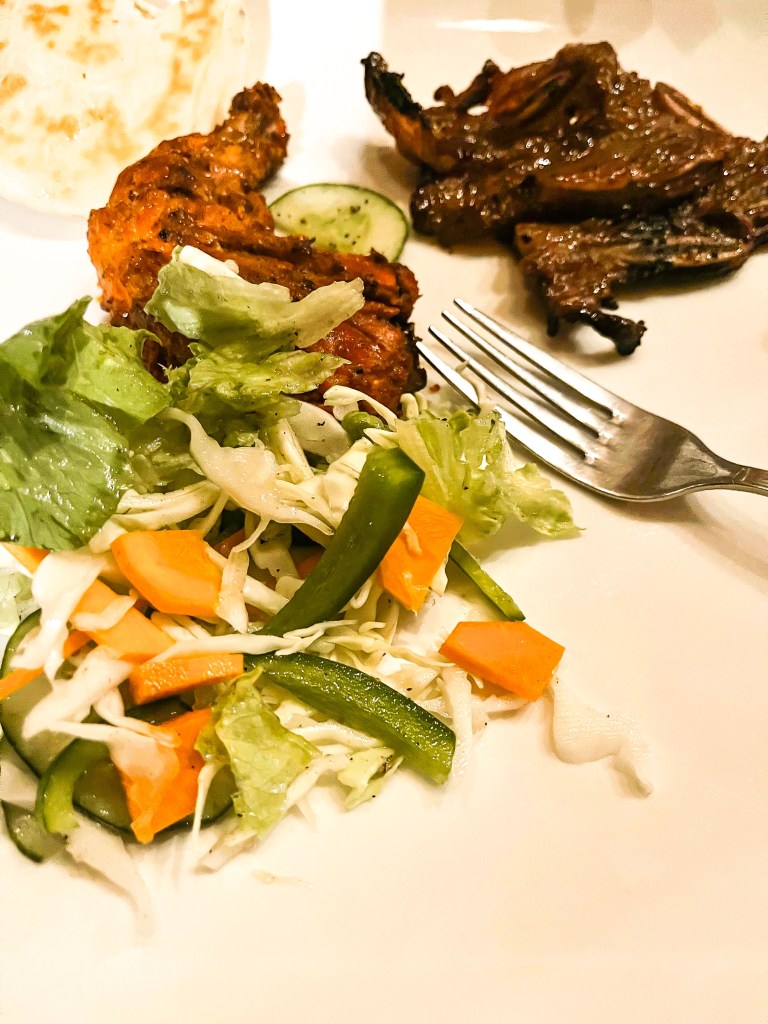
As our game drive concluded and we exited South Luangwa National Park, we noticed that Brian was taking a different route back to the lodge than usual. He told us he wanted to show us something unique since it was our final day. As we approached this area in the African bush, we noticed a bonfire, several illuminated lamps, and multiple tables with tableware, dishes, and beverages. I assumed it was a reception dinner for a different group of people. As Brian parked the jeep, he informed us that this was a special dinner under the stars in the African bush for us. We were greeted by friendly and familiar faces from Mopani Safari Lodge, who had all assisted in setting up this fantastic and unforgettable experience. The dinner consisted of various grilled, savory items, as well as the traditional Zambian dish, Nshima. This was followed by gathering around the bonfire before returning to the lodge.




Thoughts on Mopani Safari Lodge
We had a wonderful time at Mopani and look forward to visiting again. Every aspect of our stay there—lodging, meals, game drives, hospitality, friendliness from staff members, and overall customer service—exceeded our expectations. It’s not easy to find a safari lodge that accommodates toddlers and infants in Africa, and that was the most crucial box that Mopani checked off. Whether you’re traveling with kids, on a honeymoon, or seeking to experience nature and disconnect from the world, I highly recommend Mopani Safari Lodge.
Tips
- As with any safari or excursion where you are entering a national park, animal sightings often require time and luck. The longer your stay, the more likely you are to see one of the main attractions.
- Bring some binoculars and some smaller ones for the kids. They make viewing wildlife easier.
- I recommend dressing warmly for the game drives and putting on layers for the kids. The temperature will warm up as the morning game drive progresses and cool down during the evening game drive once the sun goes down.
- We didn’t have any issues with mosquitoes, but if you visit during the wet season (November- April), bringing some repellent would be a good idea.
- During our stay, Brian served as our safari guide, and his extensive knowledge of wildlife, behavior, fauna, and the South Luangwa ecosystem was a valuable asset to our group. All of the guides at Mopani Safari Lodge are very knowledgeable. If you have any questions, feel free to ask, and they will be happy to answer them for you.
- The evening drives will also have a spotter alongside Brian. Chamata was our spotter and provided a huge help in spotting animals that a normal person would miss after sunset.
- You don’t have to go on all the scheduled game drives if you choose not to, but coming from half the world away, there is no way we would skip any. Your perspective may differ if you come from Lusaka or another part of Africa.
- Whether you come from a country with a tipping culture or not, I strongly recommend tipping the staff at Mopani Safari Lodge for all the hard work they put into making your stay memorable. During your game drive, you will probably take a shortcut to cross the Luangwa River on a manual ferry. This requires the jeep to dock on a wooden platform, and people must manually pull the ferry across the river with a rope. Remember to tip these people well, as the work is arduous.
- Do not leave the open jeep when it is stopped for wildlife viewing. I suppose it’s not as apparent as it may seem to most people, but Brian told us that people have jumped out of the jeep to take pictures of lions while they were only a short distance away.
- Zambia requires you to go through several hoops to operate a drone for recreational purposes. You must register the drone, have a remote pilot license, a flight radio telephony license, and have clearance from the Zambia Civil Aviation Authority. It’s a shame that there are so many obstacles, as the lodge property would be a fantastic location for drone footage.
 Miles for places